What Is Cloud Security?
Cloud security is the set of policies, controls, and technologies that protect data, applications, and infrastructure in the cloud. The key idea is the shared responsibility model: the provider secures the cloud itself, but you are responsible for securing what you put in it.
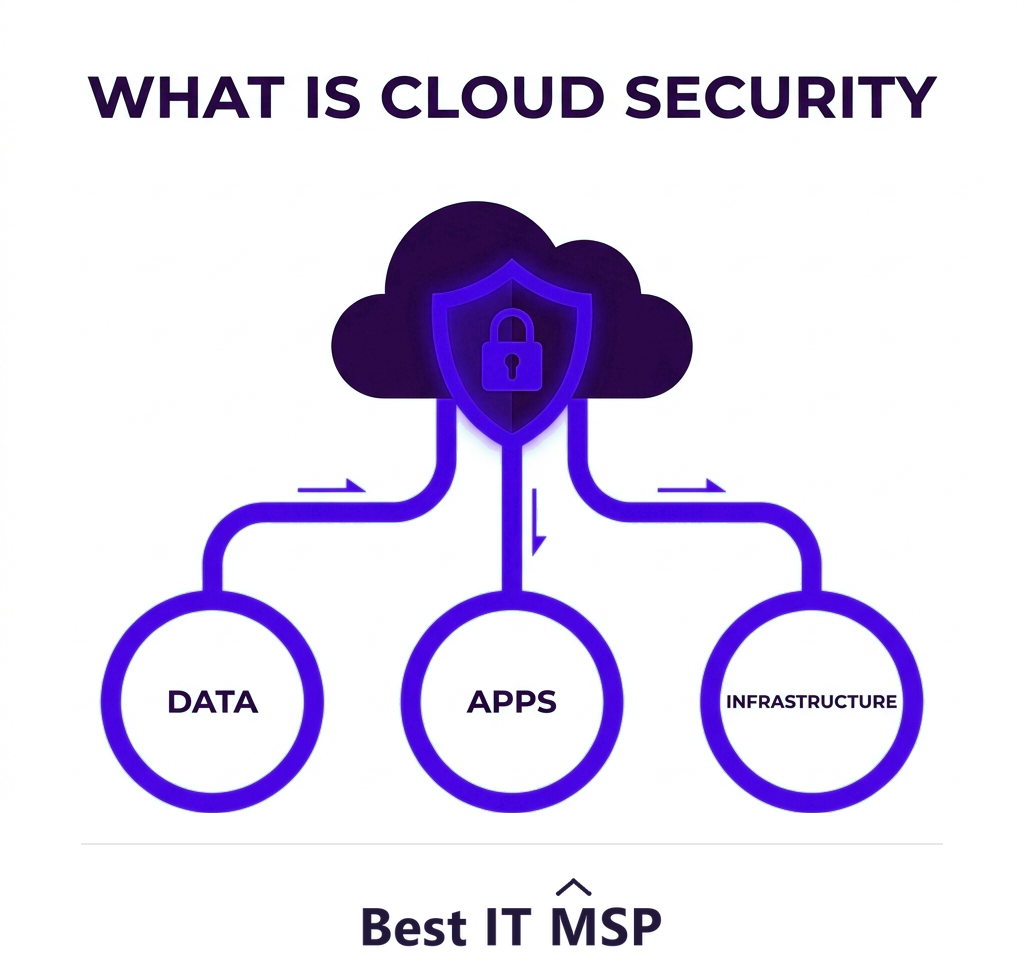
- Cloud security protects data, apps, and infrastructure in services like Microsoft 365, Azure, and AWS.
- The shared responsibility model is central: the provider secures the cloud, you secure what is in it.
- Most cloud breaches trace back to customer-side mistakes, especially misconfiguration and weak access.
- Core controls are identity and access management, encryption, configuration management, and monitoring.
- Cloud security is continuous, not a one-time setup, which is why many businesses use a provider.
What is cloud security?
Cloud security is the combination of policies, controls, and technologies that protect the data, applications, and infrastructure you run in cloud services such as Microsoft 365, Azure, and AWS. As businesses move more of their operations off local servers and into the cloud, cloud security has become central to protecting the whole business, not a niche concern. It covers everything from who can log in and what they can reach, to how data is encrypted, how cloud settings are configured, and how threats are detected.
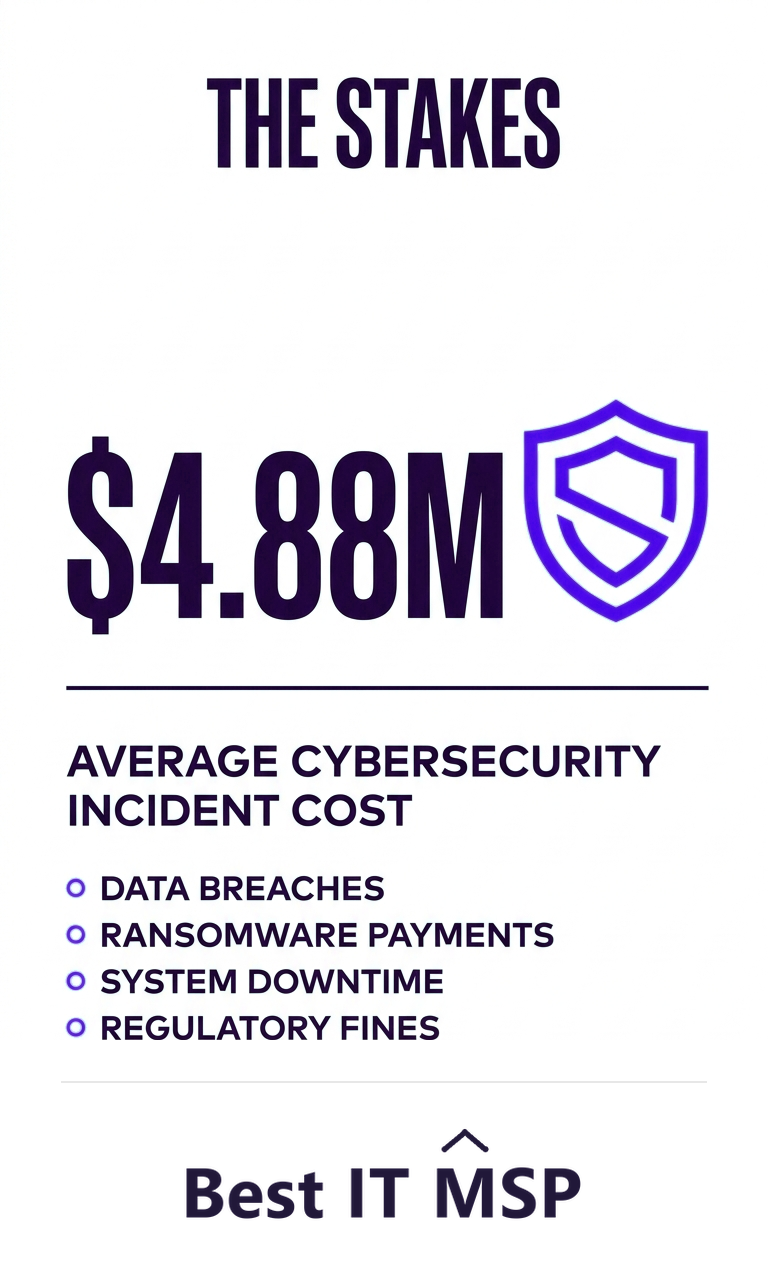
The scale of the shift makes it matter to nearly everyone: worldwide public cloud spending is forecast to top $723 billion in 2025, up from about $595.7 billion in 2024. More data and more applications in the cloud means more to protect, and the cost of getting it wrong is high, with the average data breach reaching $4.88 million and taking about 258 days to identify and contain. This guide explains cloud security in plain English, and pairs with our deeper cloud security buyer's guide.
The shared responsibility model: the part most teams miss
The single most important concept in cloud security is the shared responsibility model, and misunderstanding it causes more breaches than any technical flaw. The model splits security between you and your cloud provider. The provider secures the cloud itself, the data centers, hardware, and core services. You are responsible for security in the cloud: your data, your user accounts and access, your configurations, and your applications. The provider locks the building; you are responsible for locking your own apartment inside it.
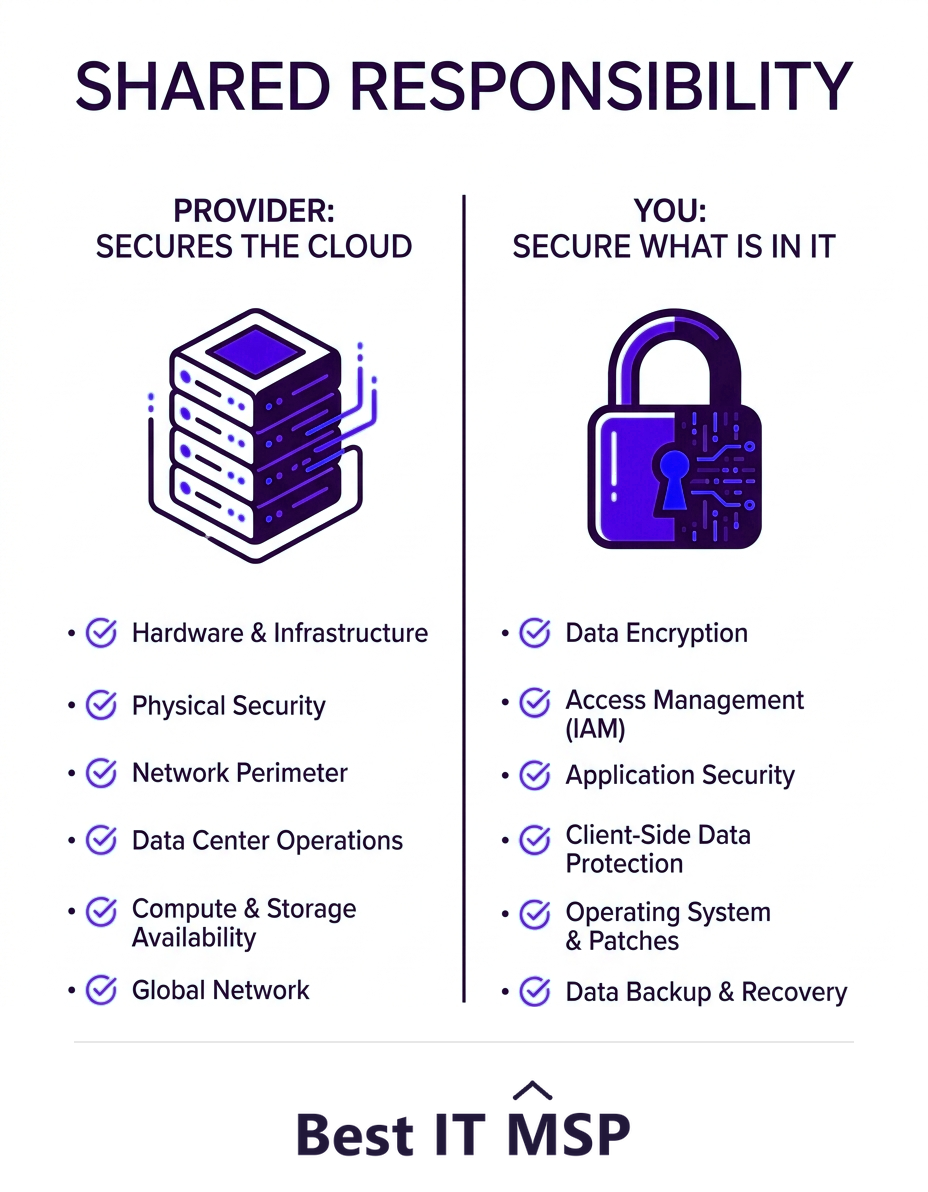
This is where so many businesses go wrong. They assume that moving to a reputable cloud provider means security is handled. It is not. Industry analysts have long noted that the overwhelming majority of cloud security failures are the customer's fault, not the provider's, usually through misconfiguration or weak access control. Knowing exactly where your responsibility begins is the foundation of cloud security, and it is the first question a good provider will walk you through, because every other control depends on getting this boundary clear.
The biggest cloud security threats
Most cloud incidents are not exotic. They cluster around a few recurring weaknesses, almost all on the customer side of the shared responsibility line:
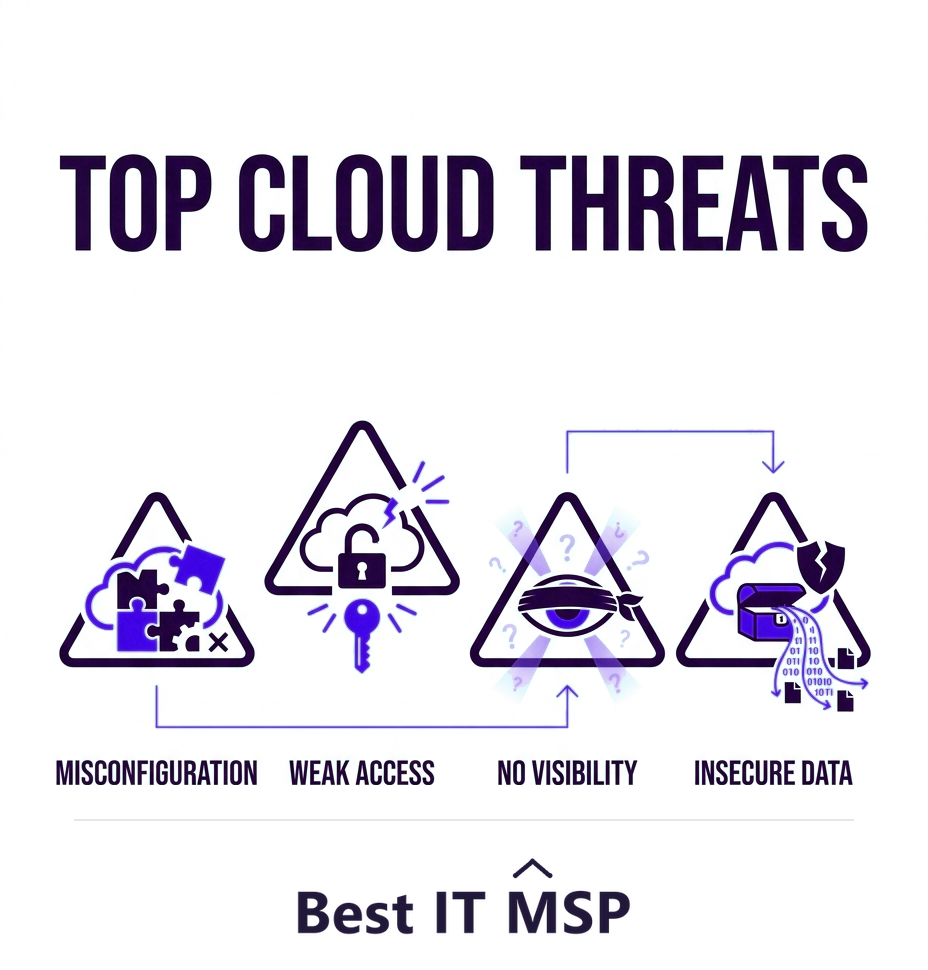
- <strong>Misconfiguration.</strong> Storage left open to the public, over-broad permissions, and default settings, the single leading cause of cloud breaches. A single misconfigured storage bucket can expose millions of records to anyone on the internet.
- <strong>Weak identity and access.</strong> Stolen or over-privileged credentials, and accounts without multi-factor authentication.
- <strong>Poor visibility and shadow IT.</strong> Unmanaged accounts, services, and data that no one is watching or securing.
- <strong>Insecure data.</strong> Data that is unencrypted or poorly governed, easy to expose and easy to steal.
- <strong>Compliance gaps.</strong> Cloud setups that quietly fail to meet rules like HIPAA or PCI, creating legal and financial risk.
The core controls of cloud security
Strong cloud security is built from a handful of controls that, together, cover the threats above:
- <strong>Identity and access management (IAM).</strong> Enforce least-privilege access and multi-factor authentication, so accounts can reach only what they need and stolen passwords are not enough.
- <strong>Encryption and data protection.</strong> Encrypt data at rest and in transit, and use data-loss prevention to stop sensitive information leaking.
- <strong>Configuration and posture management.</strong> Continuously check cloud settings against secure baselines to catch the misconfigurations that cause most breaches.
- <strong>Monitoring and detection.</strong> Log and analyze activity to spot threats early, the difference between catching an intrusion in hours and discovering it months later.
- <strong>Backup and recovery.</strong> Maintain tested backups so you can recover from ransomware, deletion, or error.
Notice that these controls map directly onto the threats: identity and access management answers weak credentials, configuration management answers misconfiguration, monitoring answers poor visibility, and encryption answers insecure data. That is not a coincidence. Effective cloud security is simply a deliberate, control-by-control response to the small set of ways cloud environments actually get breached, applied consistently rather than in a one-off project.
Cloud security best practices
Putting the controls into practice comes down to a few habits. Start by understanding exactly what you are responsible for under the shared model. Enforce least-privilege access and multi-factor authentication everywhere. Encrypt data, and harden and continuously check your configurations rather than trusting defaults. Monitor for threats, and treat compliance as an ongoing requirement rather than a one-time box to tick. Train your people, since human error and phishing remain leading routes into cloud accounts, and reported cybercrime losses topped $12.5 billion in a single year. Above all, treat cloud security as continuous: the environment changes constantly, so protection has to be maintained, not set up once and forgotten.
Is cloud security the same as cybersecurity?
Cloud security is a specialized part of cybersecurity, not a separate discipline. Cybersecurity covers all of an organization's digital assets, including on-premises networks, endpoints, and people. Cloud security focuses specifically on protecting cloud environments and the shared responsibility model that governs them. The two overlap heavily, and a strong program addresses both together rather than treating the cloud as an island. As more of the business lives in the cloud, cloud security simply becomes a larger and more central share of overall cybersecurity, rather than a separate problem to solve on its own.
Who handles cloud security?
Securing the cloud well takes specialized skills that are in short supply, with a global shortfall of about 4.8 million cybersecurity professionals. Few small and midsize businesses can staff a full cloud security team, which is why many partner with a managed provider that configures, monitors, and maintains their cloud protection. The market reflects this reliance on partners, with the managed services market projected to grow from about $330 billion in 2024 to about $879 billion over the next decade. A provider closes the skills gap and keeps protection current as the cloud evolves.
If you want help securing your cloud, the practical first step is a provider who understands the shared responsibility model and your specific platforms. To start from a vetted, merit-ranked list, browse providers by city in the Best IT MSP directory, where ranking is earned on rating and verified data.
FAQ
What is cloud security?
Cloud security is the combination of policies, controls, and technologies that protect the data, applications, and infrastructure you run in cloud services such as Microsoft 365, Azure, and AWS. It spans identity and access, encryption, configuration, monitoring, and compliance to keep cloud workloads safe from attack, misuse, and loss.
What is the shared responsibility model?
The shared responsibility model splits cloud security between you and your provider. The provider secures the cloud itself, including data centers, hardware, and core services, while you are responsible for security in the cloud: your data, user access, configurations, and applications. Misunderstanding this split is a leading cause of cloud breaches.
Why is cloud security important?
Because more of every business now lives in the cloud, with public cloud spending forecast to top $723 billion in 2025, and a single misconfiguration or compromised account can expose critical data. With the average breach costing $4.88 million, securing your share of the cloud protects the whole organization.
What are the biggest cloud security threats?
The leading threats are misconfiguration such as open storage and over-broad permissions, weak identity and access including stolen credentials and missing MFA, poor visibility and shadow IT, insecure or unencrypted data, and compliance gaps. Most cloud incidents come from customer-side mistakes rather than flaws in the cloud platform itself.
Is cloud security the same as cybersecurity?
No, cloud security is a specialized part of cybersecurity. Cybersecurity covers all digital assets, including on-premises networks, endpoints, and people, while cloud security focuses specifically on protecting cloud environments and the shared responsibility model. They overlap heavily, and a strong program addresses both together.
Who is responsible for securing the cloud?
Both you and your provider, under the shared responsibility model. The provider secures the underlying cloud infrastructure, but you remain responsible for your data, access, configurations, and applications. Because this requires specialized and scarce skills, many businesses partner with a managed provider to configure, monitor, and maintain their cloud security.
Best IT MSP is the independent directory of vetted managed IT and cloud security providers across North America. Compare merit-ranked firms in your city, with real ratings and verified data. No pay-to-play.