Security Misconfiguration: Risks and Fixes
Security misconfiguration is when a system, application, or cloud service is set up insecurely, through default settings, open permissions, exposed storage, or unnecessary features left on. It is one of the most common and damaging causes of breaches, especially in the cloud, because it hands attackers an easy way in.
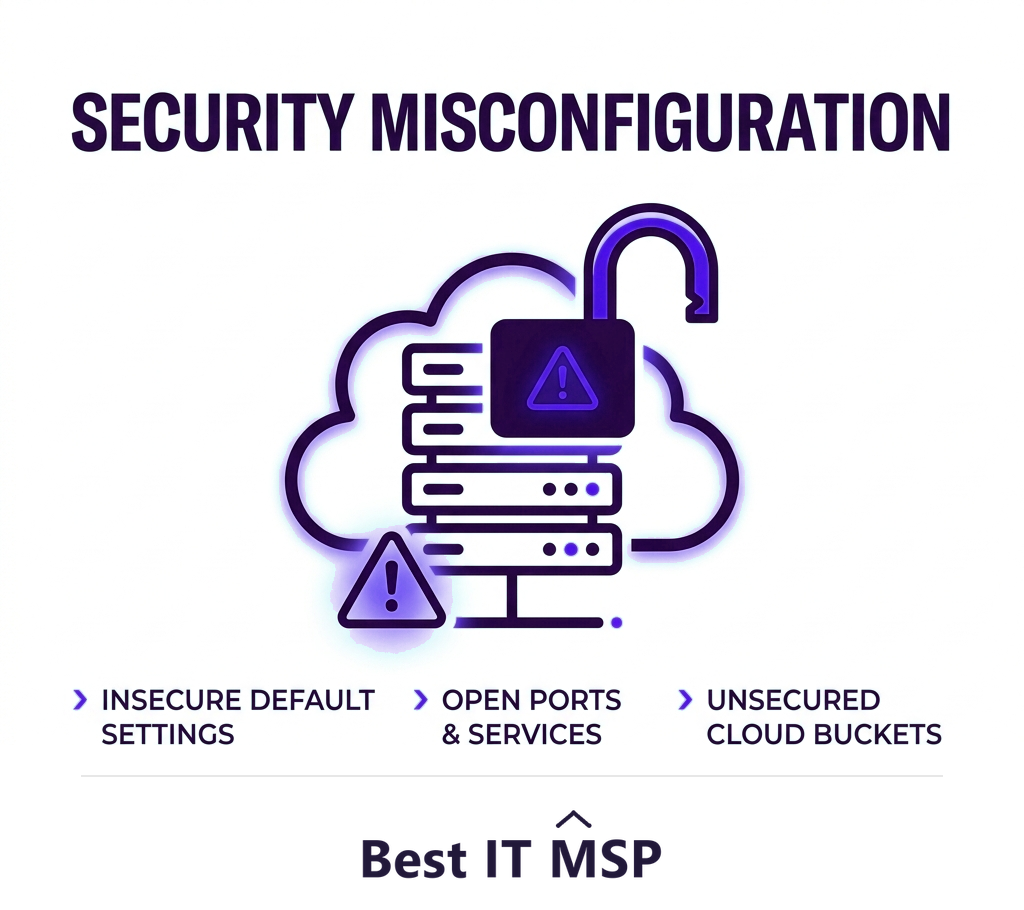
- Security misconfiguration is insecure setup: defaults left on, open permissions, exposed storage, unnecessary features.
- It is a leading cause of breaches, especially in the cloud, and almost always preventable.
- Common culprits include default credentials, public storage buckets, over-broad access, and verbose error messages.
- The fixes are hardening to secure baselines, least-privilege access, and automated configuration scanning.
- Because cloud changes constantly, misconfiguration must be monitored continuously, not fixed once.
What is security misconfiguration?
Security misconfiguration is when a system, application, network device, or cloud service is set up in an insecure way, leaving a gap an attacker can exploit. It is not a flaw in the software itself; it is a mistake in how the software is configured. Common forms include leaving default settings or passwords in place, granting overly broad permissions, exposing storage or databases to the public internet, leaving unnecessary features or ports enabled, and showing detailed error messages that reveal how a system works. Because the technology is working as designed, misconfiguration is easy to miss, which is exactly what makes it so dangerous.
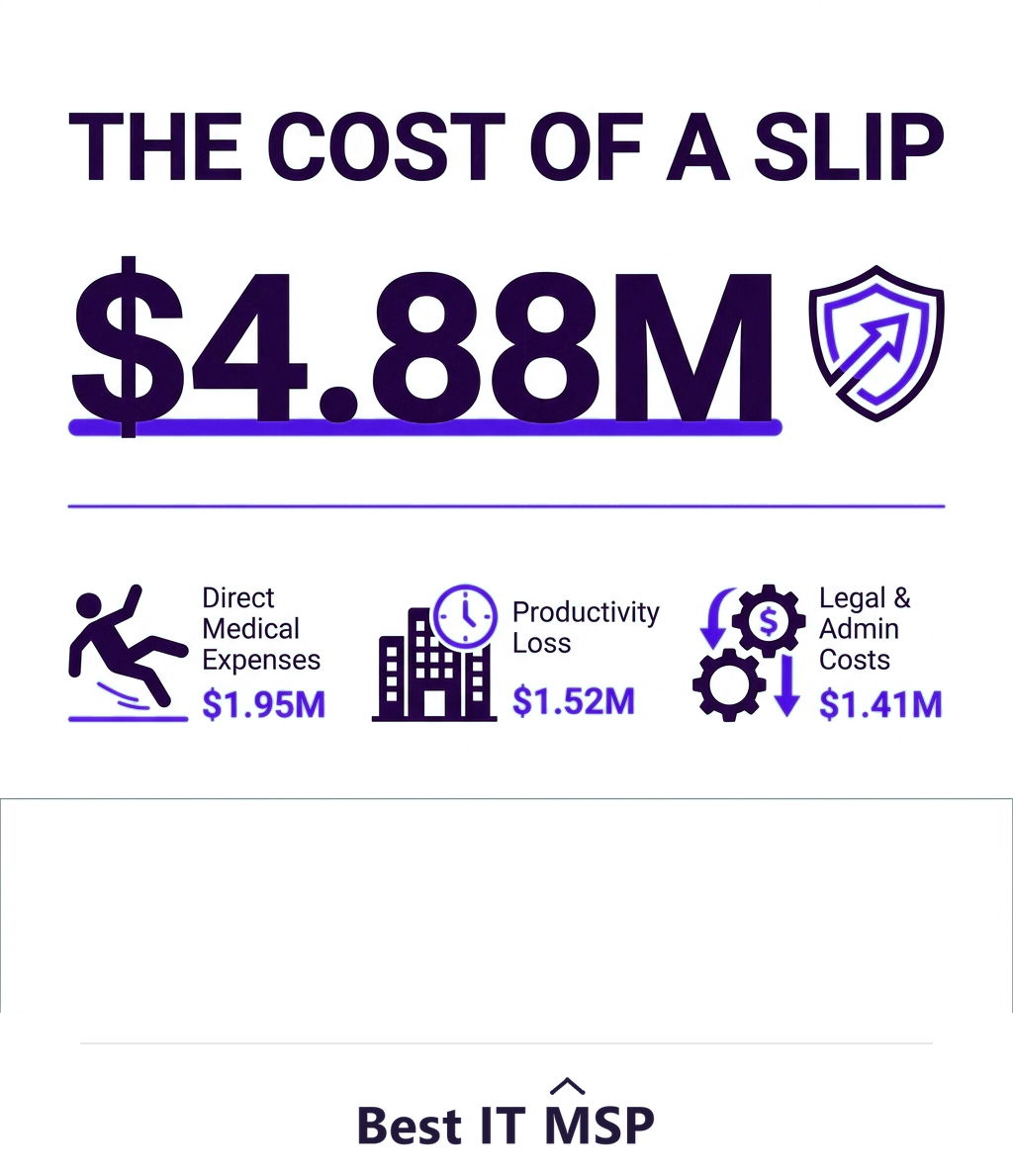
It is also extremely common. Security misconfiguration consistently ranks among the top categories in the OWASP Top 10 list of web application risks, and it is a leading cause of cloud breaches in particular. The cost when it is exploited is severe: the average data breach reached $4.88 million in 2024 and takes about 258 days to identify and contain. This guide explains the common misconfigurations and how to fix them. It pairs with our cloud security and cybersecurity services overviews.
Common examples of security misconfiguration
Misconfigurations show up in predictable places. These are the ones that cause the most incidents:
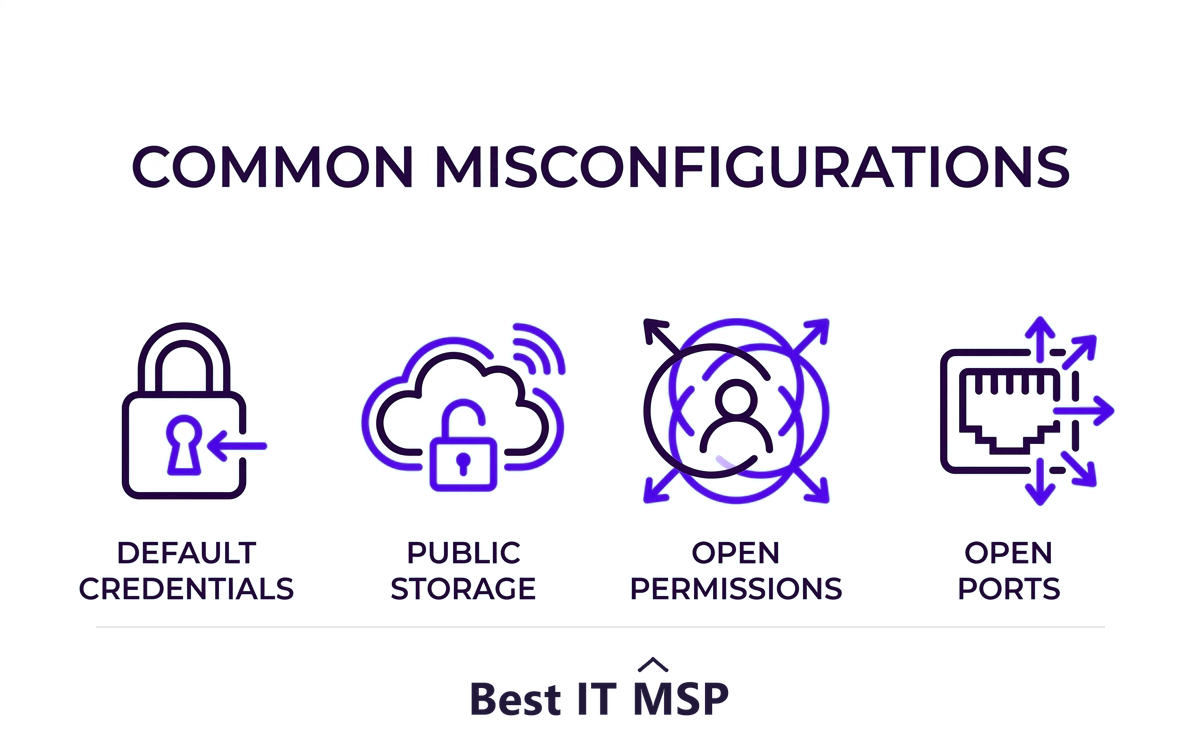
- <strong>Default credentials and settings.</strong> Devices and software shipped with default usernames, passwords, and settings that were never changed, an open door attackers check first.
- <strong>Publicly exposed cloud storage.</strong> Storage buckets or databases left open to the internet, the cause of many large data leaks.
- <strong>Over-broad permissions.</strong> Accounts and services granted far more access than they need, so one compromise reaches everything.
- <strong>Unnecessary features and open ports.</strong> Unused services, ports, and accounts left enabled, expanding the attack surface for no benefit.
- <strong>Missing security hardening.</strong> Systems deployed without applying secure configuration baselines, encryption, or proper access controls.
- <strong>Verbose error messages.</strong> Detailed errors that leak system information attackers can use to plan an attack.
Why misconfiguration is so common and so dangerous
Misconfiguration is rampant for understandable reasons. Modern systems, especially cloud platforms, have an enormous number of settings, and the secure choice is rarely the default. Teams move fast, prioritize getting things working over locking them down, and rarely revisit settings once a system is live. In the cloud, the shared responsibility model means securing configurations is your job, not the provider's, and many businesses do not realize it. The result is that an insecure default or a single careless setting can expose everything, which is why misconfiguration causes so many breaches.
What makes it especially dangerous is that it is silent. Unlike a crashed server, a misconfiguration produces no symptom, the system works perfectly while quietly exposing data, so it often goes unnoticed until an attacker or a researcher finds it. That gap is part of why breaches take so long to detect, and why the eventual cleanup is so costly, running well beyond $100,000 for every hour of resulting downtime once an incident forces systems offline.
How to find and fix security misconfiguration
The fixes are well established, and most are about discipline rather than expensive tools:
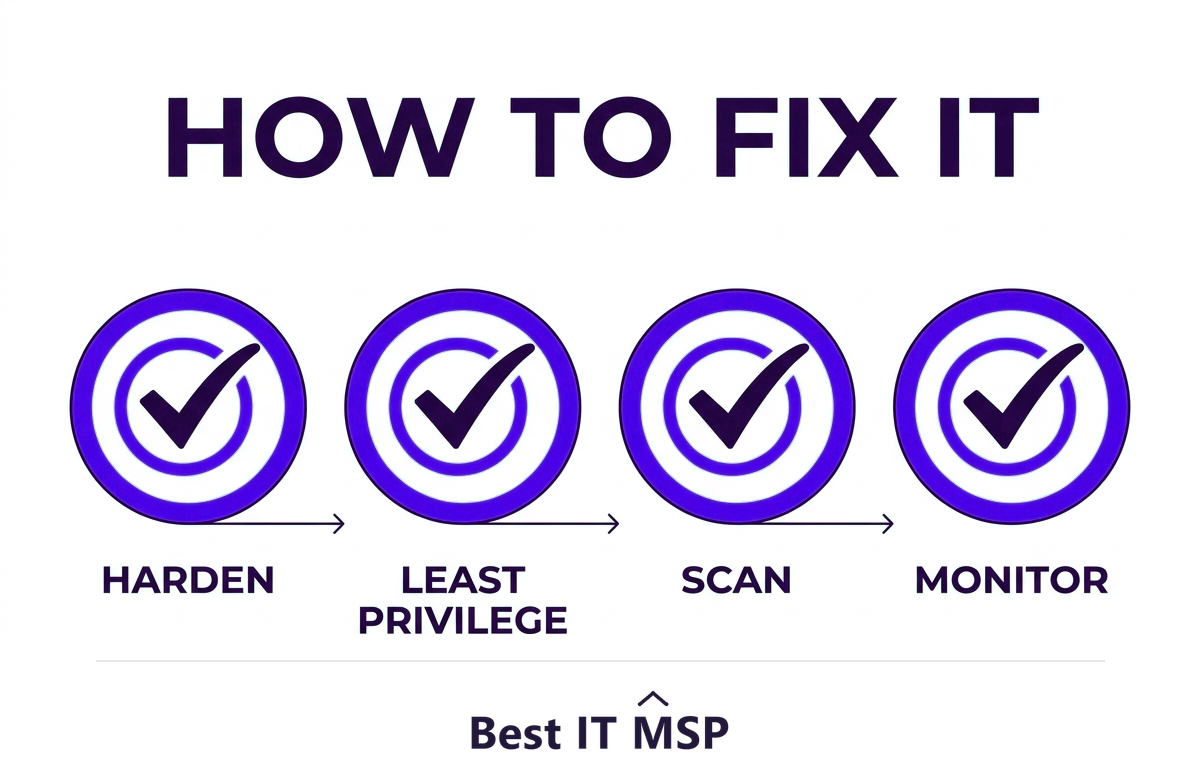
- <strong>Harden to a secure baseline.</strong> Apply a defined, secure configuration standard to every system instead of accepting defaults. Change default credentials immediately.
- <strong>Apply least privilege.</strong> Give every account and service only the access it needs, so a single compromise cannot reach everything.
- <strong>Remove what you do not need.</strong> Disable unused features, ports, services, and accounts to shrink the attack surface.
- <strong>Scan configurations automatically.</strong> Use automated tools, including cloud security posture management, to continuously check settings against secure baselines and flag drift.
- <strong>Standardize and automate deployment.</strong> Build systems from secure, repeatable templates so every deployment starts hardened rather than relying on manual setup.
- <strong>Monitor and review continuously.</strong> Re-check configurations regularly, because environments change and new misconfigurations appear over time.
Misconfiguration in the cloud
Cloud environments deserve special attention, because they are where misconfiguration causes the most damage today. The cloud's flexibility means thousands of settings, and a single one, a storage bucket set to public, an over-permissive access policy, can expose vast amounts of data instantly. As more business moves to the cloud, in a market where public cloud spending is forecast to top $723 billion in 2025, the attack surface for misconfiguration grows with it. This is why cloud security posture management, which continuously audits cloud settings against secure baselines, has become essential. The shared responsibility model makes it clear: the provider secures the cloud, but configuring your part securely is on you.
Making secure configuration stick
A simple example shows how easily it happens. A developer spins up a cloud storage bucket to share files during a project and sets it to public for convenience, meaning to lock it down later. Months pass, the project ends, and that bucket still holds sensitive data, indexed and reachable by anyone who finds the address. No alarm ever sounded, because nothing broke. This is the pattern behind a striking share of cloud data leaks: not a sophisticated hack, but a convenient shortcut nobody revisited. Continuous configuration scanning exists precisely to catch these quiet, forgotten exposures before an outsider does.
The hardest part of fixing misconfiguration is not knowing what to do; it is doing it consistently across a changing environment. New systems are deployed, settings drift, and staff move on, so a configuration that was secure last quarter may not be today. Because the human element features in 68 percent of breaches, a single person's oversight, a forgotten setting or a shortcut taken under deadline, is often all it takes. This demands ongoing attention and expertise that is scarce amid a global shortfall of about 4.8 million cybersecurity professionals, and getting it wrong is costly given reported cybercrime losses topping $12.5 billion in a single year. Many businesses address this by working with a managed provider that hardens systems, scans for misconfiguration continuously, and maintains secure baselines, part of why the managed services market is projected to grow to about $879 billion over the next decade.
If you want to find and close the misconfigurations hiding in your systems and cloud, start with a provider that runs configuration scanning and hardening. Browse vetted, merit-ranked firms by city in the Best IT MSP directory, where ranking is earned on rating and verified data.
FAQ
What is security misconfiguration?
Security misconfiguration is when a system, application, network device, or cloud service is set up insecurely, leaving a gap an attacker can exploit. It is a mistake in configuration, not a flaw in the software. Common forms include default passwords, over-broad permissions, publicly exposed storage, unnecessary features left enabled, and verbose error messages that reveal system details.
What are examples of security misconfiguration?
Examples include leaving default credentials and settings in place, exposing cloud storage buckets or databases to the public internet, granting over-broad permissions, leaving unused features and ports enabled, deploying systems without security hardening, and showing detailed error messages that leak information. Publicly exposed cloud storage causes many of the largest data leaks.
Why is security misconfiguration so common?
Modern systems, especially cloud platforms, have an enormous number of settings, and the secure choice is rarely the default. Teams move fast, prioritize getting things working, and rarely revisit settings. In the cloud, securing configurations is the customer's responsibility under the shared responsibility model, which many businesses do not fully realize.
Why is misconfiguration so dangerous?
Because it is silent. Unlike a crash, a misconfiguration produces no symptom, the system works perfectly while quietly exposing data, so it often goes unnoticed until an attacker or researcher finds it. A single insecure setting can expose everything, and the average breach takes about 258 days to identify and contain, letting damage compound.
How do you fix security misconfiguration?
Harden every system to a secure baseline and change default credentials, apply least-privilege access, remove unused features and ports, scan configurations automatically with tools like cloud security posture management, build systems from secure repeatable templates, and monitor and review continuously because environments change and new misconfigurations appear over time.
How do I prevent cloud misconfiguration?
Use cloud security posture management to continuously audit cloud settings against secure baselines and flag risky changes, apply least-privilege access policies, never expose storage publicly unless required, and standardize deployments from hardened templates. Remember the shared responsibility model: the provider secures the cloud, but configuring your part securely is your responsibility.
Best IT MSP is the independent directory of vetted managed IT and security providers across North America. Compare merit-ranked firms in your city that harden systems and scan for misconfiguration. No pay-to-play.