DDoS Attacks Explained (With Real Examples)
A DDoS (Distributed Denial of Service) attack floods a website, server, or network with junk traffic from many compromised machines at once, overwhelming it so legitimate users cannot get through. Real examples have knocked major services offline and been used for extortion. The three main types are volumetric, protocol, and application-layer attacks.
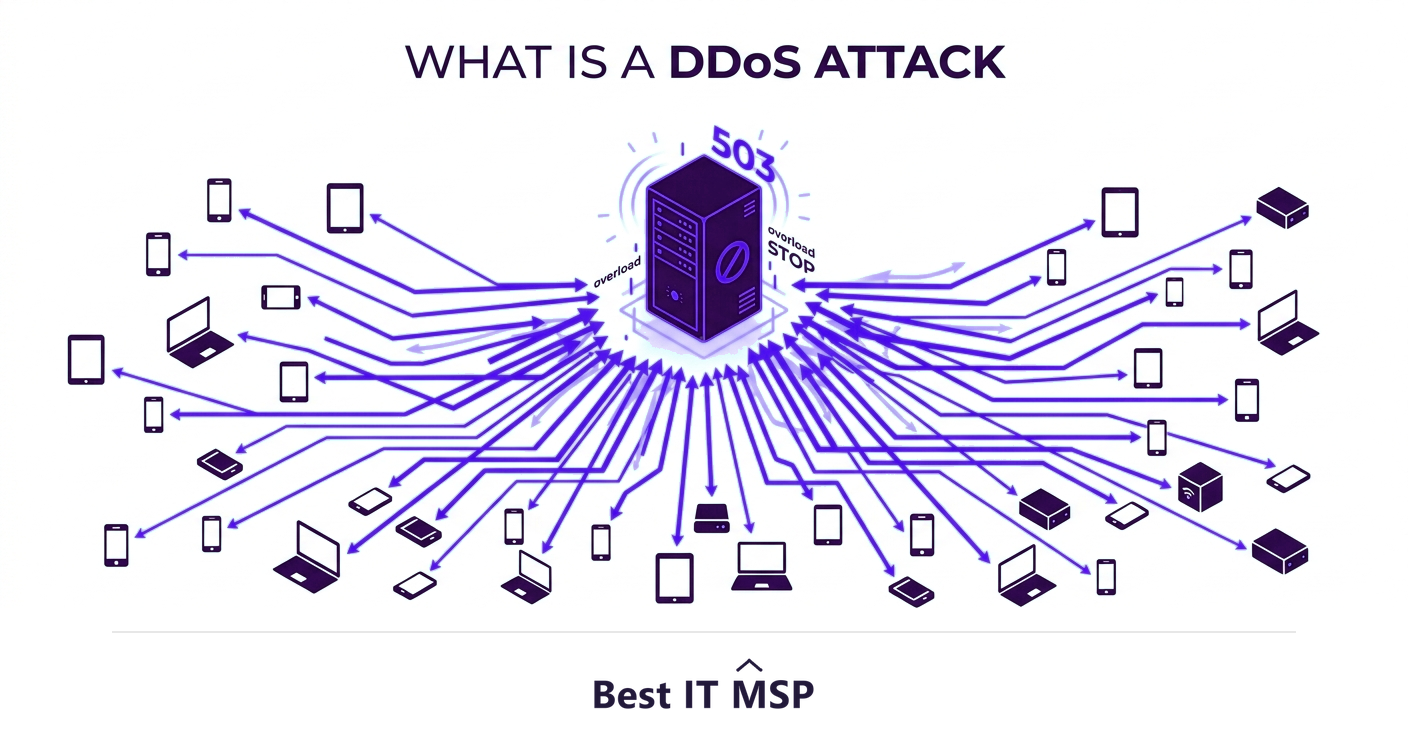
- A DDoS attack overwhelms a target with traffic from many sources at once, taking it offline.
- Attackers use botnets, networks of compromised devices, to generate the flood.
- The three main types are volumetric, protocol, and application-layer attacks.
- Real DDoS attacks have downed major services and are used for extortion and distraction.
- Defense requires dedicated DDoS mitigation (scrubbing, CDNs, rate limiting), not just a firewall.
What is a DDoS attack?
A DDoS attack, short for Distributed Denial of Service, is an attempt to take a website, server, or network offline by flooding it with more traffic than it can handle. The distributed part is what makes it powerful: instead of one machine, the attacker commands many, often thousands, of compromised computers and devices at once, all hammering the target simultaneously. Overwhelmed by the flood of fake requests, the target slows to a crawl or crashes entirely, and legitimate users, your customers, cannot get through. Think of it as deliberately jamming a store's doorway with a crowd so real shoppers cannot enter.
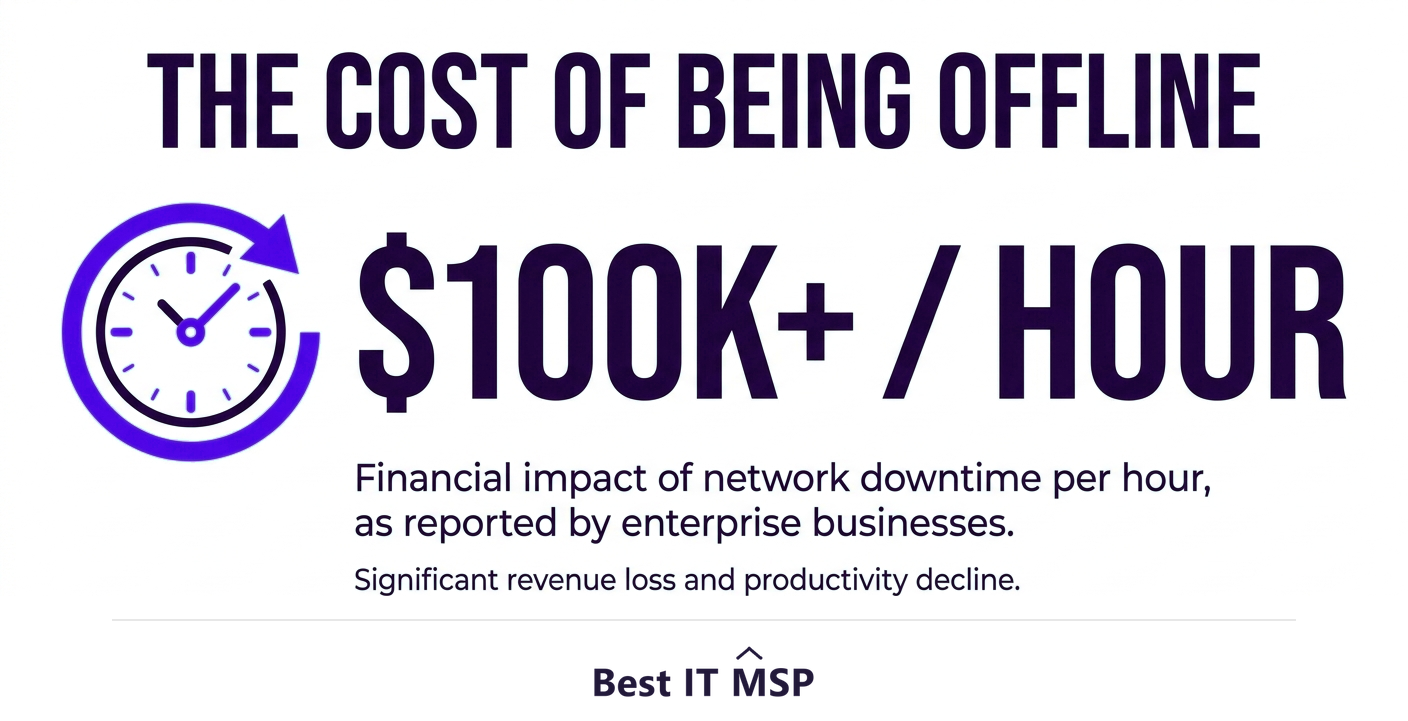
DDoS attacks are common, disruptive, and surprisingly cheap for attackers to launch, which is why every business with an online presence is a potential target. The damage is real, because being knocked offline is pure downtime, and an hour of downtime costs most organizations more than $100,000, while reported cybercrime losses topped $12.5 billion in a single year. This guide explains how DDoS attacks work, real examples, the types, and how to defend. It pairs with our network support and cybersecurity services overviews.
How a DDoS attack works
The engine behind most DDoS attacks is a botnet: a network of devices, PCs, servers, routers, and increasingly insecure smart (IoT) devices, that have been quietly infected with malware and can be controlled remotely by the attacker. The owners usually have no idea their device is part of it. On command, the attacker directs the entire botnet to send requests to the target all at once. Because the traffic comes from thousands of different, legitimate-looking sources spread around the world, it is hard to simply block, you cannot just ban one IP address. The target's finite resources, its bandwidth, its server capacity, its connection limits, get exhausted by the flood, and service fails for everyone.
Real DDoS attack examples
DDoS attacks are not theoretical; some have made headlines. In one of the most famous, attackers used a massive botnet of compromised IoT devices to take down a major internet infrastructure provider, briefly knocking offline a swath of well-known websites that depended on it. Other record-breaking attacks have hit major technology platforms with floods of traffic measured in the terabits per second. Beyond the giants, countless smaller businesses are hit every day with attacks that never make the news but still take their sites offline. Increasingly, DDoS is used for extortion, the attacker launches or threatens an attack and demands payment to stop, and as a smokescreen to distract security teams while another attack is carried out. The lesson from every example is the same: any online service can be a target, and the disruption is immediate.
The three main types of DDoS attack
DDoS attacks are usually grouped into three categories by what they target:
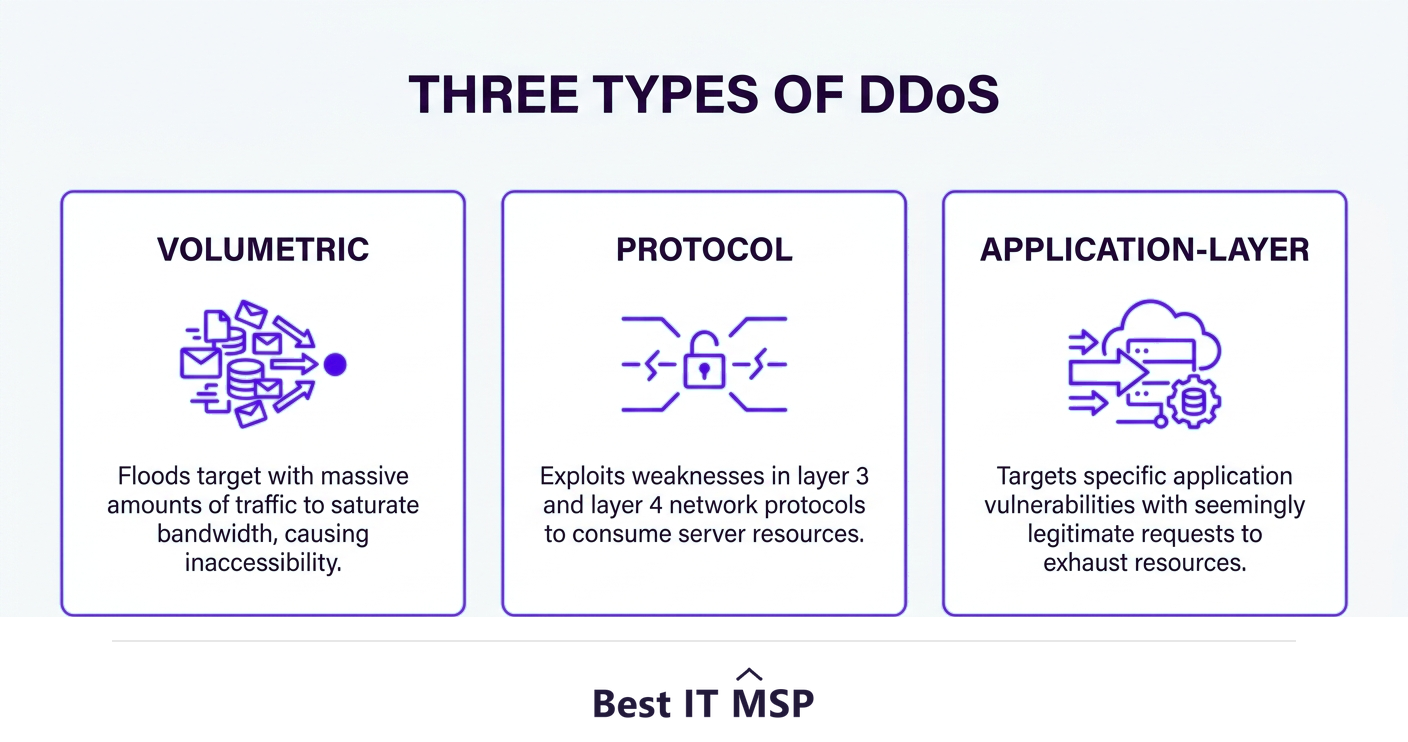
- <strong>Volumetric attacks.</strong> The most common type: simply flood the target with massive amounts of traffic to saturate its bandwidth. Measured in bits per second.
- <strong>Protocol attacks.</strong> Exploit weaknesses in network protocols (like SYN floods) to exhaust server or firewall resources such as connection tables. Measured in packets per second.
- <strong>Application-layer attacks.</strong> Target a specific application or web page with requests that look legitimate but overwhelm it, often harder to detect because the traffic mimics real users. Measured in requests per second.
Sophisticated attacks combine types, and attackers shift tactics during an attack, which is why effective defense has to handle all three rather than just one.
The business impact of a DDoS attack
The immediate impact is downtime: your website, application, or online service is unavailable, which directly costs revenue and blocks customers, at a rate exceeding $100,000 an hour for most organizations. But the damage goes further. There is reputational harm, because customers who cannot reach you, or see your site is down, lose confidence. There is the cost of response and recovery. And there is the danger of DDoS as a distraction: while your team scrambles to restore service, attackers may be quietly breaching your systems elsewhere, which matters when the average breach costs $4.88 million and takes about 258 days to identify and contain. A DDoS attack is rarely just an inconvenience; it is a business event.
How to defend against DDoS attacks
A standard firewall alone cannot stop a large DDoS attack, because the flood overwhelms it too. Effective defense uses purpose-built measures:
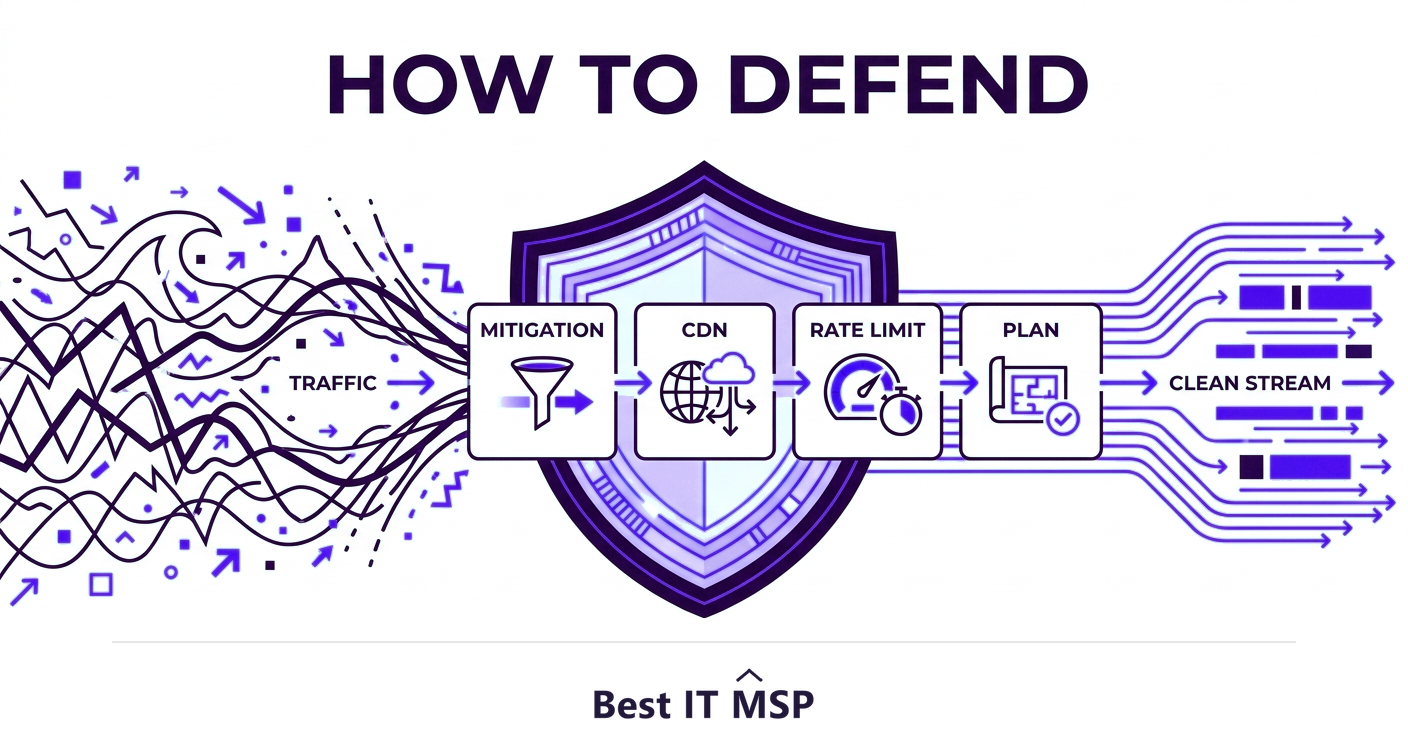
- <strong>DDoS mitigation service.</strong> Specialized services (often cloud-based) that detect and mitigate attack traffic, scrubbing it out before it reaches you and absorbing massive floods.
- <strong>Content delivery network (CDN).</strong> A CDN distributes your content across many servers, adding capacity and a layer that absorbs and disperses attack traffic.
- <strong>Rate limiting and traffic filtering.</strong> Capping how many requests a single source can make and filtering obviously malicious patterns.
- <strong>Sufficient capacity and redundancy.</strong> Architecture that can scale and reroute, so a flood is harder to overwhelm.
- <strong>An incident response plan.</strong> Knowing in advance who does what and how to engage your mitigation provider when an attack starts, so response is fast.
The key is to have protection in place before an attack, because trying to arrange mitigation mid-attack, while your site is down, is far slower and more painful.
Getting DDoS protection right
DDoS defense is specialized, and most small and midsize businesses neither have the in-house expertise nor want to build it, especially amid a global shortfall of about 4.8 million cybersecurity professionals. The practical approach is to use managed DDoS protection, typically through a cloud provider or a managed IT and security provider that has the capacity and tools to absorb attacks and the expertise to respond. It is part of why the managed services market is projected to grow from about $330 billion in 2024 to about $879 billion over the next decade, as more of business depends on always-on online services in a cloud-driven market where public cloud spending is forecast to top $723 billion in 2025.
If your business depends on its website or online services, DDoS protection is not optional. To find a provider that can put it in place before you need it, browse vetted, merit-ranked firms by city in the Best IT MSP directory, where ranking is earned on rating and verified data.
FAQ
What is a DDoS attack?
A DDoS (Distributed Denial of Service) attack takes a website, server, or network offline by flooding it with more traffic than it can handle, sent from many compromised machines at once. Overwhelmed by fake requests, the target slows or crashes and legitimate users cannot get through. It is like deliberately jamming a store's doorway so real customers cannot enter.
How does a DDoS attack work?
Attackers use a botnet, a network of devices infected with malware and controlled remotely, often including insecure smart devices. On command, the entire botnet sends requests to the target simultaneously. Because the traffic comes from thousands of different, legitimate-looking sources worldwide, it is hard to block, and it exhausts the target's bandwidth, server capacity, or connections until service fails.
What are the types of DDoS attacks?
There are three main types: volumetric attacks that flood bandwidth with massive traffic, protocol attacks that exploit network protocols (like SYN floods) to exhaust server or firewall resources, and application-layer attacks that target a specific app or page with seemingly legitimate requests. Sophisticated attacks combine types and shift tactics during the attack.
What is a real example of a DDoS attack?
One famous example used a massive botnet of compromised IoT devices to take down a major internet infrastructure provider, briefly knocking offline many well-known websites that relied on it. Other record-breaking attacks have hit big platforms with traffic in the terabits per second, while countless smaller businesses are hit daily by attacks that never make the news.
What is the business impact of a DDoS attack?
The immediate impact is downtime, costing most organizations more than $100,000 an hour in lost revenue and blocked customers, plus reputational harm and recovery costs. DDoS is also used as a distraction: while your team restores service, attackers may breach your systems elsewhere, which matters given the average breach costs $4.88 million.
How do you defend against a DDoS attack?
A standard firewall alone cannot stop a large DDoS attack. Effective defense uses a DDoS mitigation service that scrubs attack traffic, a content delivery network that adds capacity, rate limiting and traffic filtering, sufficient capacity and redundancy, and an incident response plan. Crucially, this protection must be in place before an attack, not arranged mid-attack.
Best IT MSP is the independent directory of vetted managed IT and security providers across North America. Compare merit-ranked firms in your city that deploy DDoS mitigation and resilient networks. No pay-to-play.