Why Network Security Is Important for Your Business
Network security is important because it protects the data, systems, and connections your business runs on from attack, theft, and disruption. Without it, a single breach or outage can cost millions, halt operations, expose customer data, and destroy trust.
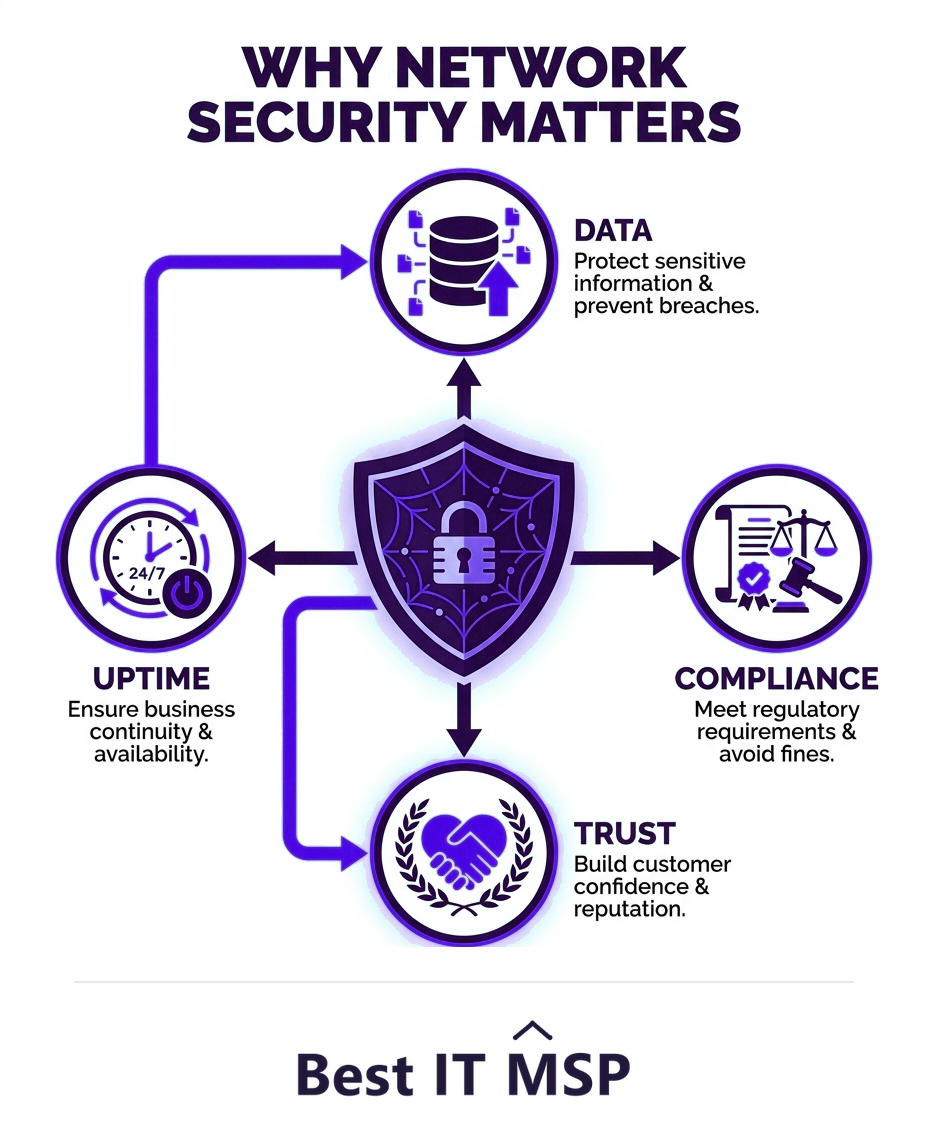
- Network security protects your data, systems, and connections from unauthorized access, theft, and disruption.
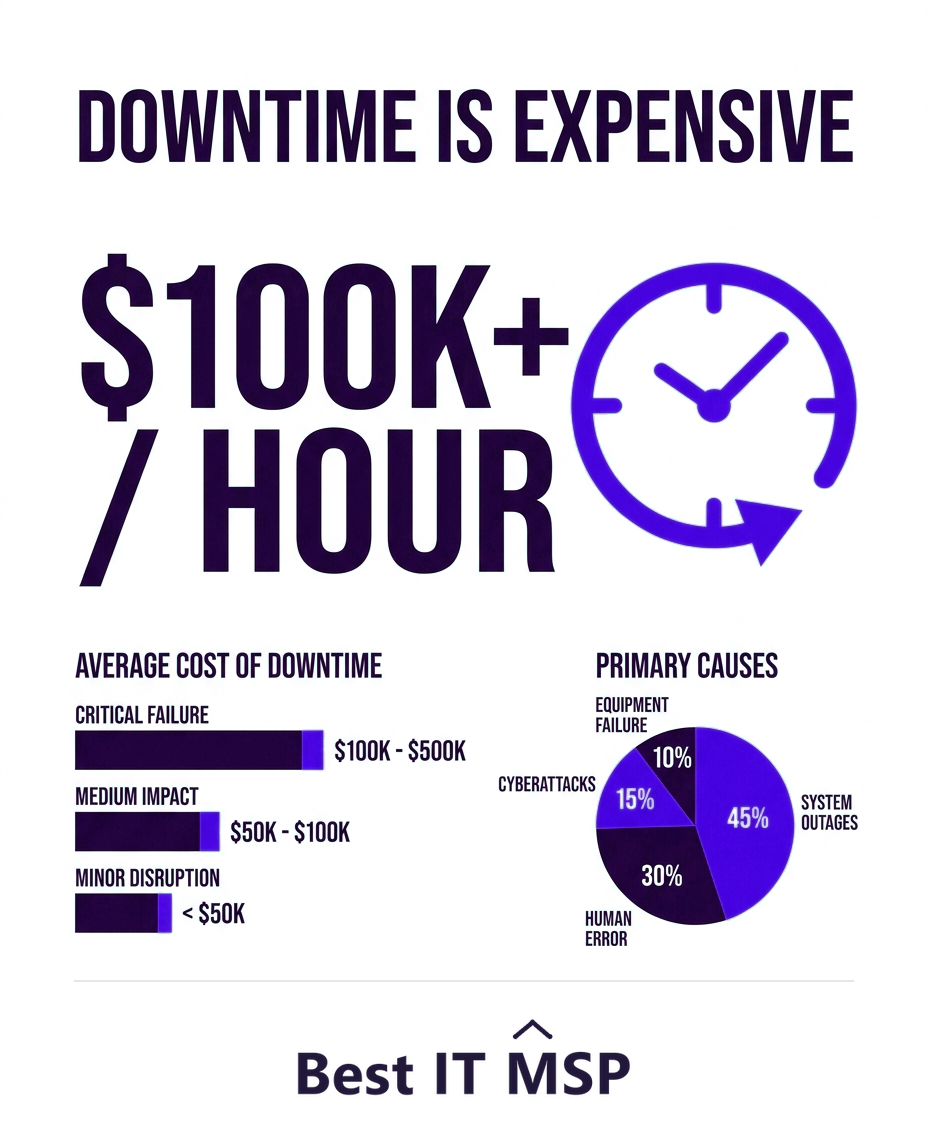
- The cost of weak security is severe: breaches average millions and downtime runs over $100,000 an hour.
- It defends against the real threats businesses face daily: ransomware, phishing, and data theft.
- Strong network security also underpins compliance and preserves customer trust and reputation.
- Most small and midsize businesses get the best protection by layering defenses with a managed provider.
What network security protects, and why it matters
Network security is the combination of policies, technologies, and practices that protect your business network, the data on it, the systems connected to it, and the people using it, from unauthorized access, misuse, and disruption. Almost everything a modern business does runs across that network: email, files, applications, payments, customer records, and the internet connection itself. If the network is compromised, so is the business. That is why network security has moved from a back-office IT task to a core business priority that protects revenue, reputation, and survival.
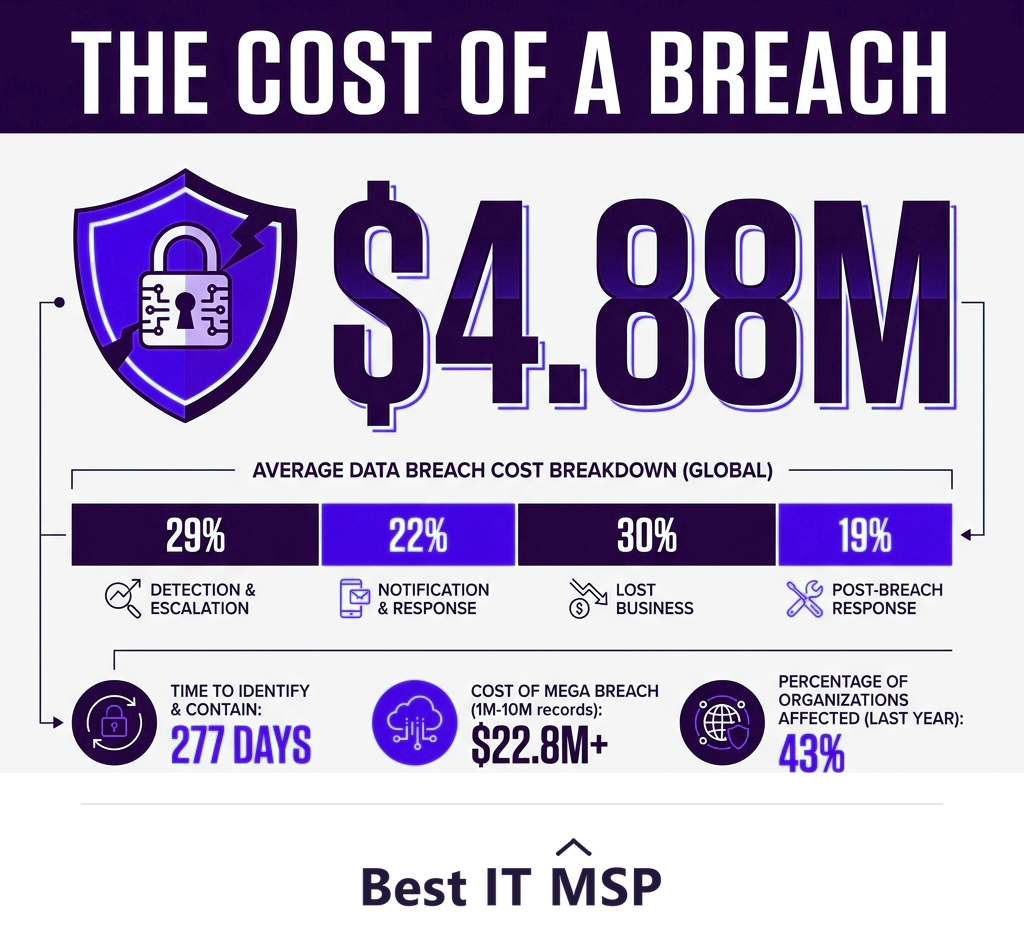
The reason it matters so much is the scale of what is at stake when it fails. A single incident can expose customer data, halt operations, trigger regulatory penalties, and permanently damage trust. The numbers make the case plainly: the average data breach now costs $4.88 million and reported cybercrime losses topped $12.5 billion in a single year. This guide explains exactly why network security is important and what it protects against. It pairs with our network support and cybersecurity services overviews.
1. It protects your most valuable asset: data
Your business runs on data: customer records, financial information, intellectual property, and credentials. Network security keeps that data confidential and intact by controlling who can reach it and blocking those who should not. When it fails, the cost is staggering and slow to recover from, because the average breach takes about 258 days to identify and contain. By the time many businesses realize they have been breached, attackers have had months inside the network. Strong network security is what shortens or prevents that window.
2. It defends against the threats businesses actually face
Network security is not abstract; it defends against specific, daily threats. The most common are:
- <strong>Ransomware</strong> that encrypts your systems and demands payment, halting the business until you recover.
- <strong>Phishing</strong> that tricks employees into handing over credentials or installing malware, the entry point for most attacks.
- <strong>Malware</strong> that steals data or hijacks systems.
- <strong>Data theft</strong> of customer and financial information, whether by outsiders or insiders.
- <strong>Denial-of-service attacks</strong> that flood your network and knock services offline.
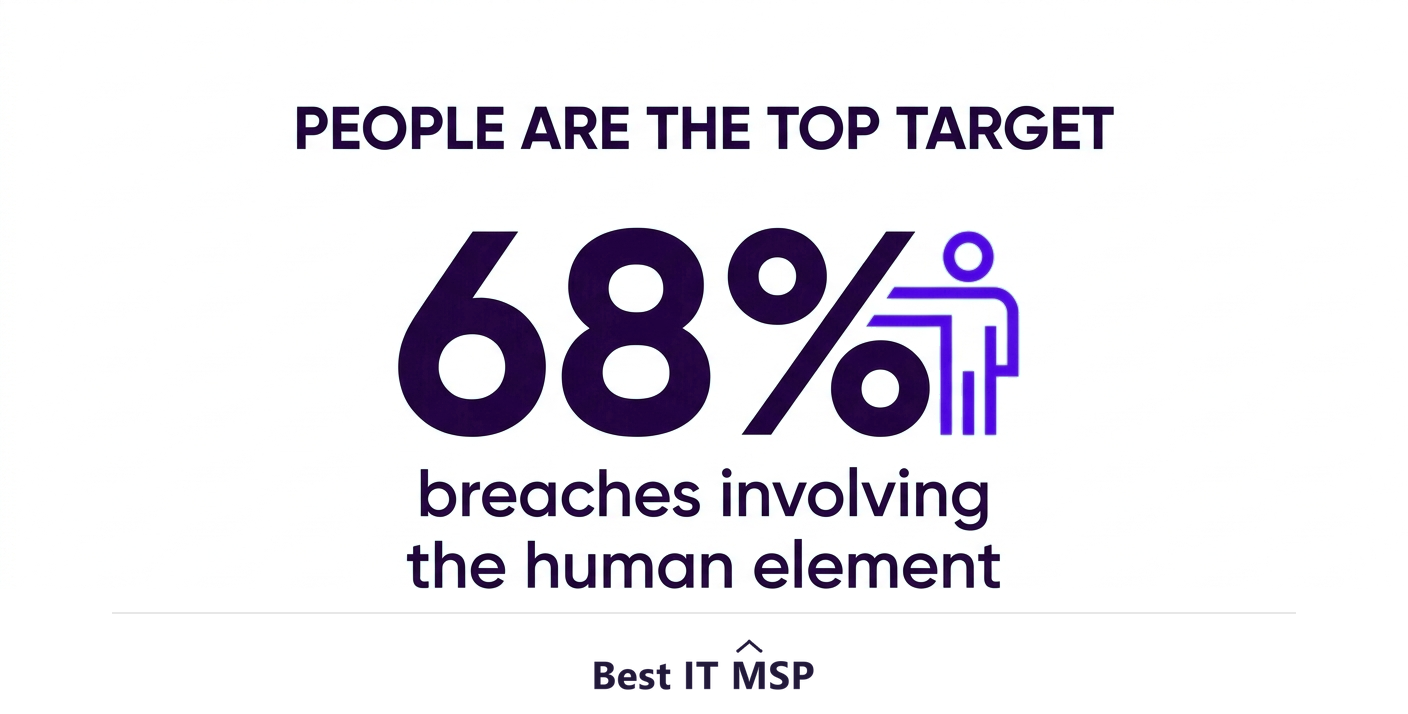
Crucially, most of these begin with people, not technology. Verizon's research found the human element was involved in 68 percent of breaches, which is why network security combines technical defenses with employee awareness.
3. It prevents costly downtime
A security incident does not just expose data; it stops work. Ransomware can freeze every system, and a network outage halts orders, payments, and communication. That downtime is expensive: an hour of downtime costs most organizations more than $100,000. Network security, paired with reliable backup and recovery, keeps the business running and limits how long any disruption lasts. For many companies, preventing a single major outage pays for years of security investment.
4. It supports compliance and avoids penalties
Most businesses now operate under rules that require them to protect data, from HIPAA in healthcare to PCI DSS for payment cards to a growing list of privacy laws. Network security provides the controls, the encryption, access management, monitoring, and documentation, that these frameworks demand. Beyond avoiding fines, demonstrating strong security is increasingly a condition of winning business, because larger customers now audit the security of their suppliers before signing.
5. It preserves trust and reputation
The damage from a breach outlasts the cleanup. Customers who learn their data was exposed lose confidence, and that reputational harm can cost more than the incident itself. In a competitive market, trust is a differentiator, and a visible commitment to protecting customer data is part of the brand. Network security protects the intangible asset that is hardest to rebuild once it is lost: the belief that you can be trusted with sensitive information. A single public breach can undo years of carefully earned goodwill, while a quiet record of protecting data steadily strengthens it.
Why small businesses cannot ignore network security
A dangerous myth is that attackers only target large enterprises. In reality, small and midsize businesses are attractive precisely because they often have weaker defenses, and automated attacks do not discriminate by company size. Many small businesses never fully recover from a serious breach. Yet building strong, layered defenses in-house is hard, given a global shortfall of about 4.8 million cybersecurity professionals that makes skilled staff scarce and expensive. This is why so many small and midsize businesses partner with a managed provider to get enterprise-grade network security at an affordable, predictable cost.
Network security is now business-critical
It is tempting to treat network security as an IT line item, but it has become business-critical infrastructure. The systems it protects, email, payments, customer data, and the internet connection itself, are the systems the business simply cannot operate without. A failure is not an inconvenience; it is an existential risk that can stop revenue, breach contracts, and end customer relationships overnight. Keeping the network secure is therefore as fundamental as locking the doors at night, and just as non-negotiable. Treating security as optional, or as something to bolt on only after an incident, is exactly how a small, preventable problem becomes a company-ending one. The goal is simple to state and demanding to maintain: keep the network, and everything connected to it, secure and available every single day.
How to strengthen your network security
Effective network security is layered, no single tool is enough. The essentials include a properly configured firewall, endpoint and email protection, multi-factor authentication, network monitoring to catch threats early, tested backups, network segmentation so a breach cannot spread freely, and ongoing employee training. Because the threat landscape changes constantly, in a market where public cloud spending reached about $595.7 billion in 2024 and connected systems keep expanding, security has to be maintained continuously rather than set up once. The most practical path for most businesses is to work with a provider that designs, runs, and monitors these layers for you.
If you want help assessing or strengthening your network security, start from a vetted, merit-ranked list of providers by city in the Best IT MSP directory, where ranking is earned on rating and verified data.
FAQ
Why is network security important?
Network security is important because it protects the data, systems, and connections your business depends on from attack, theft, and disruption. Without it, a single breach or outage can cost millions, halt operations, expose customer data, trigger penalties, and destroy trust. It is now a core business priority that protects revenue, reputation, and survival.
What does network security protect against?
It defends against the threats businesses face daily, including ransomware that freezes systems, phishing that steals credentials, malware, data theft, and denial-of-service attacks that knock services offline. Because most attacks begin with people, network security combines technical defenses with employee awareness and monitoring.
How much does a security breach cost a business?
The average data breach now costs $4.88 million and takes about 258 days to identify and contain, while an hour of downtime costs most organizations more than $100,000. Reported cybercrime losses topped $12.5 billion in a single year. For small businesses, the cost and reputational damage of a serious breach can be unrecoverable.
Do small businesses really need network security?
Yes. The myth that attackers only target large enterprises is false; small and midsize businesses are attractive because their defenses are often weaker, and automated attacks do not discriminate by size. Many small businesses never fully recover from a serious breach, making strong, layered network security essential rather than optional.
How can a business improve its network security?
Use layered defenses: a properly configured firewall, endpoint and email protection, multi-factor authentication, continuous network monitoring, tested backups, network segmentation, and regular employee training. Because threats evolve constantly, security must be maintained over time. Many businesses partner with a managed provider to design, run, and monitor these layers.
Is network security the same as cybersecurity?
Network security is a major part of cybersecurity focused specifically on protecting the network and the systems and data connected to it. Cybersecurity is the broader discipline covering all digital assets, including endpoints, applications, and the cloud. A strong program addresses network security as one layer within an overall cybersecurity strategy.
Best IT MSP is the independent directory of vetted managed IT and security providers across North America. Compare merit-ranked firms in your city that design, run, and monitor network security. No pay-to-play.