Auto-renewal and the notice window you already missed
An auto-renewal clause commits you to the term you signed, and to twice that term if you miss one notice deadline. A one-year agreement with a 90-day notice period puts your real decision deadline at month nine. Miss it and you are bound through month 24. The notice period, not the term length, sets your lock-in.
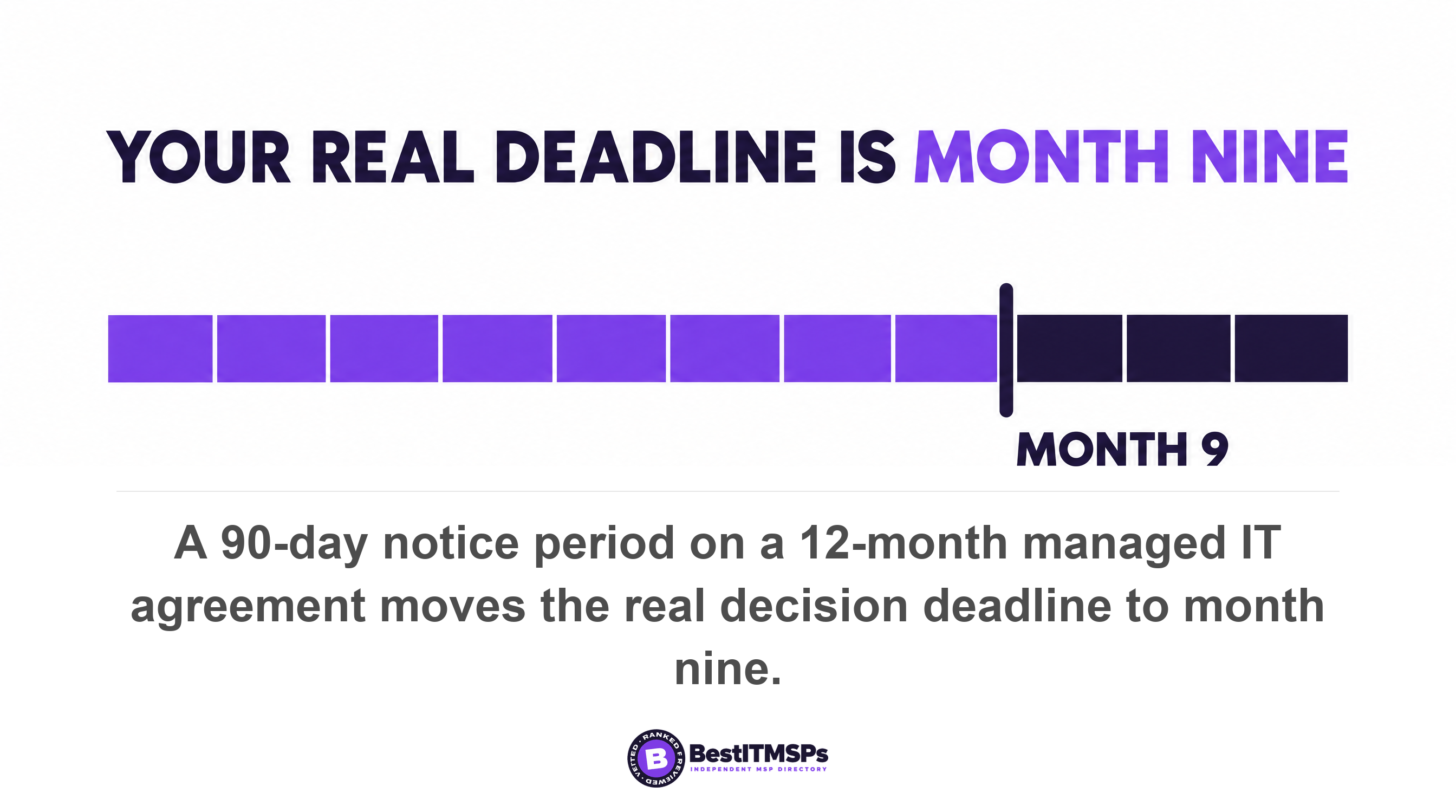
- Your real decision deadline is the term end minus the notice period. A 90-day notice period on a 12-month agreement moves it to month nine, so you decide on nine months of evidence.
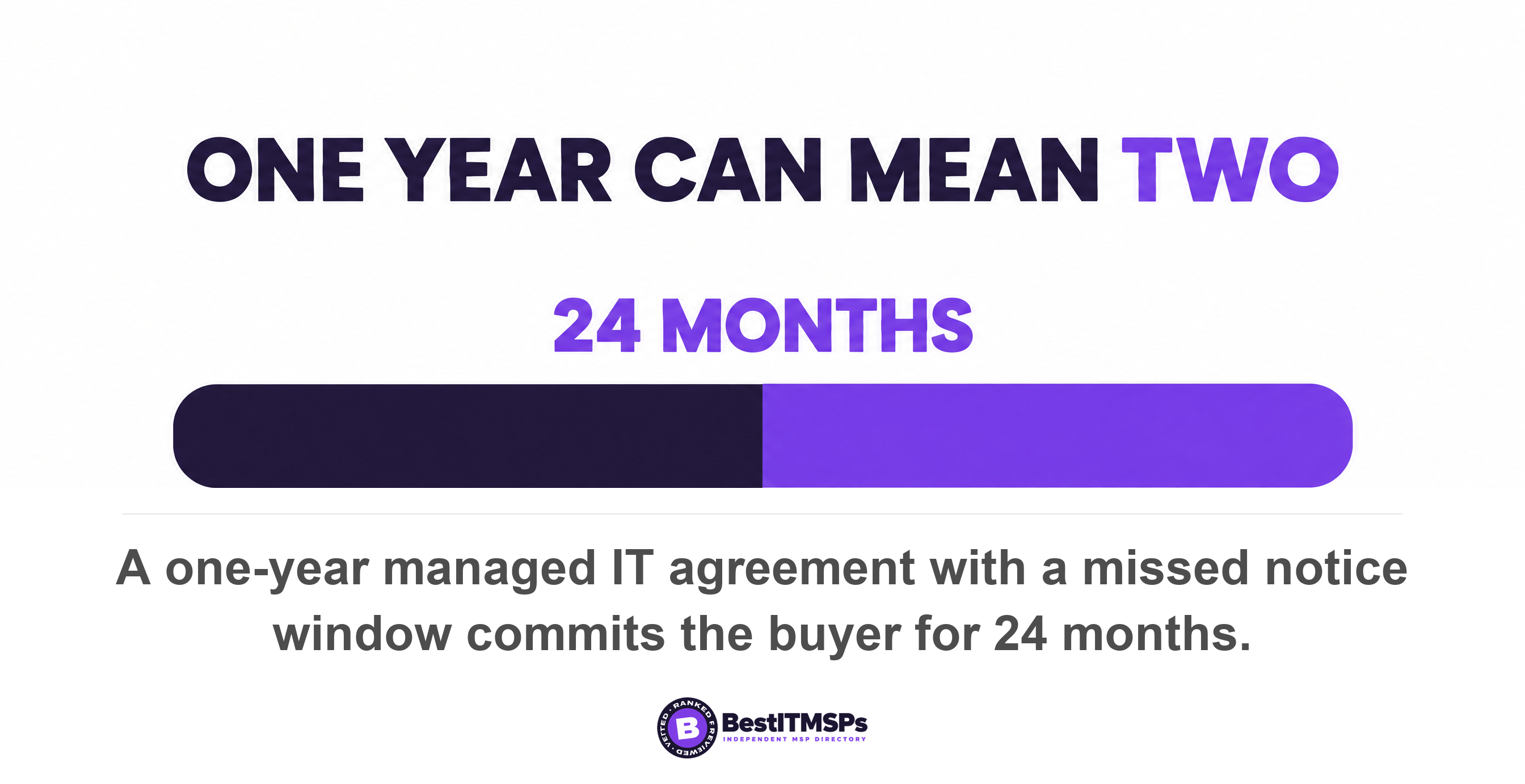
- One missed deadline doubles the commitment. A one-year term plus one missed notice window equals 24 months, and nobody has misled you.
- Shortening the term without shortening the notice makes things worse. Four years on rolling 12-month terms gives you four deadlines to miss instead of two.
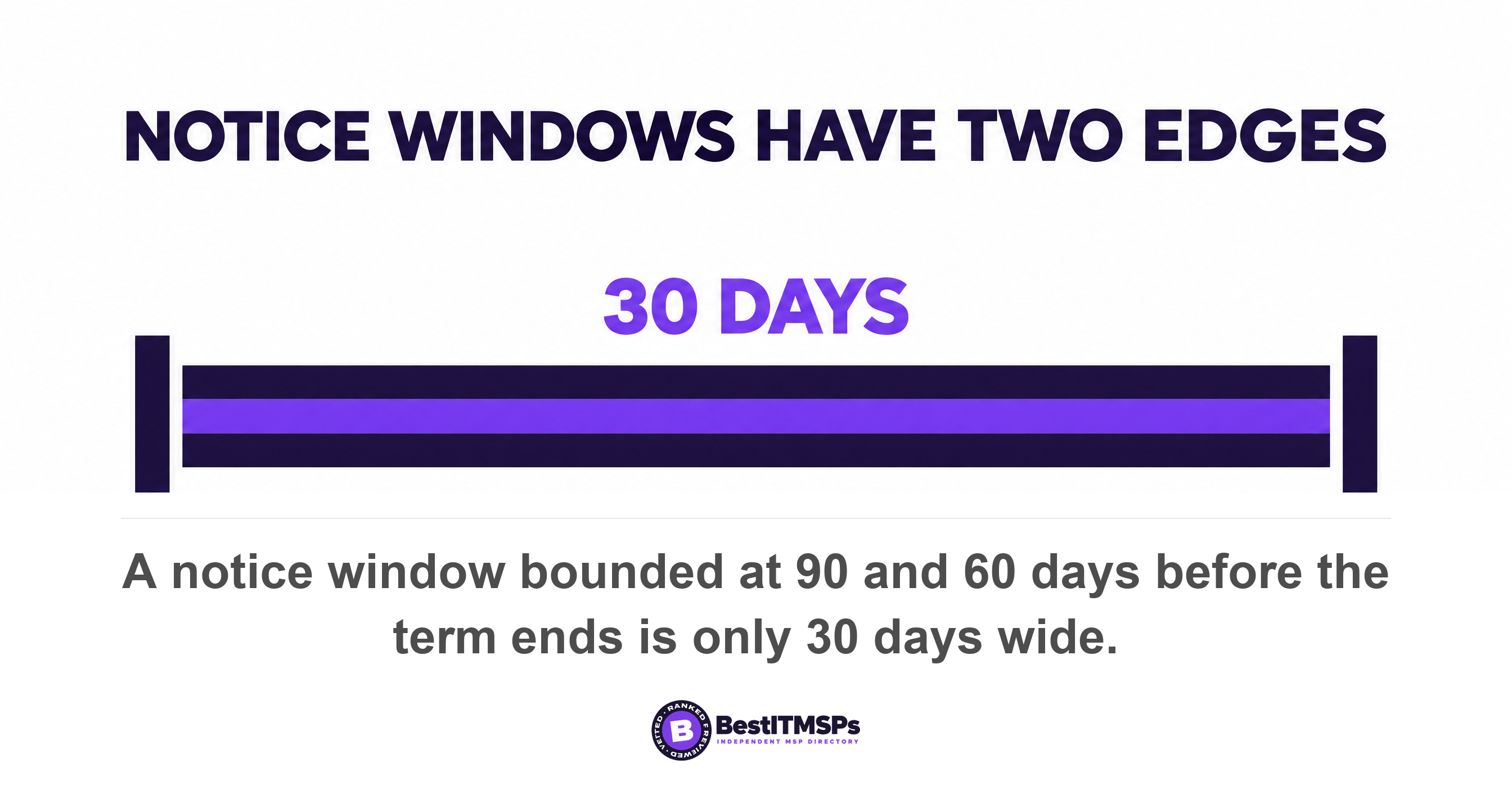
- Some notice windows have two edges. If yours reads not more than 90 and not less than 60 days prior, notice sent in month seven is as void as notice sent in month twelve.
- Most automatic renewal statutes protect consumers, not companies. New York and Wisconsin both reach business contracts, and Wisconsin's notice rule only bites where the term and the renewal each run more than one year.
How long does an auto-renewal clause actually commit you for?
An auto-renewal clause commits you to the term you signed, and to twice that term if you miss one notice deadline. A 12-month agreement with a 90-day notice period gives you nine months to decide. Miss that date and you are committed to month 24. Nobody has misled you. That arithmetic is simply never written out, which is why owners meet their evergreen clause on the day they try to leave rather than on the day they sign.
Three definitions carry the whole post. An auto-renewal clause, also called an evergreen clause, extends your agreement for a fresh term unless you send a notice of non-renewal by a stated date. The notice period is how many days before the term ends that notice has to arrive. The notice window is the span of dates on which notice counts. Every number below comes out of those three sentences.
Automatic renewal is not a trick. California's own statute defines it as a provision in which a paid subscription or purchasing agreement is automatically renewed at the end of a definite term for a subsequent term. The mechanism is legal, ordinary and in most managed IT paperwork. The date is the risk, not the clause.
This post covers renewal mechanics only. Pricing models sit in per-user or per-device pricing, exclusions in out of scope IT support, response commitments in first response or resolution SLA, and the other nine problem clauses in MSP contract red flags. If you are reading this because you want out, read could you leave your IT provider and the switching MSPs transition playbook next.
Why the notice period, not the term length, sets your lock-in
The notice period sets your lock-in because it moves your decision deadline forward while the term end stays where it is. Term length tells you when the agreement ends. The notice period tells you when you lose the power to end it. Those are two different dates, and only the second one is a deadline you can miss.
Work it with real dates. Your master services agreement runs from 1 January 2026 to 31 December 2026, and requires 90 days written notice before the end of the term. Count back 90 days from 31 December and your deadline is 2 October 2026. On 3 October the renewal is already decided, and it is silent. The agreement then runs to 31 December 2027, and the next deadline is 2 October 2027. From signing to the first exit you did not have to argue for is 24 months.
Four numbers fall out of that one worked example.
- Decision horizon. Term length minus notice period. Twelve months minus 90 days leaves nine, so you judge your provider on three quarters of a year.
- Maximum exposure. Two terms. One missed notice window on a 12-month agreement commits you for 24 months.
- Deadline frequency. One per term. A rolling 12-month agreement hands you a deadline every year. A 36-month term hands you one every three years.
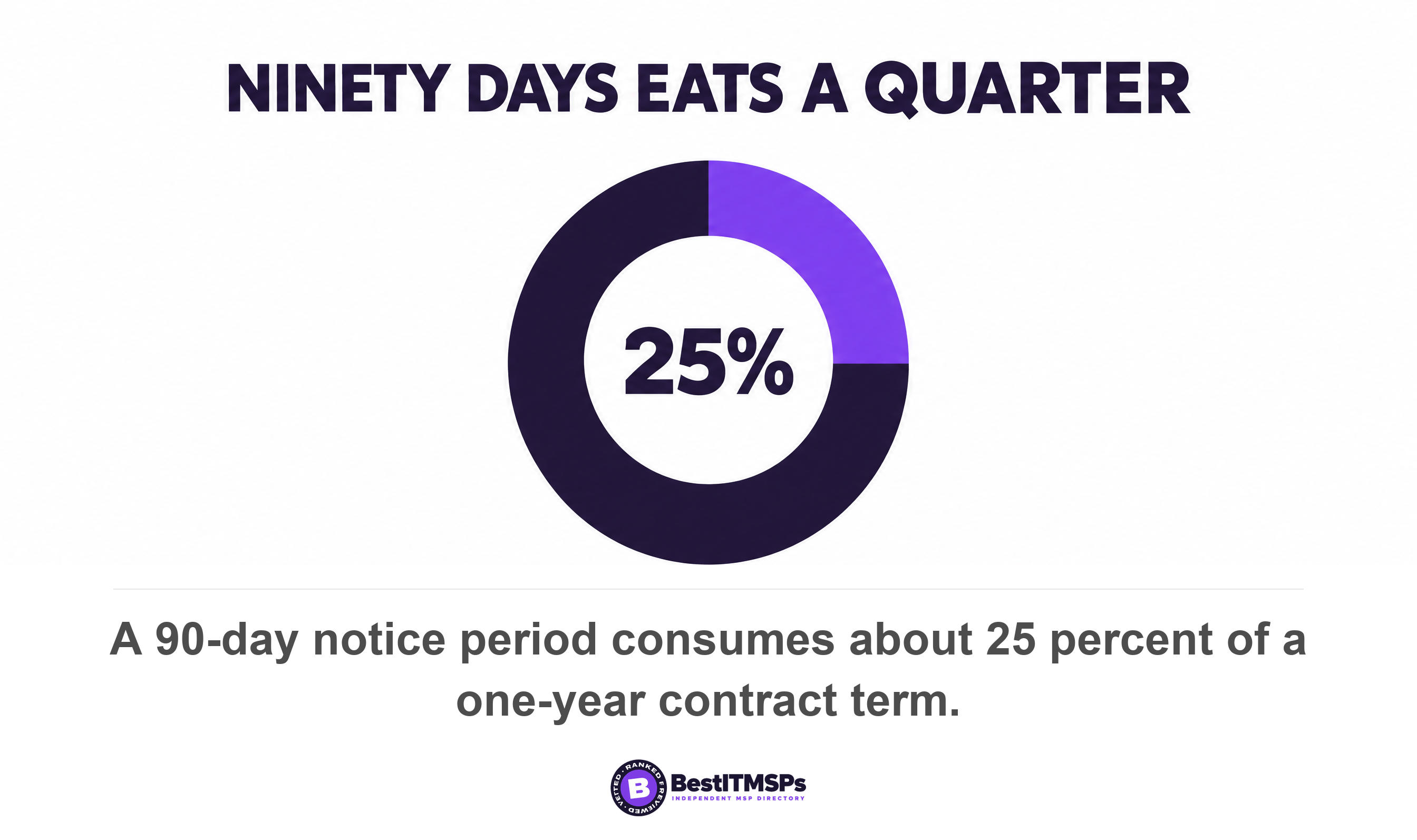
- Proportional cost. Notice days divided by term days. A 90-day notice period eats about 25 percent of a one-year term and about 12 percent of a two-year term.
The fourth number reverses the standard advice. Shortening the term without shortening the notice period leaves you worse off, not better. Four years on rolling 12-month terms with a 90-day notice hands you four deadlines to miss. The same four years on two 24-month terms hands you two. Buyers negotiate the term because it is the number on page one, and leave the notice period alone because it is a clause on page nine. Negotiate the notice period first.
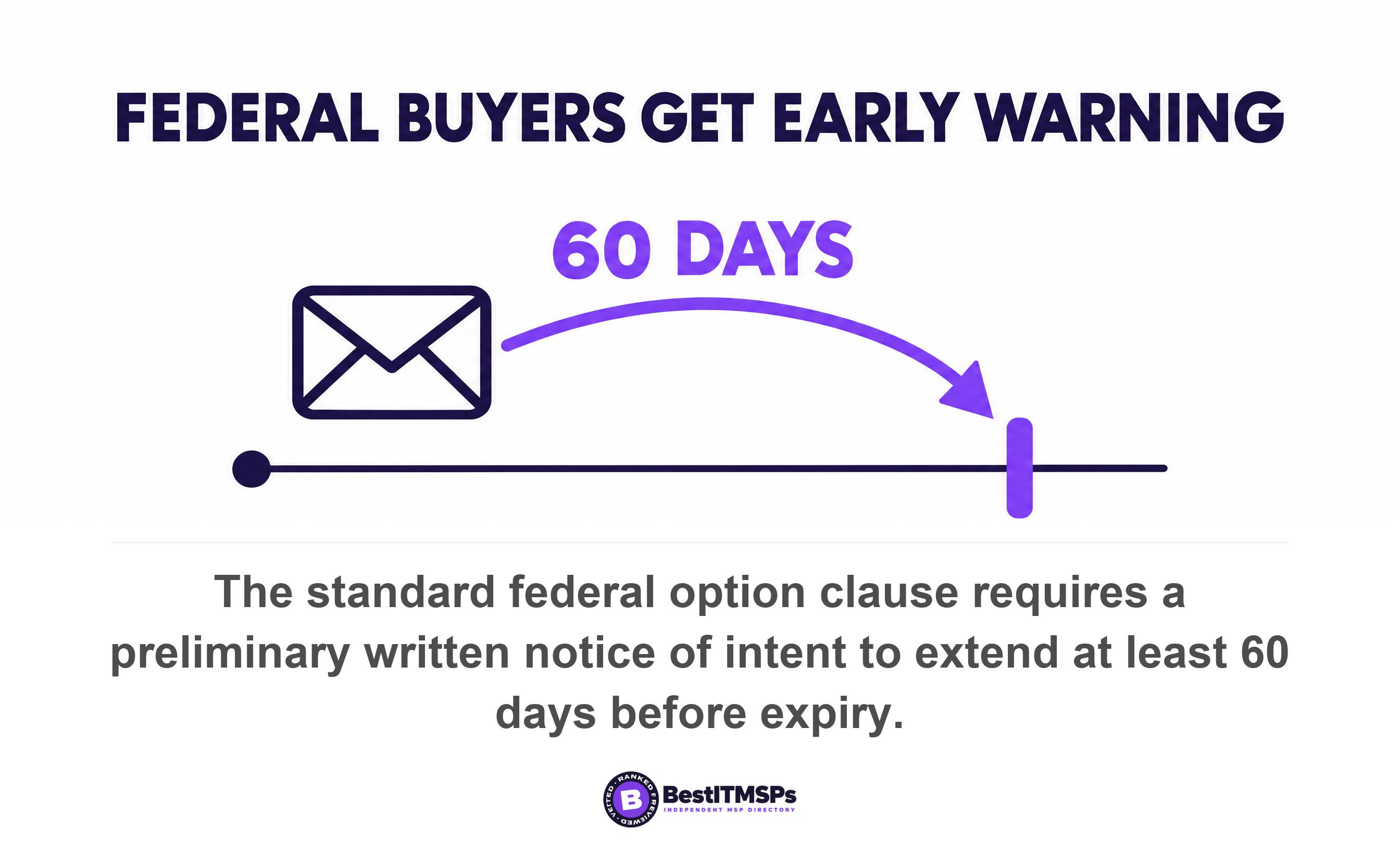
The largest IT buyer in the world writes the opposite arrangement for itself. Under the standard federal option clause the government must send the contractor a preliminary written notice of its intent to extend at least 60 days before the contract expires, and the clause states plainly that the preliminary notice does not commit the Government to an extension. The buyer gets early warning and keeps the choice. Your agreement probably reverses both halves of that.
Does your notice window have two edges?
Many notice windows have two edges, so sending notice early fails just as completely as sending it late. A clause reading not more than 90 days and not less than 60 days prior to the end of the term gives you a window 30 days wide, not a 90-day runway. Notice posted in month seven falls outside it. So does notice posted in month twelve.
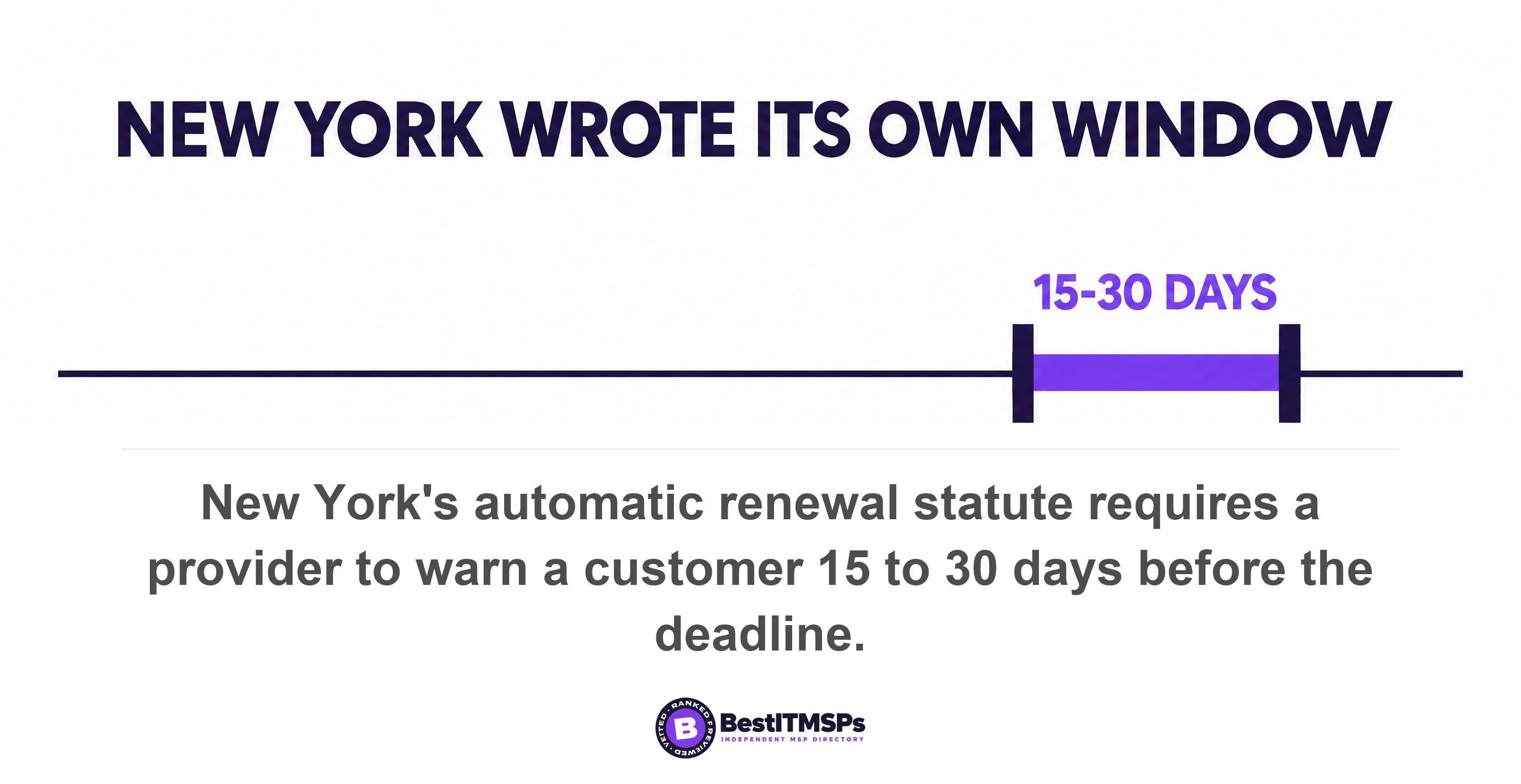
A two-sided window is a normal drafting choice rather than a hostile one. New York's legislature wrote one into its own statute, which requires a provider to warn its customer not less than fifteen days and not more than thirty days before the date set for the customer's termination notice. Lawmakers use two edges to stop a warning arriving so early that it is forgotten. A contract can use them for the same reason. Read your clause for both edges before you assume you have until the last day.
Form and recipient defeat more notices than timing does. Your agreement's notices clause names who must receive the notice, at what address, and by what method. New York's statute requires the provider's reminder to be served personally or by certified mail, which tells you how seriously legislatures treat proof of delivery. An email to your account manager is not written notice when the clause names a registered office. Send it the way the clause says, keep the delivery receipt, and ask for a written acknowledgement.
Ambiguous anchors cause most of the rest. A clause measuring notice from the anniversary date is only clear if the agreement says which date that is. The effective date, the service commencement date and the first invoice date are routinely weeks or months apart in managed IT onboarding, and each one produces a different deadline. If your agreement does not define the anniversary date, you do not know your deadline, and neither does your provider.
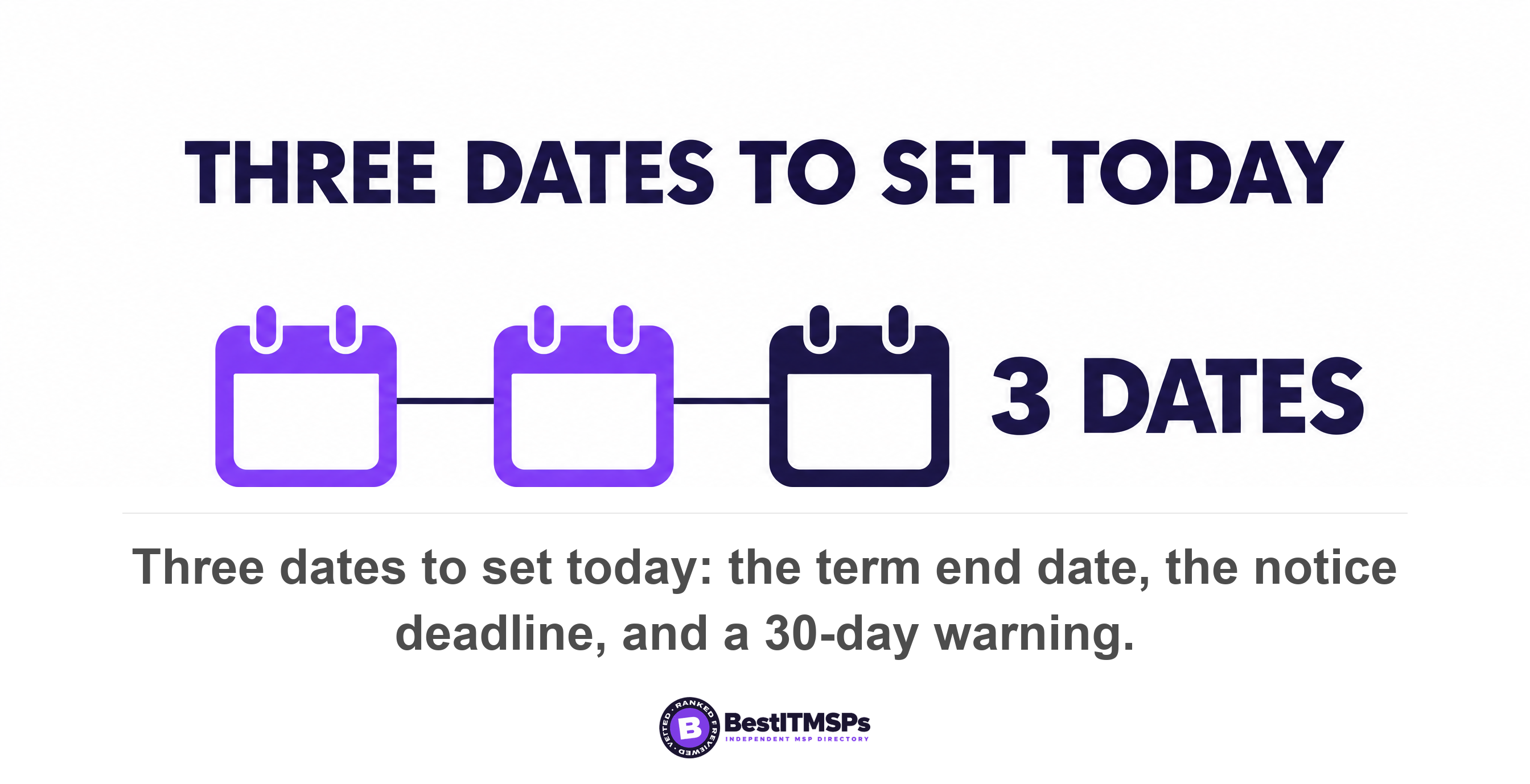
Three dates to put in your calendar today
To protect your position today, set three dates and take all three from the agreement rather than from memory. Open the master services agreement, find the term clause and the notices clause, and write the dates out in full.
- Add the term end date. Read it off the term clause. Where the clause says 12 months from the effective date, find the effective date on the signature page and write out the day, the month and the year.
- Add the notice deadline. Count back the notice period in days from the term end date. Ninety days before 31 December 2026 is 2 October 2026. That is your real decision deadline, and it is the only one of the three you can miss.
- Add a 30-day warning before the notice deadline. This is the day the renegotiation starts, not the day you cancel. Thirty days is enough to request pricing, compare two alternatives and decide without a rush.
Add a fourth date, if your clause has an outer edge. Where notice must arrive not more than 90 days before the term ends, the window opens on that day and nothing sent earlier counts. Mark the open date as well as the deadline.
Three details decide whether the reminder works. Put the dates in a shared calendar rather than one person's, because the owner who signed is often not the person on duty nine months later. Name the file and the clause inside the reminder, so the next reader does not have to find them again. Check whether the deadline lands on a weekend or a holiday, and act before it rather than after.
Treat the deadline as a decision point, not a cancellation. Sending a notice of non-renewal does not oblige you to leave, and most providers negotiate once the renewal stops being automatic. You keep the service, you keep the relationship, and you recover the one thing the clause took away.
What does the renewal do to your price?
The renewal is the one moment your provider can reprice the agreement without negotiating, so read the renewal price increase language before the notice window closes. Most clauses do one of three things. They hold the price, they raise it by a stated percentage, or they tie it to a CPI escalator. Only the first two are predictable.
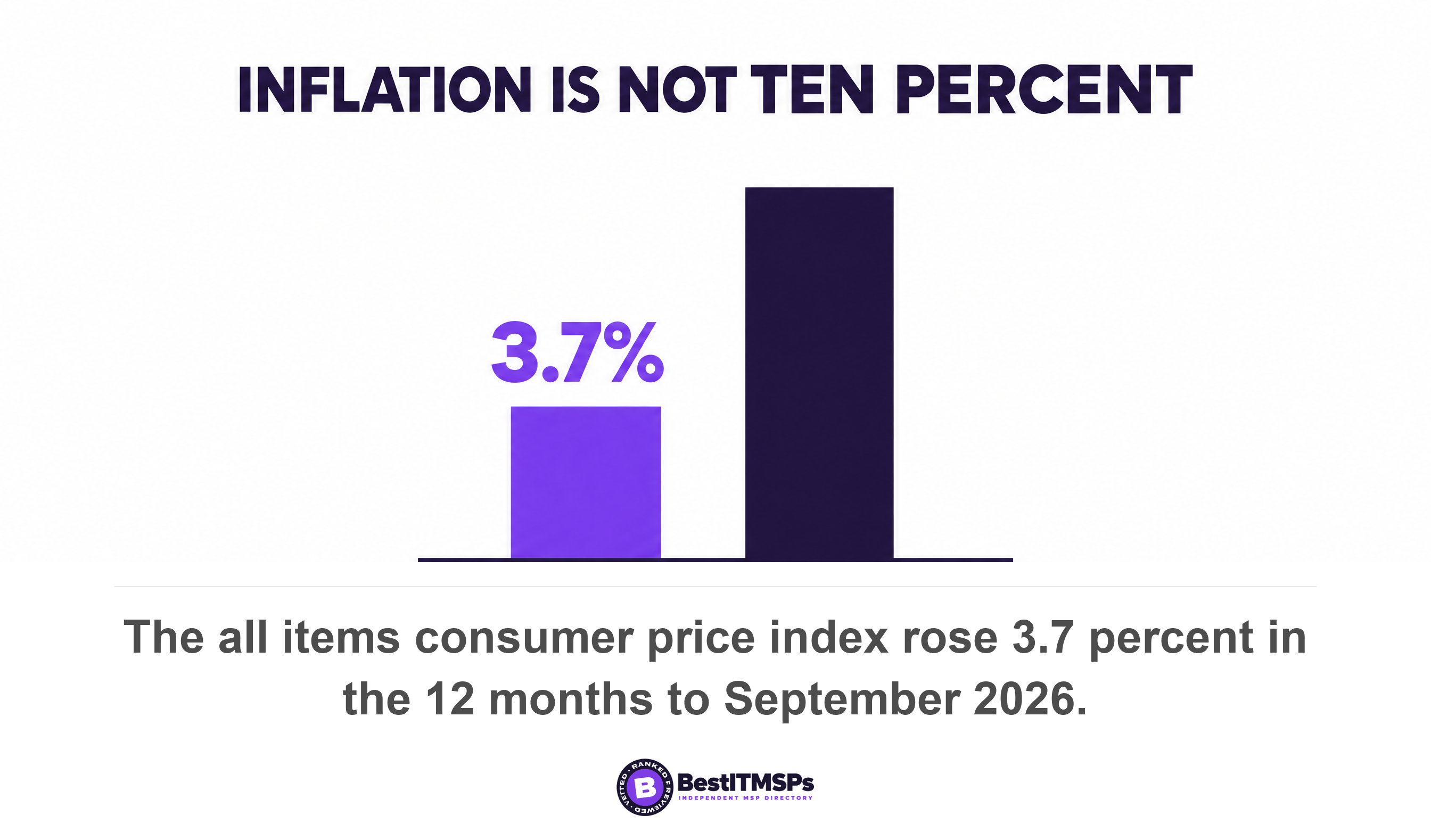
Put a number on the escalator before you accept it. The all items consumer price index rose 3.7 percent over the 12 months to September 2026. The government's producer price index for data processing, hosting and related services, which measures the industry your provider sits in, stood at 127.4 in September 2026 against 123.9 a year earlier, about 2.8 percent higher. A renewal uplift of 3 to 4 percent tracks the economy. A renewal uplift of 10 percent is a price change wearing an inflation costume, and you are entitled to ask what it buys you.
Compounding is where an uncapped clause does its damage. A 4,000 dollar monthly agreement rising 3.7 percent at each renewal costs about 4,461 dollars a month in its fourth year. The same agreement rising 10 percent a year costs 5,324 dollars. Across the three renewal years the gap is close to 20,000 dollars, on a contract nobody reopened. Cap the increase, apply the cap at every renewal rather than once, and make the clause name the index instead of describing it.
Price and notice are the same problem. A renewal you did not choose is also a price you did not negotiate, because the uplift lands inside a term you can no longer exit. The notice deadline is a budget date as much as a legal one.
What to negotiate on the renewal clause, in order of value
Negotiate six things on a renewal clause, in this order, because the first two are worth more than the other four combined.
- Fix the notice in days from a stated calendar date. Ask for the deadline to appear in the agreement as a written date, not as a count back from an anniversary date nobody has defined. One sentence removes the whole ambiguity.
- Make the renewal revert to month-to-month. A rollover into a monthly arrangement keeps the service and removes the trap. The Uniform Commercial Code treats a contract of that shape as one that may be terminated at any time by either party, and New York's renewal statute does not apply at all where the renewal period is one month or less, which shows how little protection a monthly arrangement needs.
- Require the provider to notify you before the window opens. The federal government writes this for itself. The standard option clause obliges it to send a preliminary written notice of intent to extend at least 60 days before expiry, and the supply schedule clause requires written notice 30 days before the contract expires, for a five-year option exercisable up to three times. Ask for the same courtesy in reverse.
- Cap the renewal price increase. Name a ceiling, name the index, and apply the cap at every renewal.
- Add a short extension option instead of a full renewal term. The federal services clause lets a buyer extend performance at contract rates for no more than 6 months in total. A 90-day bridge is far more useful than a fresh 12-month term when a transition slips.
- Cap the total duration. The same federal clause states that the total duration of the contract, including the exercise of any options, shall not exceed a stated period. Without that ceiling, an evergreen clause has none.
Termination for convenience is the separate backstop, and it deserves its own conversation rather than a line in the renewal clause. A 30 to 60 day right to terminate for convenience after month six makes a missed notice window survivable, which is exactly why providers resist it.
Ask in writing, ask early, and ask for one thing at a time. A provider that will not shorten a 90-day notice period to 30 or 60 days is telling you the renewal clause does work the service does not. A provider that agrees in one sentence has told you something useful too. Either way, make the answer contractual. Get it into the signed document, where it is enforceable, rather than into an email from a salesperson.
Does the law protect a business from an automatic renewal?
Automatic renewal rules vary by jurisdiction and by contract type, and most of them protect consumers rather than companies. Check your own state and your own agreement with a lawyer before relying on any of them. Best IT MSP is an independent directory, not a law firm, and none of this is legal advice.
The consumer statutes you may have read about are drawn narrowly. California's automatic renewal law defines a consumer as any individual who seeks or acquires goods or services for personal, family, or household purposes. A company buying managed IT does not fit that description. The federal Restore Online Shoppers' Confidence Act speaks to the same group, making it unlawful to charge any consumer through an online negative option feature without clear disclosure, express informed consent and a simple cancellation mechanism.
New York's section is the one worth reading yourself. General Obligations Law 5-903 defines a person to include an individual, firm, company, partnership or corporation, so it is not limited to individuals, and it makes an automatic renewal clause unenforceable against the customer unless the provider gives the required notice. The section's own words reach contracts for the service, maintenance or repair of property. Whether a particular managed IT agreement falls inside that description is a question for a lawyer in your state, so do not assume that it does.
Wisconsin reaches further than New York, and its threshold is the part to read. Section 134.49 of the Wisconsin Statutes defines a business contract as one entered into for the lease of business equipment used primarily in the state, or for providing business services, but only if the contract is for the direct benefit of the end user. It defines a customer as a person who conducts business in this state who leases that equipment or purchases those services. Those are the statute's own words. Whether a particular managed IT agreement sits inside that description is again a question for a lawyer in your state, because the definition carries its own exclusions.
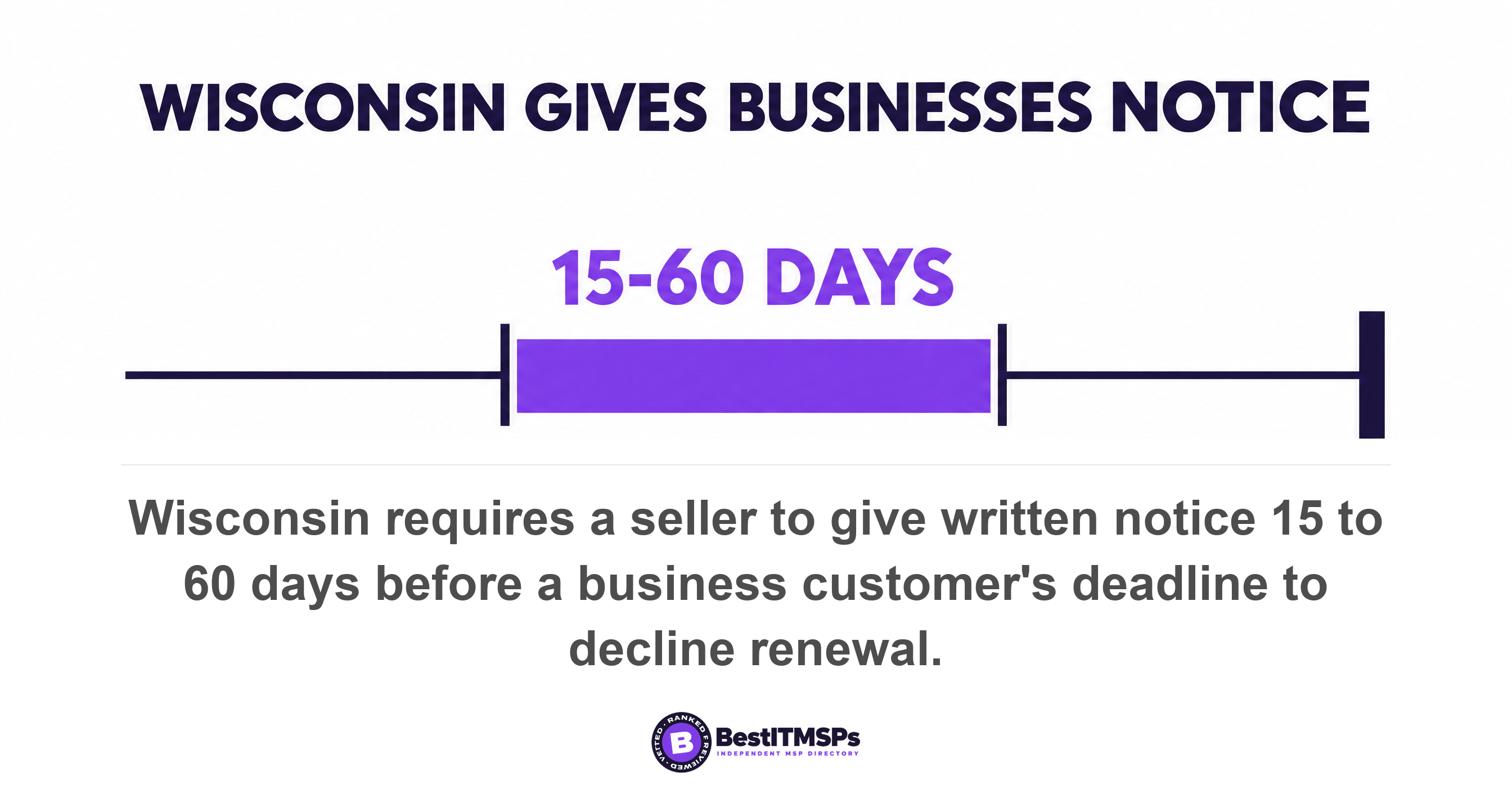
Where the section does apply, it has teeth. A renewal provision is not enforceable against the customer, and the contract terminates at the end of the current term, unless the seller gives written notice at least 15 days but not more than 60 days before the deadline to decline, and that notice must include a description of any increase in charges to the customer that will apply after renewal. A customer may also bring an action or counterclaim for damages where the seller failed to give that notice. Check the threshold before you count on any of it. The requirement bites only where the initial term is more than one year and the renewal term is also more than one year. A 12-month agreement renewing for 12 months falls outside it, which proves the earlier point twice over. Term length and notice length interact, and the number that triggers a protection is rarely the number you negotiated hardest.
Do not plan around a federal rule either. The Federal Trade Commission's Negative Option Rule moved twice in 2026 alone. The Commission published a notice on 12 February 2026 revising the rule to conform these rules to federal court decisions, then opened an advance notice of proposed rulemaking on 13 March 2026 about unintended recurring payments. Both are consumer rulemakings. Outside a statute that covers your contract, your notice period is whatever your signature put there.
A silent renewal is not a hidden one. It is a date you were given and did not write down.
What to do if you already missed the notice window
If you already missed the notice window, work three steps in order, and do not open with a demand to terminate. Read the notices clause for anything the provider owed you, confirm the new term end date, then negotiate from the renewal rather than against it.
- Check what the provider owed you. Some agreements, and some state statutes, require a conspicuous reminder before your deadline. New York's section makes the clause unenforceable where the provider failed to give notice not less than fifteen and not more than thirty days before the deadline. If your agreement promised a reminder and none arrived, say so in writing.
- Recalculate both dates from the new term. The deadline does not stay where it was. A renewal that began on 1 January 2027 moves your next notice deadline to 2 October 2027, and that is the date to set now.
- Trade something you want for something they want. Providers often accept an early exit, a conversion to month-to-month, or a capped uplift in return for a longer notice period going forward or a public reference. Ask for transition assistance in the same conversation, because the end of a term is the cheapest moment to buy it.
Then use the year you did not choose. A renewal you could not refuse is still 12 months of leverage you can spend on everything around it, and the out-of-scope definition, the rate card and the service levels all reopen more easily at a renewal than mid-term. Read out of scope IT support and first response or resolution SLA before that meeting, then price the result against our managed IT services guidance.
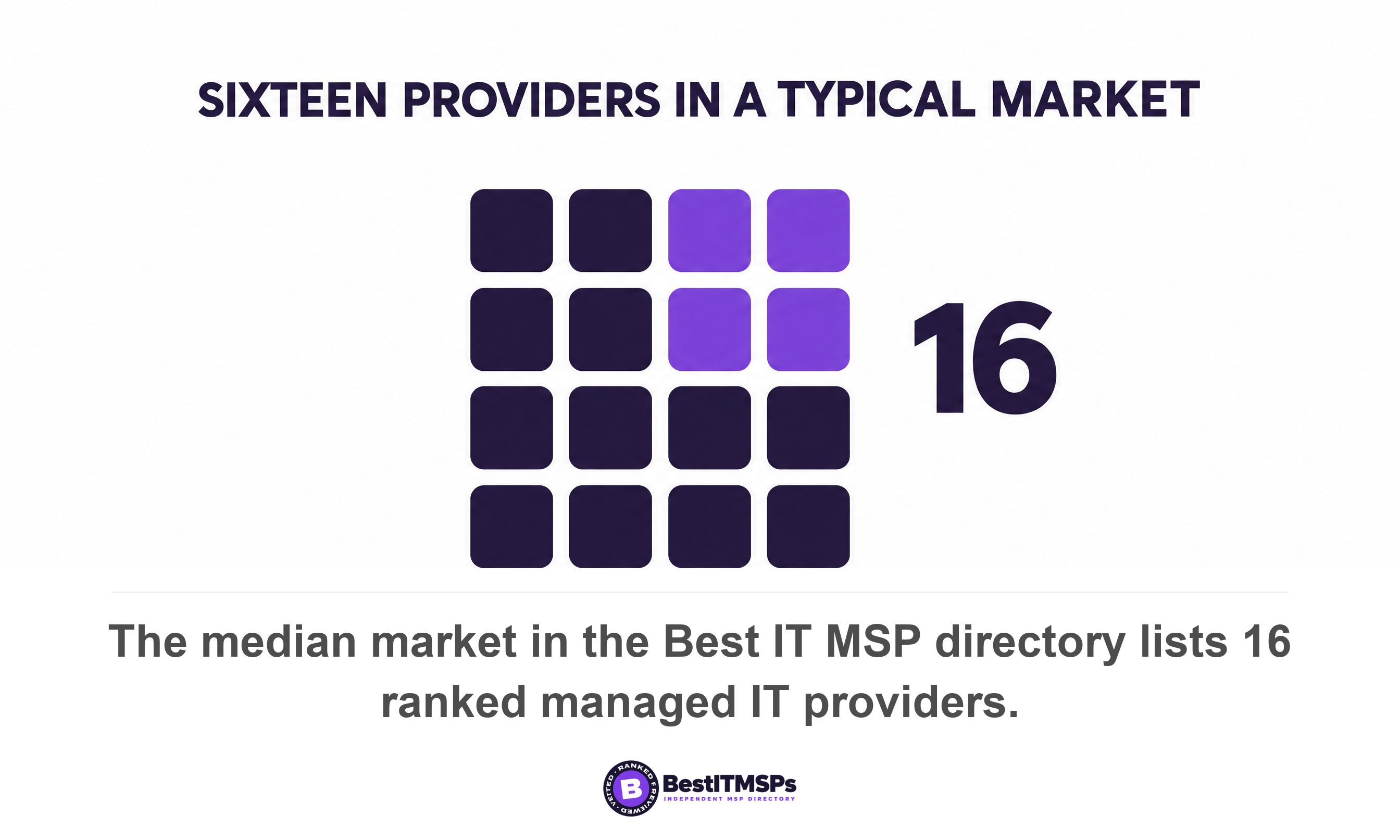
Knowing your alternatives is what makes the conversation work. The median market in our directory lists 16 ranked managed IT providers, with 11 at the 25th percentile and 22 at the 75th, measured across 24,491 roster rows in 730 city datasets. Even the thinnest markets carry 8 listed providers at the 10th percentile, against 34 at the 90th. Most of that choice is local rather than national, because 5,701 of our 7,858 listed provider domains, or 72.6 percent, appear in exactly one market. Almost every buyer has real options. A notice deadline you have already met is the thing that lets you use them.
None of this needs a lawyer to start. It needs one agreement, two clauses and three dates. Owners lose years to this clause because the deadline lands in a quiet month, not because the clause is unfair. Set the dates today, and the renewal becomes a decision you make rather than one that happens to you.
FAQ
What is an auto-renewal clause in a managed IT contract?
An auto-renewal clause, also called an evergreen clause, extends your agreement for a further term unless you send a notice of non-renewal by a stated deadline. California's statute defines automatic renewal as a provision in which a paid subscription or purchasing agreement is automatically renewed at the end of a definite term for a subsequent term. The clause is ordinary. The deadline is the risk.
How long is the notice period in an MSP contract?
The notice period is set by your agreement, not by convention, so the only reliable answer is the one in your own document. Read the term clause for the length and the notices clause for the method and the recipient. A 90-day notice period on a 12-month term moves your real decision deadline to month nine, which is three months earlier than most buyers expect.
What happens if I miss the auto-renewal notice deadline?
Missing the deadline renews the agreement for another full term, so a 12-month contract with a 90-day notice period can bind you through month 24. Recalculate the deadline from the new term end date, then check whether the provider owed you a reminder. New York's statute makes a renewal unenforceable unless the provider gave written notice 15 to 30 days before the deadline.
Do automatic renewal laws protect businesses?
Most do not. California's automatic renewal law defines a consumer as an individual who acquires goods or services for personal, family, or household purposes, and the federal Restore Online Shoppers' Confidence Act addresses any consumer in online transactions. Two states reach business buyers. New York's definition of person includes a firm, company, partnership or corporation, and Wisconsin regulates business contracts for providing business services where the initial term and the renewal term each run more than one year. Rules vary by state and contract type, so check yours with a lawyer.
Can I ask for a month-to-month renewal instead of a new term?
Yes, and it is the single most valuable change to request. A monthly rollover keeps the service and removes the deadline. The Uniform Commercial Code treats an indefinite contract of successive performances as one that may be terminated at any time by either party, and New York's renewal statute does not apply where the renewal period is one month or less, which shows how little protection a monthly arrangement needs.
Best IT MSP is the independent directory of vetted managed IT providers across the US and Canada. Organic ranking is earned on verified rating and firmographic data, paid placement is always labelled, and we do not sell IT services. Open the ranked list for your city, then set your three dates before the next renewal decides itself.