How to Choose a Managed Service Provider: A Step-by-Step Guide
To choose a managed service provider, match the provider to your size, industry, and goals rather than the lowest price. Look for SLA-backed response times, security built into the base plan, real industry experience, a named strategic contact, and verified references.
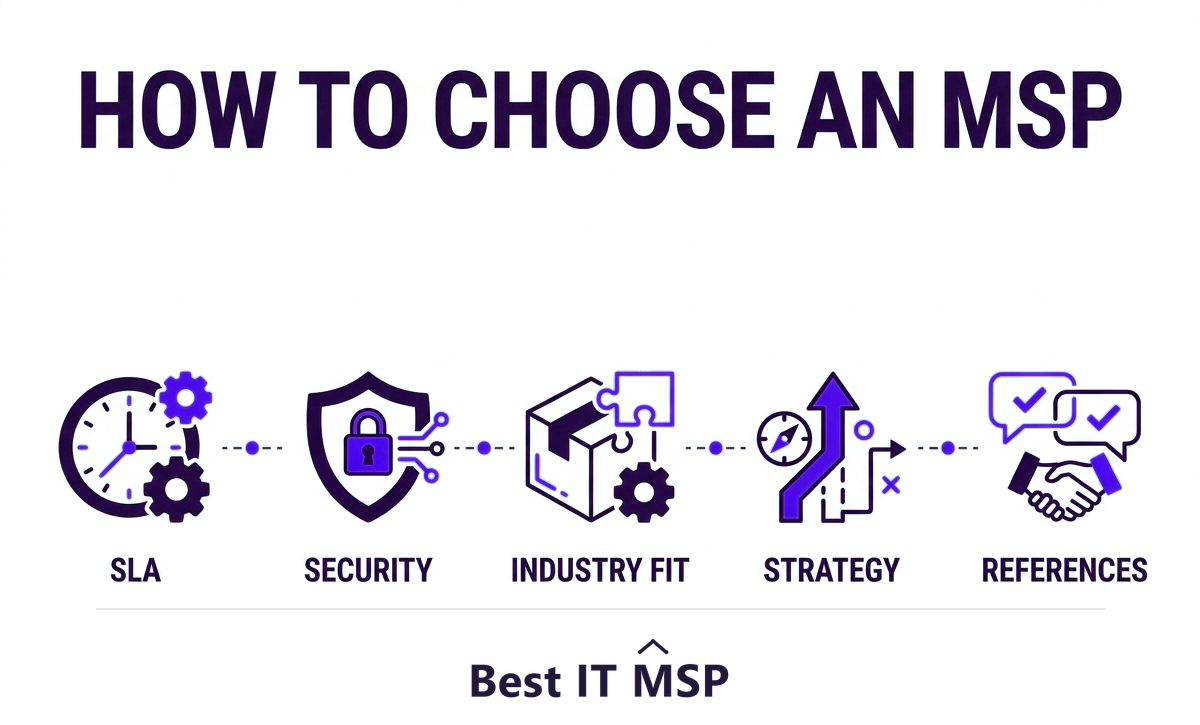
- The best managed service provider is the best fit for your business, not the cheapest or the biggest.
- Insist on SLA-backed response times and cybersecurity built into the base plan, not sold as an add-on.
- Ask every provider the same questions and check verified references from businesses your size.
- Watch for red flags: no written SLA, lock-in contracts, security upsells, and reluctance to share references.
- Shortlist three providers, compare them on the same criteria, and weight fit and security over headline price.
Start with fit, not price
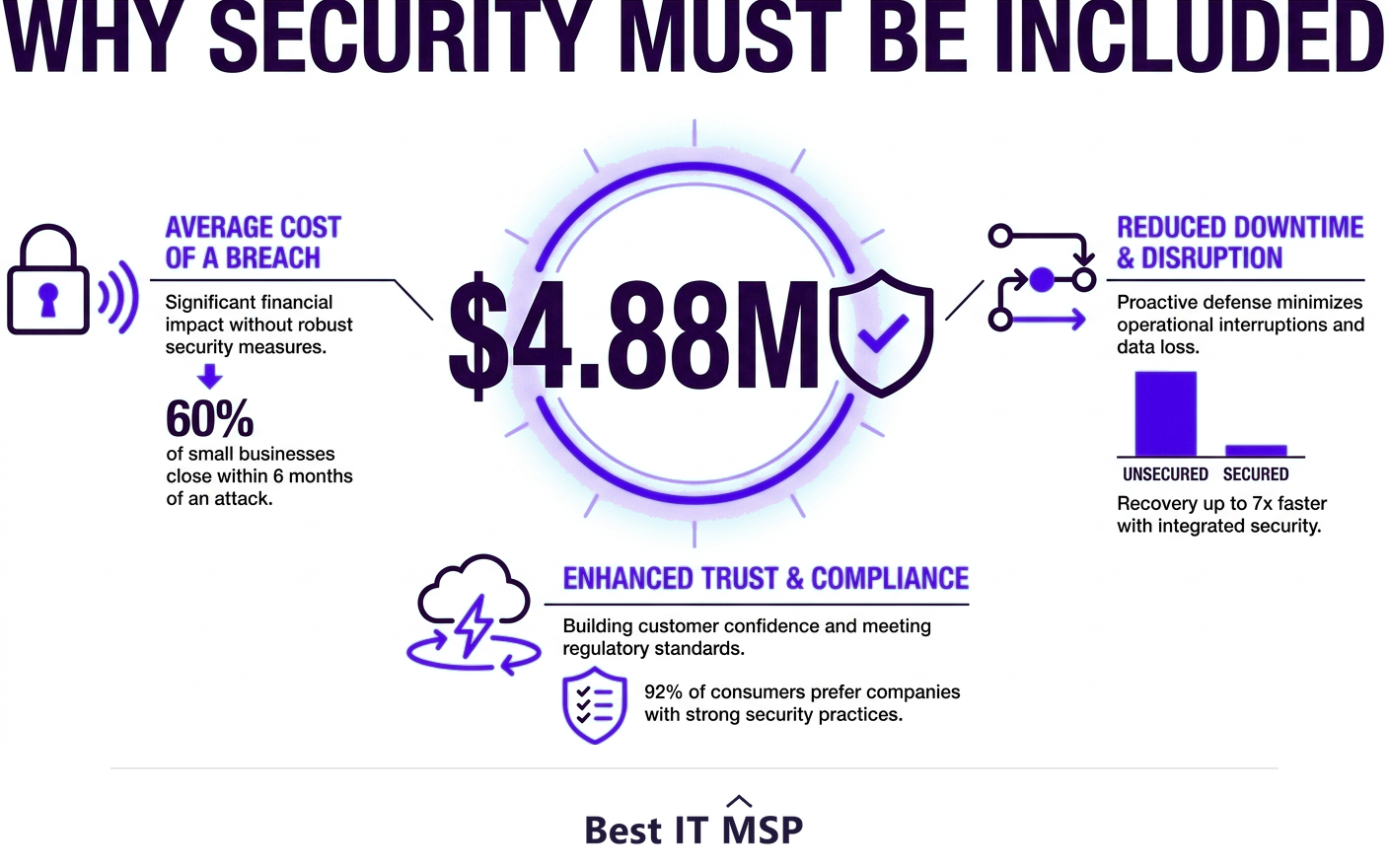
There is no single best managed service provider, only the best fit for your business. The right provider matches your size, industry, compliance needs, and goals, and behaves like a partner rather than a vendor. Choosing well matters because your provider will hold the keys to your systems and data, and switching later is disruptive. With the average data breach now costing $4.88 million and an hour of downtime costing most organizations more than $100,000, a weak choice is expensive. Recovery speed depends on the choice too: the average breach takes about 258 days to identify and contain, and a strong, reliable provider with real monitoring shortens that window dramatically. This guide gives you the criteria, the questions, the red flags, and a simple process to evaluate and decide. It pairs with our buyer's guide on how to choose an MSP.
What to look for in a managed service provider
Strong providers share a recognizable set of traits, and the gaps between a great provider and a mediocre one usually surface in these areas long before you sign a contract. Use the following as your scorecard, and score each candidate honestly rather than trusting the polish of a sales deck:
- <strong>SLA-backed response times.</strong> Written response and resolution targets, captured in a service level agreement (SLA), that the provider reports against rather than as vague promises.
- <strong>Security built into the base plan.</strong> Endpoint protection, email security, and multi-factor authentication included, not sold after an incident.
- <strong>Real industry and compliance experience.</strong> Proven work with businesses like yours and the rules you must meet, such as HIPAA, PCI, or CMMC.
- <strong>A named strategic contact.</strong> A virtual CIO or account lead who plans ahead, not just a faceless ticket queue.
- <strong>A proactive model.</strong> Monitoring and maintenance that prevent problems, rather than break-fix that reacts after the damage.
- <strong>Verified references and reviews.</strong> Proof from real clients your size on independent sources, not just hand-picked testimonials on the provider's own website.
Questions to ask before you hire
Ask every provider on your shortlist the same questions, so you compare answers rather than sales pitches:
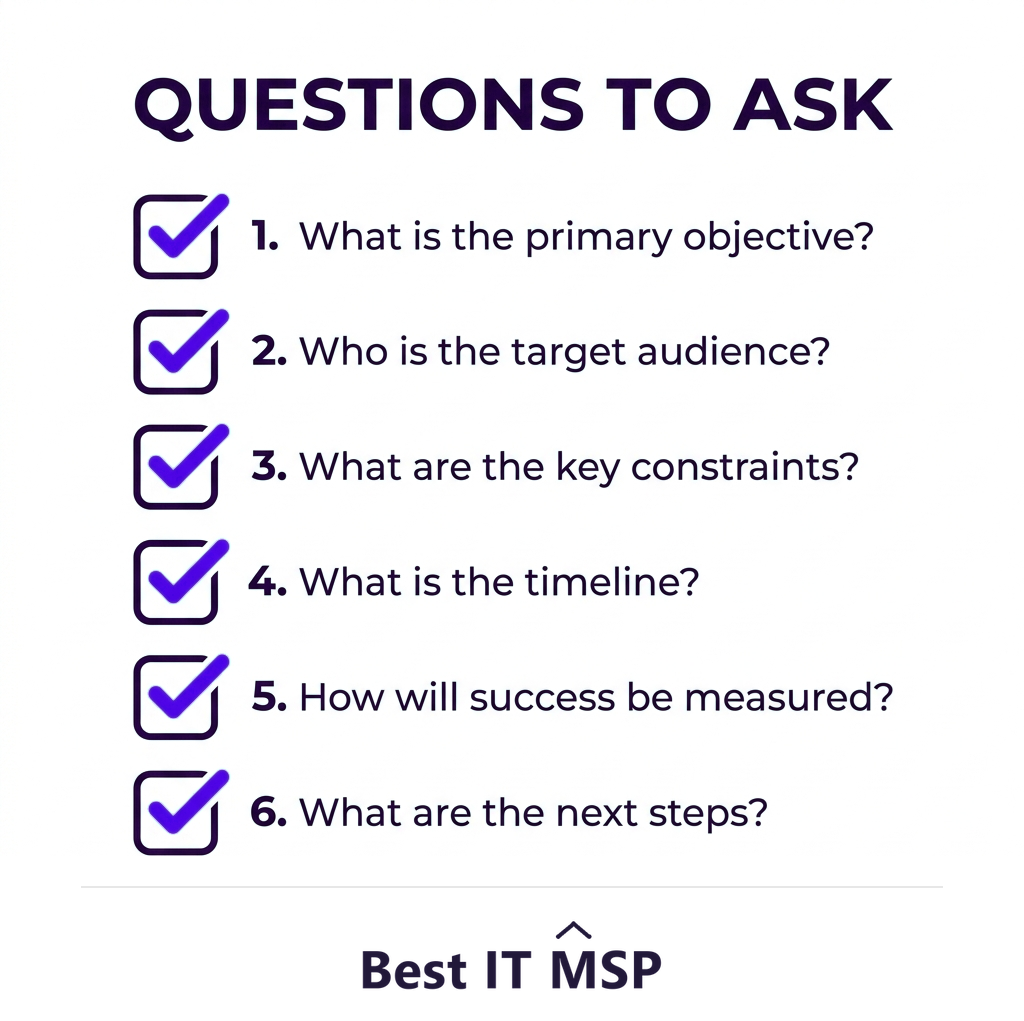
- What response and resolution times do you guarantee, and how do you report on them?
- What security is included in the base plan, and what is extra?
- Do you have clients in our industry and at our size, and can we speak with them?
- Will we have a named strategic contact or virtual CIO?
- How is your pricing structured, and what is not included as we grow?
- If we decide to leave, who owns our data and documentation, and how does the transition work?
Red flags to avoid
Some warning signs reliably predict a bad relationship. Walk away if you see them:
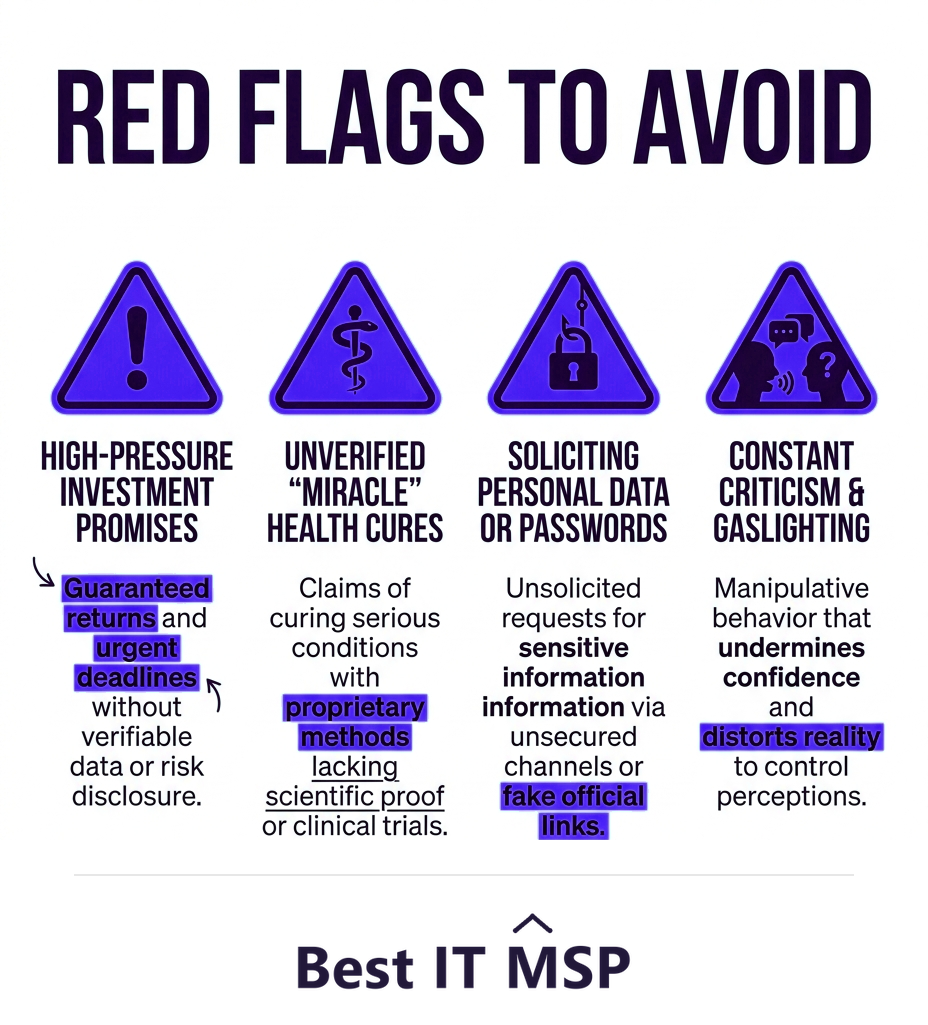
- No written SLA, or vague, unmeasurable response-time promises.
- Security sold only as an add-on after you sign, rather than included by default.
- Reluctance to provide references or to show verified, independent reviews.
- A reactive, break-fix mindset instead of proactive management.
- Lock-in contracts with no clear exit terms or data-ownership clauses.
- A quote far below the others, which usually means something you need has been left out.
Why security cannot be an afterthought
The single most important thing to verify is that security is built into the base service. Attacks are relentless, with reported cybercrime losses topping $12.5 billion in a single year, and skilled defenders are scarce amid a global shortfall of about 4.8 million cybersecurity professionals. A provider that treats security as an upsell is leaving you exposed until the worst happens, and then charging you to fix it. The whole point of hiring a provider is to get that expertise by default. Ask to see exactly what protection comes in the base plan, in writing, and be wary of any provider that cannot answer plainly or that frames basic safeguards like multi-factor authentication and managed backup as premium extras.
A simple process to compare and decide
Turn the criteria above into a repeatable process so the decision is evidence-based, not a gut call:
- <strong>Step 1: Define your needs.</strong> List your headcount, devices, locations, compliance requirements, and the problems you want solved.
- <strong>Step 2: Shortlist three providers.</strong> Pick three with real experience serving businesses like yours.
- <strong>Step 3: Ask the same questions.</strong> Use the question list above so answers are comparable.
- <strong>Step 4: Check references.</strong> Speak with current clients your size about responsiveness and reliability.
- <strong>Step 5: Compare on fit and security.</strong> Score each provider on the scorecard and weight fit and security over the lowest price.
Treat IT as an investment, not just an expense. The market reflects how much value a good provider delivers: it was worth roughly $330 billion in 2024, is projected to reach about $879 billion over the next decade, and is growing at roughly a 13 to 15 percent annual rate. A slightly higher fee for a true partner usually pays back quickly in uptime, security, and focus, so resist the urge to let the lowest quote make the decision for you.
Where to start your shortlist
The fastest way to a quality shortlist is to start from a vetted, merit-ranked list rather than a search ad, where the top result is simply whoever paid the most. Browse providers by city in the Best IT MSP directory, where ranking is earned on rating and verified data and any paid placement is clearly labelled. From there, apply the criteria, questions, and process above to choose the provider that fits your business best.
One last piece of advice: do not rush, but do not stall either. Give yourself a few weeks to evaluate your shortlist properly, because the relationship typically lasts years and a careful choice compounds. At the same time, every month spent with an unreliable or insecure setup is a month of avoidable risk. Set a decision date, run the same process for each candidate, and commit. A good managed service provider becomes a quiet competitive advantage; the wrong one becomes a recurring problem you have to manage on top of your business.
FAQ
How do I choose a managed service provider?
Match the provider to your size, industry, compliance needs, and goals rather than picking the cheapest or biggest. Look for SLA-backed response times, security built into the base plan, real industry experience, a named strategic contact, and verified references. Shortlist three providers, ask each the same questions, and compare them side by side.
What should I look for in an MSP?
Look for written SLAs with response and resolution targets, cybersecurity included by default, experience in your industry and compliance frameworks, a proactive rather than break-fix model, a named strategic contact or virtual CIO, and verified references and reviews from businesses your size.
What questions should I ask a managed service provider?
Ask about guaranteed response and resolution times and reporting, what security is in the base plan versus extra, whether they have clients in your industry and size you can speak with, whether you get a named strategic contact, how pricing is structured as you grow, and what happens to your data if you leave.
What are red flags when choosing an MSP?
Red flags include no written SLA, security sold only as an add-on, reluctance to share references or verified reviews, a reactive break-fix mindset, lock-in contracts with no clear exit or data-ownership terms, and a quote far below the others, which usually means something you need has been left out.
Should I choose the cheapest managed service provider?
No. The cheapest option is rarely the cheapest outcome once you account for downtime, security gaps, and poor service. Treat IT as an investment and weight fit, security, and reliability over headline price. A slightly higher fee for a true partner usually pays back quickly in uptime and avoided incidents.
How do I verify a managed service provider's references?
Ask for references from current clients in your industry and at your size, then speak with them directly about responsiveness, reliability, and how the provider handles problems. Check independent, verified review sources rather than only testimonials on the provider's own site. Starting from a directory that vets providers makes this faster.
Best IT MSP is the independent directory of vetted managed service providers across North America. Compare merit-ranked firms in your city on real ratings and verified data, then apply this guide to choose. No pay-to-play.