Questions to Ask Before Hiring an IT Provider
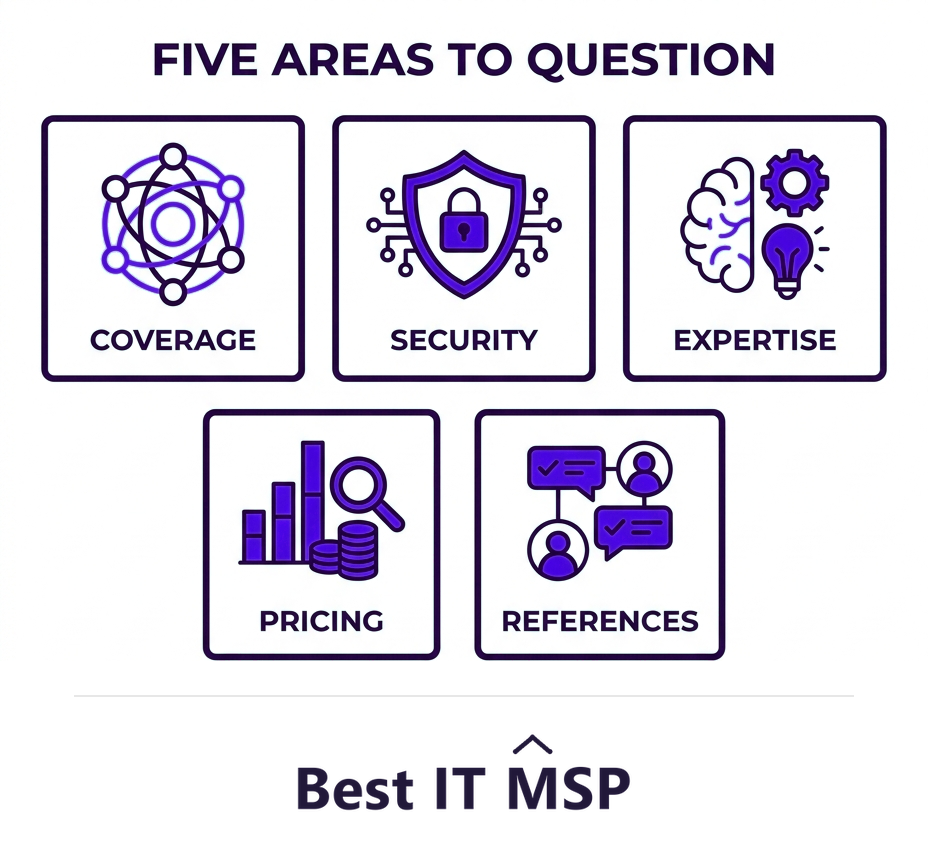
Choosing an MSP well comes down to asking the right questions before you sign. Cover five areas: coverage and service levels (response times, 24/7 monitoring, who does the work), security (how they protect you and handle a breach), expertise and fit (experience with your size and industry), pricing (what is and is not included), and references (verifiable results from similar businesses). Watch for red flags like vague service levels, no written SLA, and reactive habits. The goal is a responsive, transparent, proactive partner you can trust.
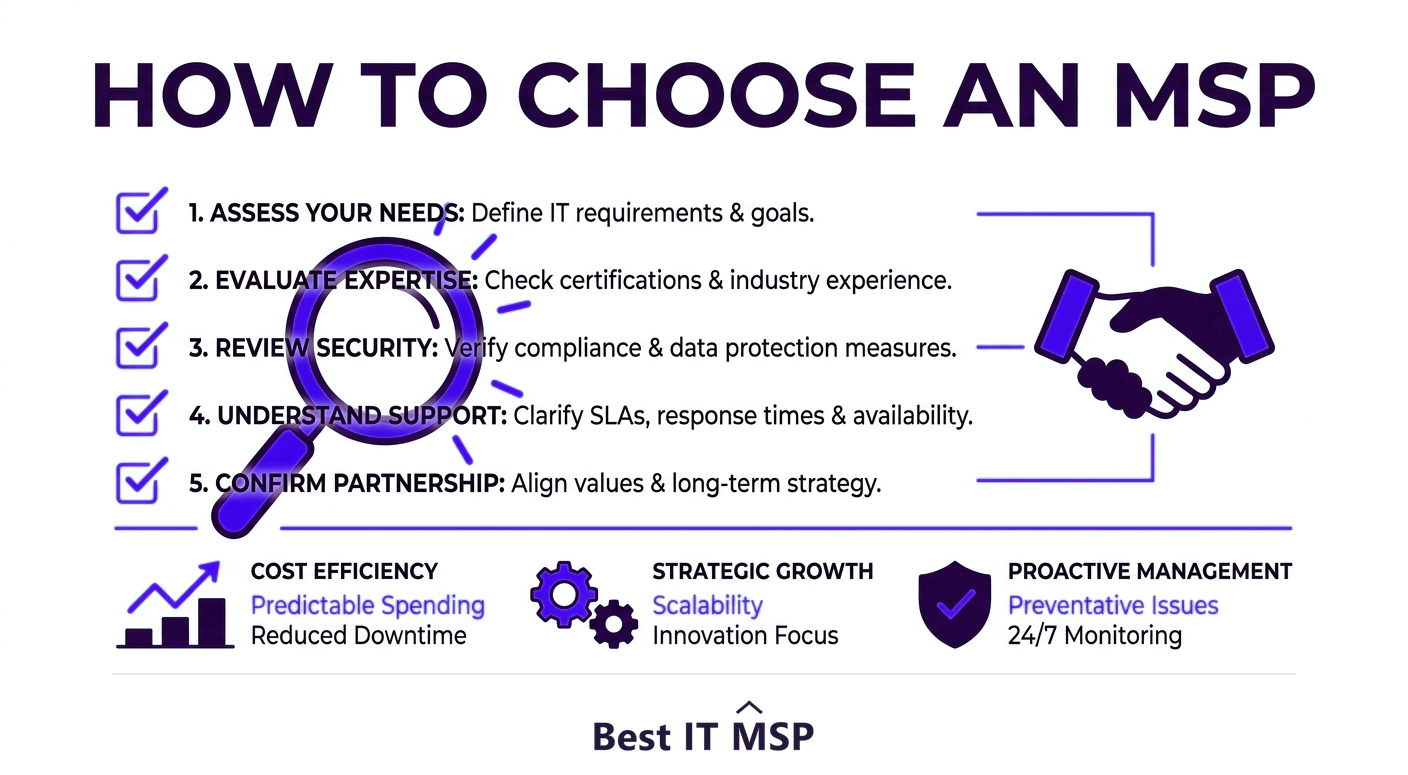
- Get a written service-level agreement with specific response and resolution times before signing.
- Probe security directly: how they protect you, monitor threats, and would handle a breach.
- Confirm experience with businesses your size and in your industry, not just enterprise clients.
- Demand pricing transparency, exactly what is and is not included in the monthly fee.
- Verify references and ratings from similar businesses, which a merit-based directory makes easy.
Why choosing the right IT provider matters
Hiring a managed service provider is one of the more consequential decisions a business makes, because you are trusting an outside company with the technology your operations run on and the data you are responsible for protecting. Get it right and you gain a proactive partner that keeps you running and secure; get it wrong and you inherit downtime, security gaps, and frustration. The good news is that the difference between a great MSP and a poor one usually surfaces in the sales conversation, if you ask the right questions. This guide gives you those questions, grouped into the five areas that matter most, plus the red flags to watch for, so you can choose with confidence.
It pairs with our managed IT services hub and our guide to the best managed IT service providers, and builds on our explainer on what a managed service provider is.
Questions about coverage and service levels
Start with how, and how fast, they actually support you. The answers should be specific and in writing, not reassuring generalities:
- <strong>What are your guaranteed response and resolution times?</strong> Insist on a written service-level agreement with real numbers, not a vague promise to get to you soon.
- <strong>Do you provide 24/7 monitoring and support?</strong> Problems and attacks do not keep business hours, and downtime costs most organizations more than $100,000 an hour.
- <strong>Who actually does the work?</strong> Confirm whether their own staff or subcontractors run the help desk, and who you will reach when you call.
- <strong>How do you handle escalations and major outages?</strong> Understand the path when something serious happens.
- <strong>Is your approach proactive or reactive?</strong> You want a provider that prevents problems through monitoring and maintenance, not one that only reacts.
Questions about security
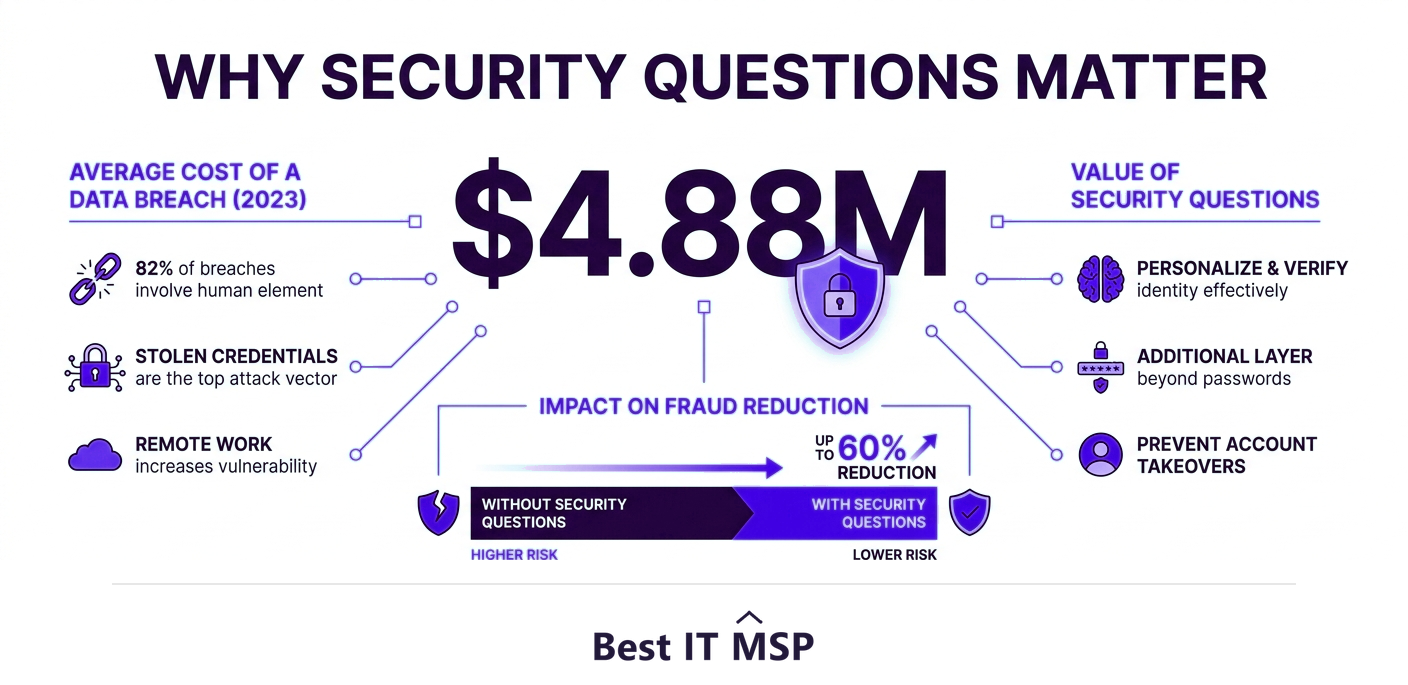
Security is where a weak provider does the most damage, so probe it directly. Ask how they will protect your business, what security is included versus extra, and whether they provide genuine 24/7 monitoring and threat detection. Ask the hard one: walk me through exactly how you would respond if we were breached tomorrow. A strong MSP answers crisply; a weak one gets vague. These questions are non-negotiable because the stakes are severe, the average breach costs $4.88 million, takes an average of 258 days to identify and contain, and security talent is scarce amid a global shortfall of about 4.8 million cybersecurity professionals, so you are partly hiring them for expertise you cannot easily build yourself, and organizations facing a security skills shortage saw breach costs about $1.76 million higher. Confirm they use automation too, since it saves breached organizations an average of $2.22 million.
Questions about expertise and fit
A technically capable provider can still be the wrong fit. Ask whether they have experience with businesses your size, because an MSP built for enterprises may not understand a 40-person company, and vice versa. Ask whether they know your industry and any compliance requirements you face, such as HIPAA, PCI, or CMMC. Ask how they will get to know your specific environment and who your main point of contact will be. And ask about strategy: will they simply keep the lights on, or actively help you plan technology around your business goals, ideally with vCIO-level guidance? The right provider feels like a partner who understands your world, not a generic vendor running a script.
Questions about pricing and contracts
Pricing surprises are a common source of regret, so get clarity up front. Ask exactly what the monthly fee includes and, just as important, what it does not, so you know which services cost extra. Ask how they price, per user or per device, and how costs change as you grow or shrink. Ask about contract length, what happens if you want to leave, and whether your data and documentation come with you. Be wary of quotes that seem far below the rest; deep discounts usually mean something important is missing. The goal is transparent, predictable pricing you can budget around, which is part of why businesses moved to managed services in the first place, a market now growing from about $330 billion in 2024 toward $879 billion over the next decade.
Questions about references, and the red flags
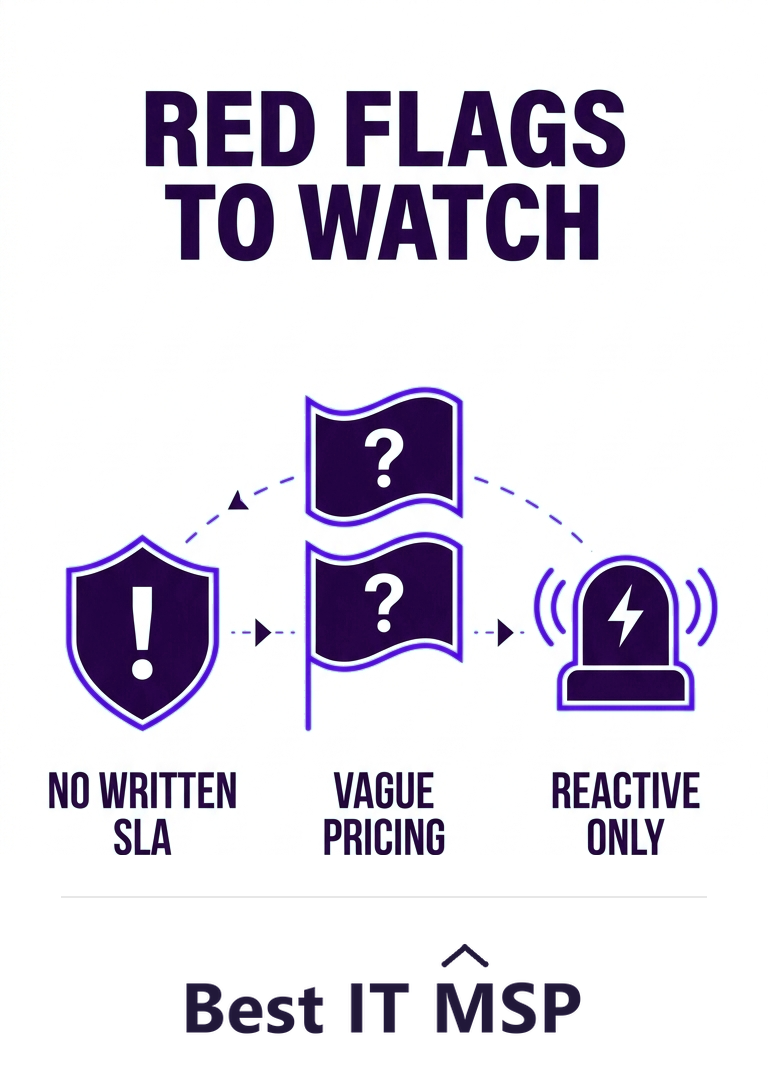
Finally, verify the claims. Ask for references from businesses similar to yours, and actually call them, asking about responsiveness, reliability, and how the provider handled problems. Look for independent reviews and ratings rather than relying only on testimonials the provider chose. As you go, watch for red flags: no willingness to put service levels in writing, vague or evasive answers about security, pricing that is unclear or suspiciously cheap, a purely reactive mindset, high-pressure sales tactics, and an inability to provide real references. Any one of these is a reason to keep looking. A confident, transparent, responsive provider will welcome these questions, not dodge them.
How to compare and decide
Once you have asked the questions, evaluate and compare providers side by side on the five areas, coverage, security, expertise, pricing, and references, and weight them by what matters most to your business. The best choice is rarely the cheapest or the one with the slickest pitch; it is the one whose answers are specific, whose references check out, and whose approach is genuinely proactive. Taking the time to vet providers well up front is the single most reliable way to avoid a painful and costly switch later.
To make the comparison easier, start with providers that are already vetted on merit. Browse merit-ranked managed service providers by city in the Best IT MSP directory, where ranking is earned on rating and verified data, not on who pays the most. You can also see how the models differ in our guide to break-fix vs managed IT services.
FAQ
How do I choose the right MSP?
Ask the right questions across five areas before signing: coverage and service levels (guaranteed response times, 24/7 monitoring, who does the work), security (how they protect you and would handle a breach), expertise and fit (experience with your size and industry), pricing (what is and is not included), and references (verifiable results from similar businesses). Then compare providers side by side and weight by what matters most to you.
What questions should I ask before hiring an IT provider?
Ask for guaranteed response and resolution times in a written SLA, whether they offer 24/7 monitoring, who actually does the work, how they would respond to a breach, what security is included, whether they have experience with your size and industry, exactly what the monthly fee covers, and for references from similar businesses you can call. The specificity of their answers tells you a lot.
What is a red flag when choosing an MSP?
Major red flags include unwillingness to put service levels in writing, vague or evasive answers about security, unclear or suspiciously cheap pricing, a purely reactive rather than proactive mindset, high-pressure sales tactics, and an inability to provide real references. Any one of these is a reason to keep looking; a transparent, confident provider welcomes hard questions.
Why is a service-level agreement important when hiring an MSP?
A service-level agreement (SLA) turns vague promises into accountable, measurable commitments, defining how quickly the provider will respond to and resolve issues and what services are included. Without a written SLA, you have no real assurance of the support you are paying for. Insisting on specific numbers up front is one of the most important steps in choosing an MSP.
Should I just choose the cheapest IT provider?
No. The cheapest quote often means important services are missing, and a single serious incident, with downtime costing more than $100,000 an hour and the average breach costing $4.88 million, can far outweigh any savings. Judge providers on the value and completeness of what they deliver, the specificity of their answers, and verified references, not on headline price alone.
How can I verify an MSP's reputation?
Ask for references from businesses similar to yours and actually call them about responsiveness, reliability, and problem handling. Look for independent reviews and ratings rather than relying only on testimonials the provider selected. Using a merit-based directory that ranks providers on rating and verified data makes this verification far easier and more trustworthy.
Best IT MSP is the independent directory of vetted managed service providers across North America. Compare merit-ranked MSPs in your city on rating and verified data, then ask the right questions. No pay-to-play.