Healthcare IT Services Explained
IT services for healthcare are specialized because healthcare organizations handle protected health information under HIPAA, depend on systems like EHRs that must never go down during patient care, and are the most-targeted sector for cyberattacks.
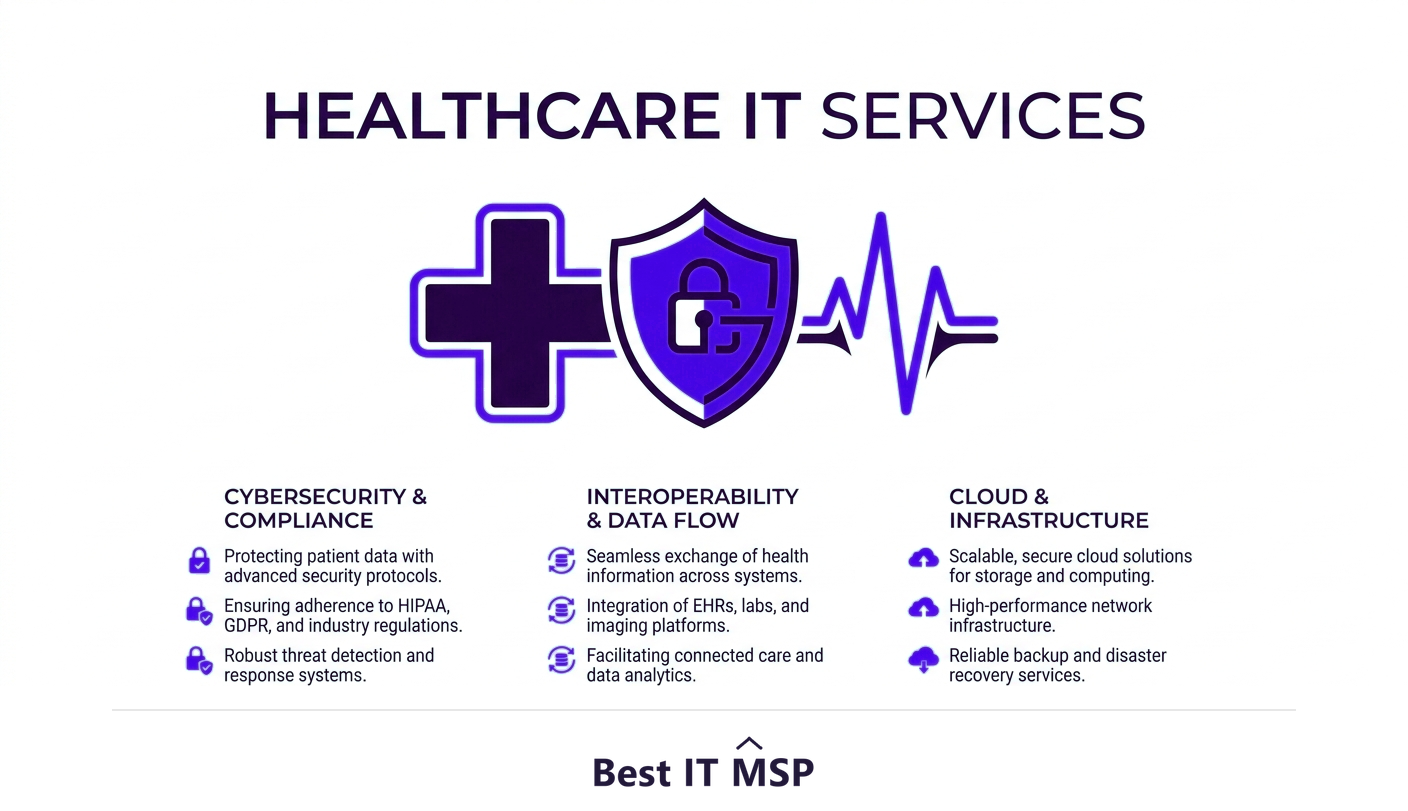
- Healthcare organizations handle protected health information (PHI) governed by HIPAA, raising the stakes for IT.
- Clinical systems like EHRs must stay available, because downtime can directly affect patient care.
- Healthcare is the most-targeted and costliest sector for data breaches.
- Good healthcare IT services combine HIPAA-aligned security, reliability, backups, and device protection.
- Specialized IT support that understands both healthcare technology and regulation is essential.
Why healthcare IT is specialized
Healthcare organizations, from small practices to clinics and surgery centers, run on technology that touches patient lives and patient privacy, which makes their IT needs unlike almost any other field. They handle protected health information (PHI), some of the most sensitive and tightly regulated data there is, under HIPAA. They depend on clinical systems like electronic health records (EHRs) that cannot go down without disrupting patient care. They run a mix of modern software, legacy systems, and connected medical devices, all of which must work and stay secure. And they are the single most-targeted industry for cyberattacks. IT services for healthcare exist to manage all of this safely, and doing it well requires understanding both the technology and the regulation. This guide explains what healthcare IT services include and why specialized support matters.
It pairs with our healthcare IT services overview and the HIPAA compliance services page, and connects to our guide on where SMB cybersecurity should start.
The challenges unique to healthcare
Several pressures define what a healthcare organization needs from its technology:
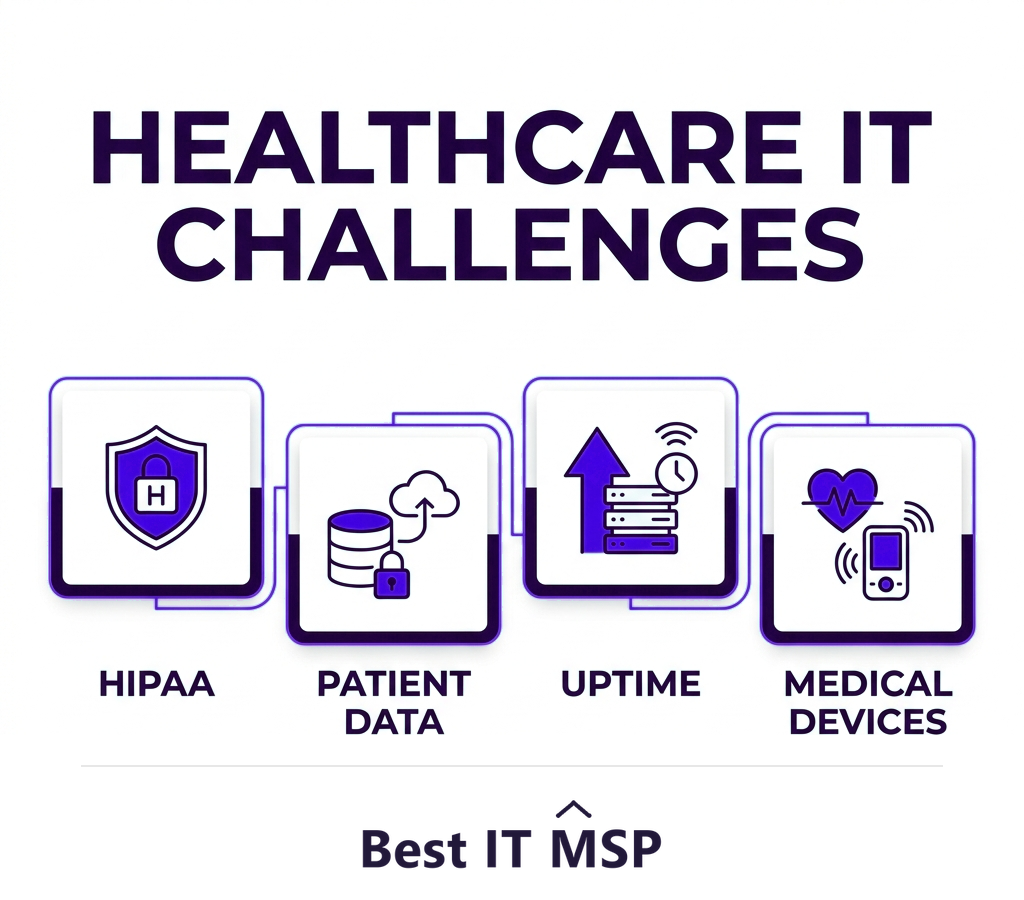
- <strong>HIPAA and protected health information.</strong> Healthcare must safeguard PHI to a legally mandated standard, with real penalties for failure, so security and compliance are inseparable from IT.
- <strong>Clinical uptime.</strong> When an EHR or scheduling system goes down, care is disrupted, so reliability is a patient-safety issue, not just an inconvenience, and downtime costs most organizations more than $100,000 an hour.
- <strong>Connected medical devices.</strong> Imaging systems, monitors, and other networked devices expand the attack surface and often run software that is hard to patch.
- <strong>Legacy systems.</strong> Healthcare often runs older systems that are critical but difficult to secure and update.
- <strong>Interoperability and access.</strong> Clinicians need fast, secure access to records across locations and devices, without compromising privacy.
What healthcare IT services include
Healthcare IT services cover the full range of a medical organization's technology needs, with security and compliance woven throughout:
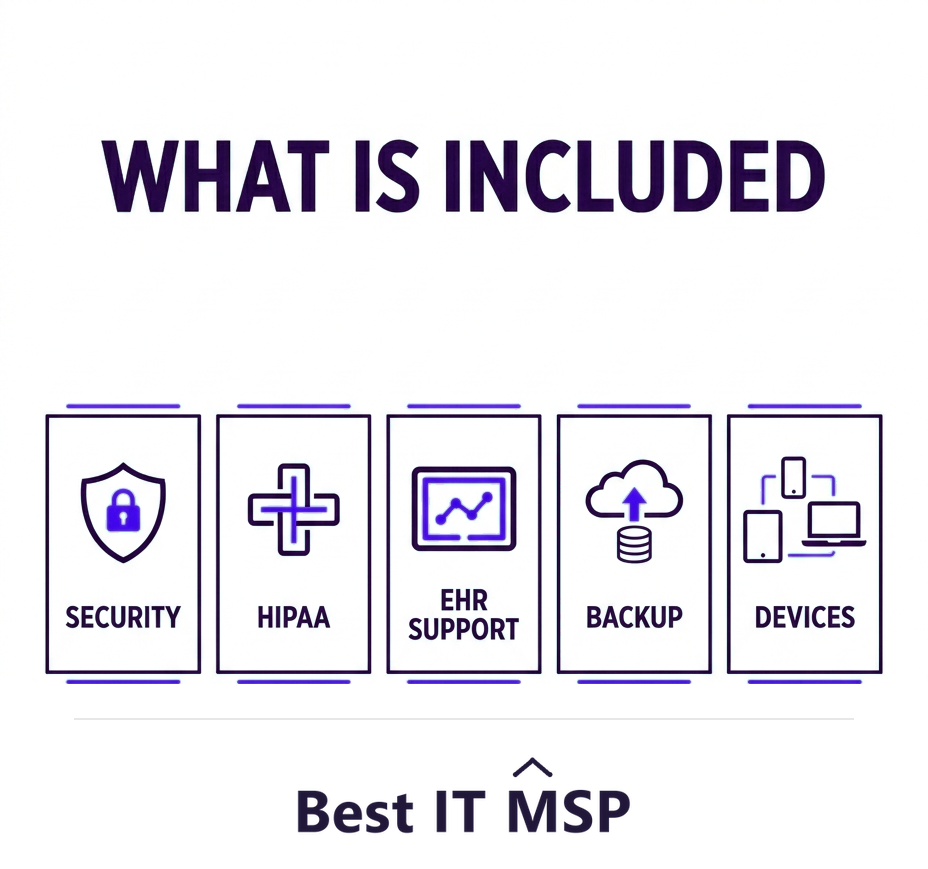
- <strong>HIPAA-aligned cybersecurity.</strong> Encryption, access controls, monitoring, and email security designed to protect PHI and meet HIPAA's safeguards.
- <strong>EHR and clinical system support.</strong> Keeping the systems clinicians depend on available, fast, and properly integrated.
- <strong>Reliable backup and disaster recovery.</strong> Tested backups so patient records are never lost and care can continue after an incident.
- <strong>Medical device and network security.</strong> Segmenting and protecting connected devices so they do not become an entry point.
- <strong>Compliance support and documentation.</strong> Risk assessments, policies, and the documentation HIPAA requires, kept audit-ready.
- <strong>Responsive help desk.</strong> Fast support so technical problems never get in the way of patient care.
HIPAA compliance and security
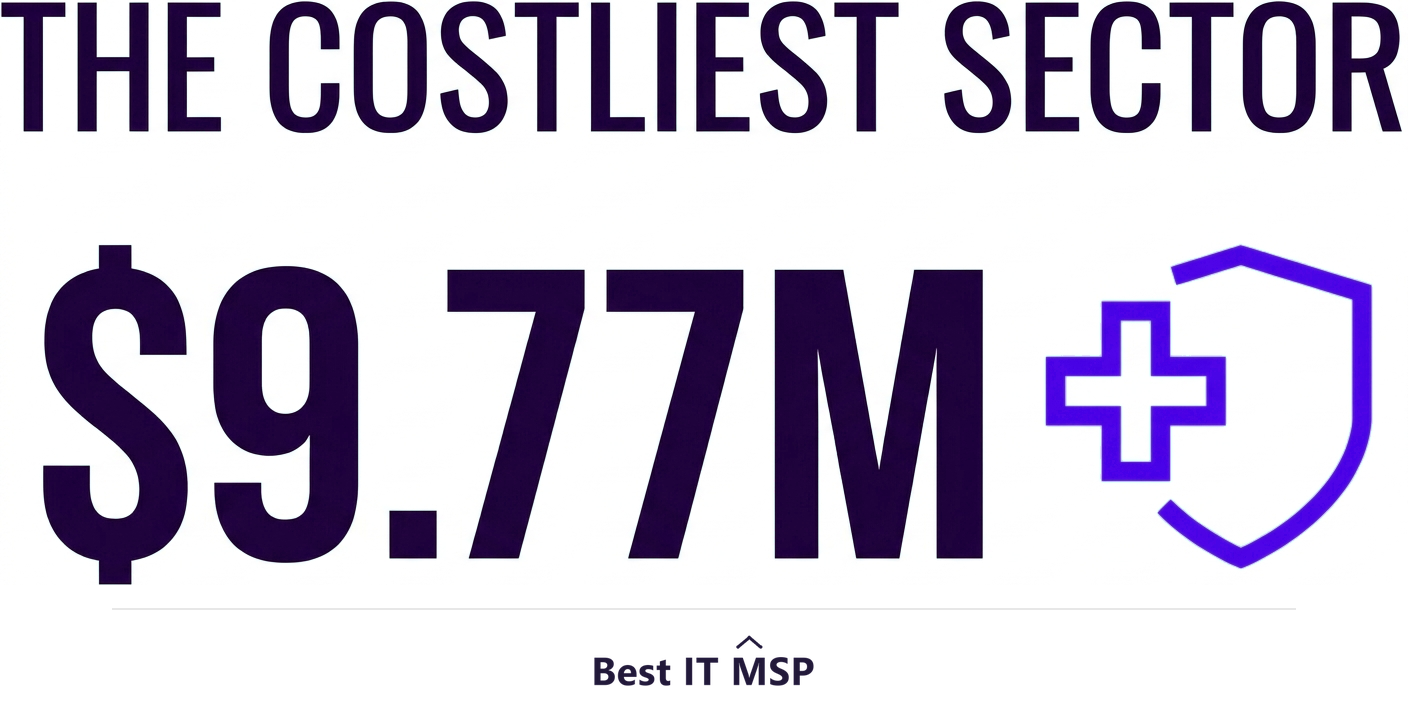
For healthcare, security and HIPAA compliance are two sides of the same coin. HIPAA requires covered entities and their business associates to protect confidential PHI with administrative, physical, and technical safeguards, and to document that they do. To comply is not a one-time project but an ongoing discipline of risk assessment, controls, training, and proof. The stakes are uniquely high because healthcare is the costliest sector to breach, with the average healthcare data breach reaching $9.77 million, roughly double the $4.88 million all-industry average. On top of the breach cost come HIPAA penalties, reputational damage, and the erosion of patient trust. Most breaches still start with people, the human element is involved in 68% of breaches, so training is as important as technology. Good healthcare IT services make compliance and security continuous and demonstrable rather than a scramble before an audit.
Why healthcare is the most-targeted sector
Healthcare is attacked relentlessly for a simple reason: the data is extraordinarily valuable and the disruption is extraordinarily painful. A complete medical record is worth far more to criminals than a credit card number because it cannot be cancelled and can enable identity and insurance fraud for years. And because downtime threatens patient care, healthcare organizations are prime ransomware targets, attackers bet that a hospital or clinic will pay quickly to restore systems. This pressure is compounded by the slow pace of detection, with breaches taking an average of 258 days to identify and contain, and by a shortage of security talent, a global shortfall of about 4.8 million cybersecurity professionals. Automation helps close the gap, saving breached organizations an average of $2.22 million, but healthcare's risk profile makes professional, continuous protection essential rather than optional.
Why specialized healthcare IT matters
A generalist IT provider can manage computers, but healthcare raises the bar in ways that reward specific experience. A provider who understands healthcare knows HIPAA and how to implement and document its safeguards, understands EHR and clinical systems and why their uptime is a patient-safety matter, can secure connected medical devices, and appreciates the unique threat landscape healthcare faces. That expertise is increasingly hard to assemble in-house, which is part of why so many healthcare organizations turn to specialized providers, and why the managed services market keeps growing from about $330 billion in 2024 toward $879 billion over the next decade. The right partner lets clinical staff focus on patients while technology stays reliable, secure, and compliant in the background.
Getting healthcare IT right
In healthcare, IT is inseparable from patient care and patient privacy. The right healthcare IT services protect PHI with HIPAA-aligned security, keep clinical systems reliably available, back everything up, secure connected devices, and keep compliance continuous and documented, all while supporting the clinicians who depend on the technology daily. Given that healthcare is the most-targeted and costliest sector to breach, this is an area where specialized, experienced IT support is not a luxury but a core part of running a safe, trusted practice.
If you are evaluating IT services for your healthcare organization, comparing vetted providers on merit is the place to start. Browse merit-ranked managed IT firms by city in the Best IT MSP directory, where ranking is earned on rating and verified data, not on who pays the most. You can also explore the full managed IT services hub.
FAQ
What are healthcare IT services?
Healthcare IT services are specialized technology support for medical organizations, covering HIPAA-aligned cybersecurity to protect patient data, support for EHR and clinical systems, reliable backup and disaster recovery, security for connected medical devices, compliance support and documentation, and responsive help desk service. They weave security and compliance throughout, because healthcare handles protected health information under strict regulation.
Why is healthcare IT more specialized than general IT?
Because healthcare handles protected health information under HIPAA, depends on clinical systems like EHRs whose uptime affects patient care, runs connected medical devices and legacy systems that are hard to secure, and is the most-targeted industry for cyberattacks. Managing all of this safely requires understanding both the technology and the healthcare regulations, which generalist IT often does not.
Why is healthcare the most-targeted sector for cyberattacks?
Because medical data is extraordinarily valuable, a complete medical record enables identity and insurance fraud for years and cannot be cancelled like a credit card, and because downtime threatens patient care, making healthcare organizations prime ransomware targets that attackers expect to pay quickly. This is why healthcare data breaches are the costliest of any industry, averaging $9.77 million.
How do healthcare IT services support HIPAA compliance?
They implement HIPAA's administrative, physical, and technical safeguards, encryption, access controls, monitoring, and email security, conduct the required risk assessments, maintain policies and documentation, train staff, and keep everything audit-ready. Because HIPAA compliance is an ongoing discipline rather than a one-time project, good healthcare IT makes it continuous and demonstrable rather than a scramble before an audit.
What does a healthcare data breach cost?
Healthcare data breaches are the costliest of any industry, averaging $9.77 million, roughly double the $4.88 million all-industry average. On top of the direct breach cost come HIPAA penalties, reputational damage, and the erosion of patient trust. This uniquely high cost is a major reason healthcare organizations invest in specialized, continuous IT security and compliance support.
Can a general IT provider support a healthcare organization?
A generalist can keep computers running, but healthcare raises the bar in ways that reward specific experience: knowing HIPAA and how to document its safeguards, understanding EHR and clinical systems and why their uptime is a patient-safety matter, securing connected medical devices, and grasping healthcare's unique threat landscape. Most healthcare organizations are better served by specialized, experienced IT support.
Best IT MSP is the independent directory of vetted managed IT providers across North America. Compare merit-ranked firms in your city with healthcare and HIPAA experience. No pay-to-play.