How Much Do Managed IT Services Cost? A 2026 Pricing Guide
Managed IT services typically cost about $100 to $250 per user per month for most small and midsize businesses, though plans range from roughly $100 to $400 per user depending on what is included. Providers price per user, per device, in tiers, or as a flat all-inclusive fee.
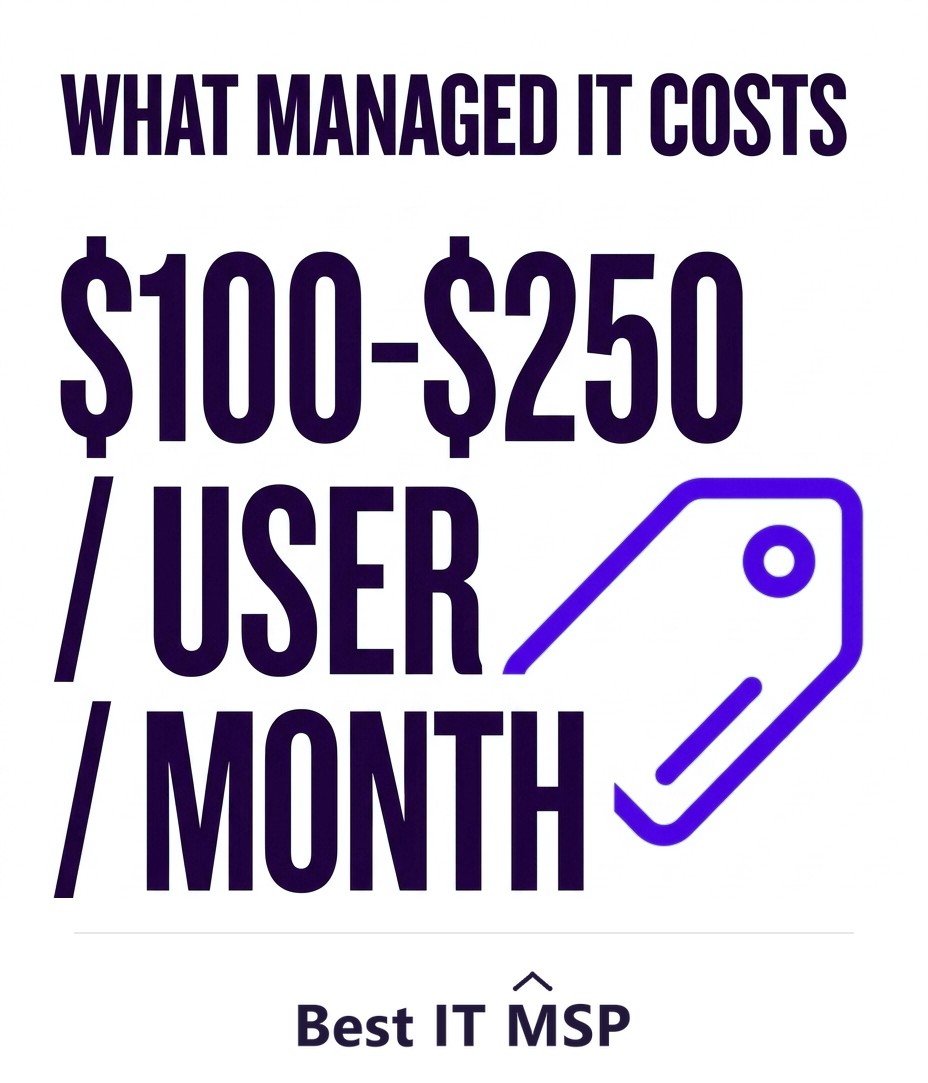
- Most small and midsize businesses pay about $100 to $250 per user per month for comprehensive managed IT.
- The common pricing models are per user, per device, tiered bundles, and flat all-inclusive fees.
- Price is driven by your number of users and devices, security and compliance needs, locations, and service level.
- Always compare on the all-in monthly number and watch for onboarding fees, after-hours premiums, and add-ons.
- A predictable managed fee is usually cheaper than the combined cost of downtime, a breach, and full-time staff.
How much do managed IT services cost?
Managed IT services typically cost about $100 to $400 per user per month, with most small and midsize businesses landing in the $100 to $250 range for a comprehensive plan. Basic support and monitoring sits near the bottom of that range, while security- and compliance-heavy plans sit near the top. If your provider prices per device instead, expect roughly $25 to $100 per device per month, with servers costing more. These are planning ranges, not quotes; your real number depends on the factors below, and two businesses of the same size can pay very different amounts depending on what they need protected. This guide condenses our full managed IT services pricing guide into the numbers buyers ask about most.
The managed IT pricing models
Providers package the same work in a few different ways. Understanding the model helps you compare quotes that look different on paper:
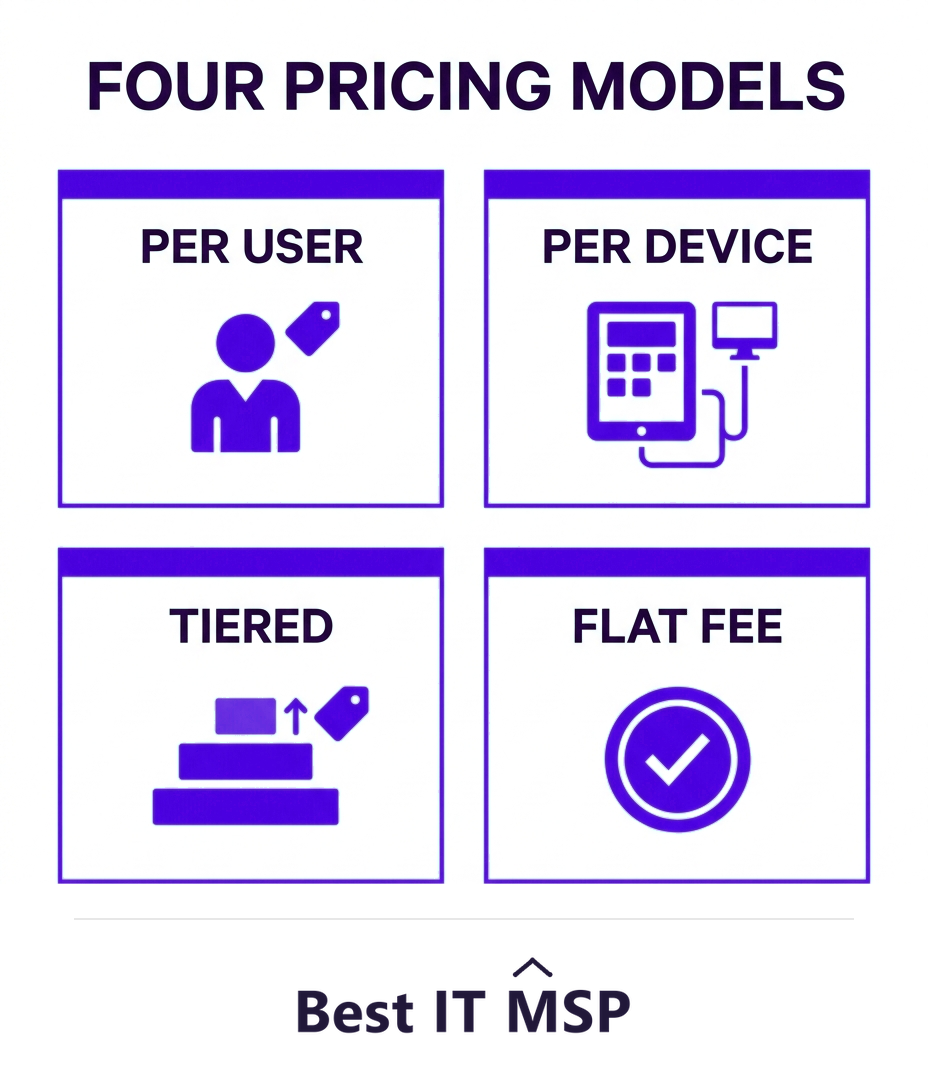
- <strong>Per user.</strong> One flat rate per employee covering all their devices. The most common model and the easiest to budget.
- <strong>Per device.</strong> A rate for each server, desktop, or laptop. This fits businesses where device counts, not headcount, drive the work.
- <strong>Tiered bundles.</strong> Good, better, and best packages, where higher tiers add security, compliance, and strategy.
- <strong>Flat-fee, all-inclusive.</strong> A single monthly fee for unlimited support. It removes per-ticket surprises and rewards the provider for preventing problems.
What drives the price up or down
Two quotes for the same headcount can differ widely because price tracks scope and risk. The biggest drivers are:
- <strong>Number of users and devices.</strong> The single largest factor in any quote.
- <strong>Security and compliance needs.</strong> HIPAA, PCI, or CMMC work raises the price because it adds tools, monitoring, and documentation.
- <strong>Network complexity and locations.</strong> More sites, servers, and systems cost more to manage.
- <strong>Service level.</strong> Round-the-clock coverage and faster guaranteed response cost more than business-hours support.
- <strong>What is included.</strong> Whether security, backup, and strategy are bundled or billed separately changes the headline number.
Example monthly costs by company size
As a rough, market-based guide for comprehensive managed IT (support plus monitoring, security, and strategy), monthly costs scale with headcount:
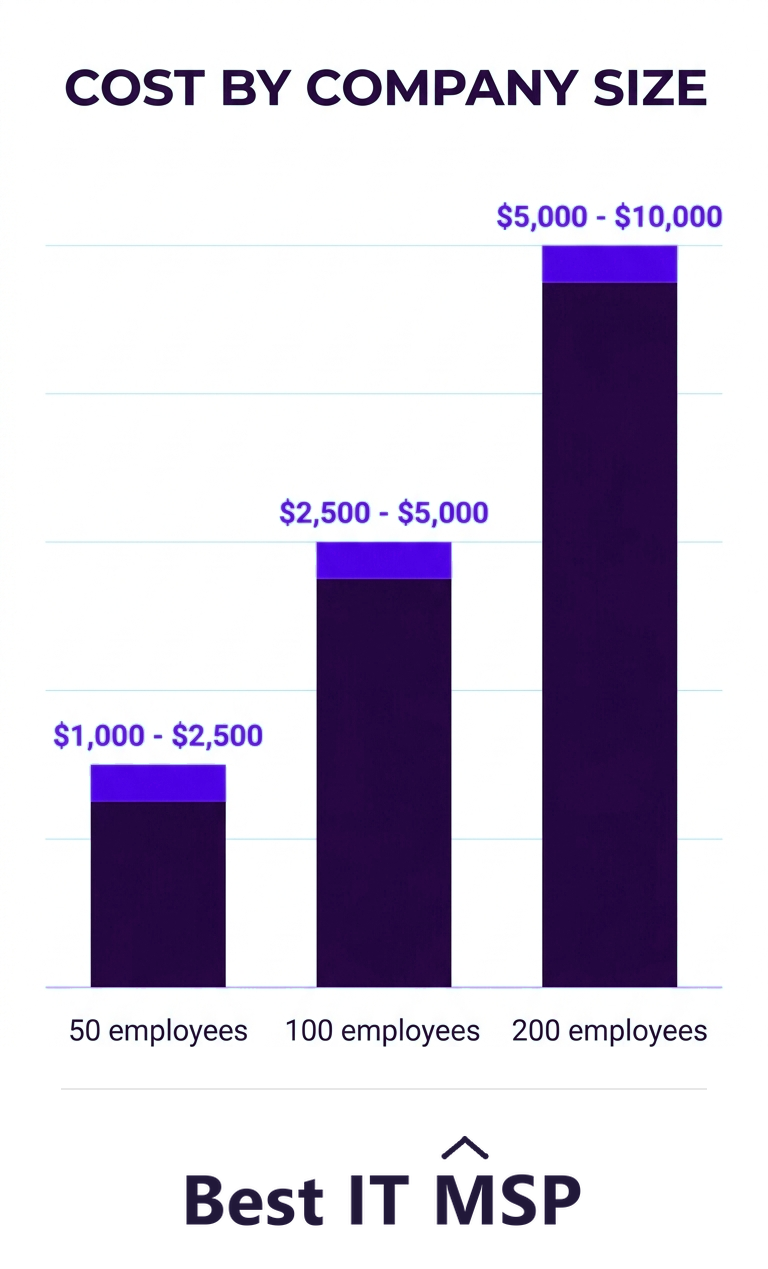
- <strong>About 50 employees:</strong> roughly $5,000 to $8,000 per month.
- <strong>About 100 employees:</strong> roughly $7,500 to $13,000 per month.
- <strong>About 200 employees:</strong> roughly $12,000 to $18,000 per month.
- <strong>300+ employees:</strong> roughly $17,000 to $28,000 or more per month.
Industry matters too. Regulated sectors such as healthcare, finance, and defense sit at the higher end because of the extra compliance work. These are directional ranges, not quotes; a provider sizes the real figure to your environment after an assessment.
What you get at each price point
It helps to know what the range actually buys. At the lower end, around $100 to $150 per user per month, you typically get core support: a help desk, remote monitoring, patching, and basic endpoint protection. That covers a stable business with simple needs, but it usually leaves security and strategy thin.
In the middle, around $150 to $250 per user, plans add stronger cybersecurity, email security, multi-factor authentication, managed backup, and some strategic guidance. This is where most growing businesses land, because it balances cost against real protection. At the top, above $250 per user, you get fully managed security, compliance support for frameworks like HIPAA or CMMC, a dedicated virtual CIO, and faster guaranteed response. Paying less than you need is the most expensive mistake, because the gap shows up as downtime or a breach rather than on the invoice.
Are managed IT services worth the cost?
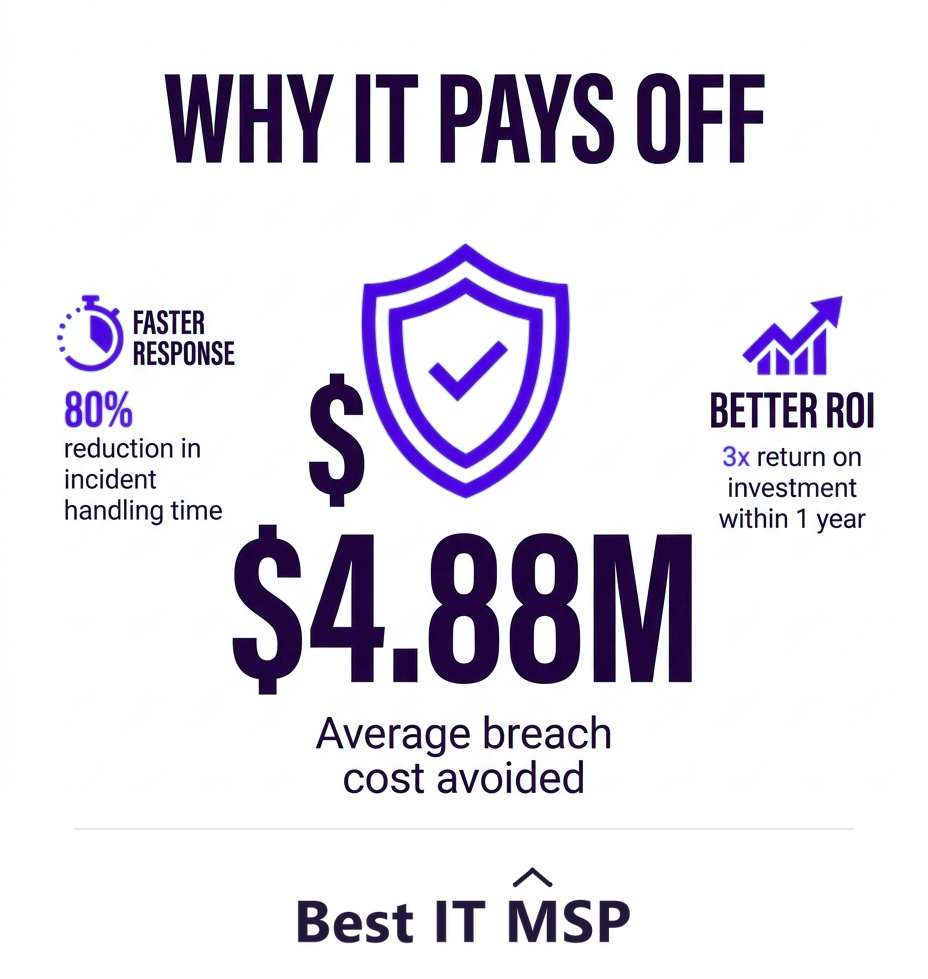
The fairest way to judge the cost is against what failure costs. An hour of downtime costs most organizations more than $100,000, the average data breach reached $4.88 million in 2024, and reported cybercrime losses topped $12.5 billion in a single year. Skilled staff are scarce and expensive amid a global shortfall of about 4.8 million cybersecurity professionals. For most small and midsize businesses, a predictable managed fee is far cheaper than the combined cost of downtime, a breach, and a full-time hire.
The market agrees: the global managed services market was valued at roughly $330 billion in 2024 and is projected to reach about $879 billion over the next decade, precisely because the model pays for itself for so many businesses.
Hidden costs and how to compare quotes
Compare providers on the all-in monthly number, not the headline rate. The cheapest quote often excludes the things you need most. Watch for onboarding and setup fees, after-hours or emergency premiums, per-ticket charges, project work billed separately, and security or backup sold as add-ons after you sign. Ask each provider exactly what is included, what is extra, and how the price changes as you grow. A flat-fee model removes most of these surprises.
How to get an accurate price for your business
The only way to know your real cost is to get scoped quotes from a few providers, because published ranges are planning guides, not your number. Shortlist three, give each the same information about your headcount, devices, locations, and compliance needs, and compare their all-in numbers alongside exactly what each one includes. Weight fit and security over the lowest price, because the cheapest option is rarely the cheapest outcome once downtime and risk are counted. A good provider will assess your environment first and explain the price in plain terms, tied to what it protects, rather than quoting a flat figure sight unseen. If a quote seems far below the others, ask what is missing, it usually means security, backup, or strategy has been stripped out. To start from a vetted, merit-ranked list rather than a search ad, browse providers by city in the Best IT MSP directory, where ranking is earned on rating and verified data.
FAQ
How much do managed IT services cost per user per month?
Managed IT typically costs about $100 to $400 per user per month, with most small and midsize businesses paying $100 to $250 for a comprehensive plan. Basic support sits near the bottom of that range and security- or compliance-heavy plans near the top. Per-device pricing runs roughly $25 to $100 per device.
What are the managed IT pricing models?
The common models are per user (a flat rate per employee), per device (a rate per server or endpoint), tiered bundles (good, better, best packages), and flat-fee all-inclusive (one monthly fee for unlimited support). Per user is the most common and easiest to budget, while flat-fee removes per-ticket surprises.
What factors determine managed IT services cost?
The main drivers are your number of users and devices, your security and compliance requirements, network complexity and number of locations, the service level you need such as 24/7 versus business hours, and how much is bundled into the fee versus billed separately. Number of users and devices is usually the largest factor.
How much does managed IT cost for 50 or 100 employees?
As a market-based guide for comprehensive managed IT, around 50 employees often runs roughly $5,000 to $8,000 per month and 100 employees roughly $7,500 to $13,000 per month. Regulated industries sit at the higher end. These are directional ranges; a provider sizes the exact figure to your environment after an assessment.
Are managed IT services worth the cost?
For most small and midsize businesses, yes. An hour of downtime costs most organizations more than $100,000 and the average breach costs $4.88 million, so a predictable monthly fee is usually cheaper than the combined cost of downtime, a breach, and full-time staff. The model also delivers expertise that is hard to hire.
What hidden costs should I watch for in an MSP quote?
Watch for onboarding and setup fees, after-hours or emergency premiums, per-ticket charges, major projects billed separately, and security or backup sold as add-ons. Always compare providers on the all-in monthly number and ask what is included versus extra as you grow. A flat-fee model removes most of these surprises.
Best IT MSP is the independent directory of vetted managed IT providers across North America. Compare merit-ranked firms in your city on real ratings and verified data, then request scoped quotes. No pay-to-play.