Phone Number Porting Problems: The Four Ways It Fails
Phone number porting fails in four ways. The request gets rejected, only some numbers move, the numbers move but your 911 address and directory listing stay behind, or a port runs that nobody authorized. Federal rules cap a port request at 14 standard data fields, so most failures are data mismatches you can fix before you sign anything.
- Porting fails in four ways. Rejected, partial, orphaned, or unauthorized. Each has a different cause and a different pre-port check.
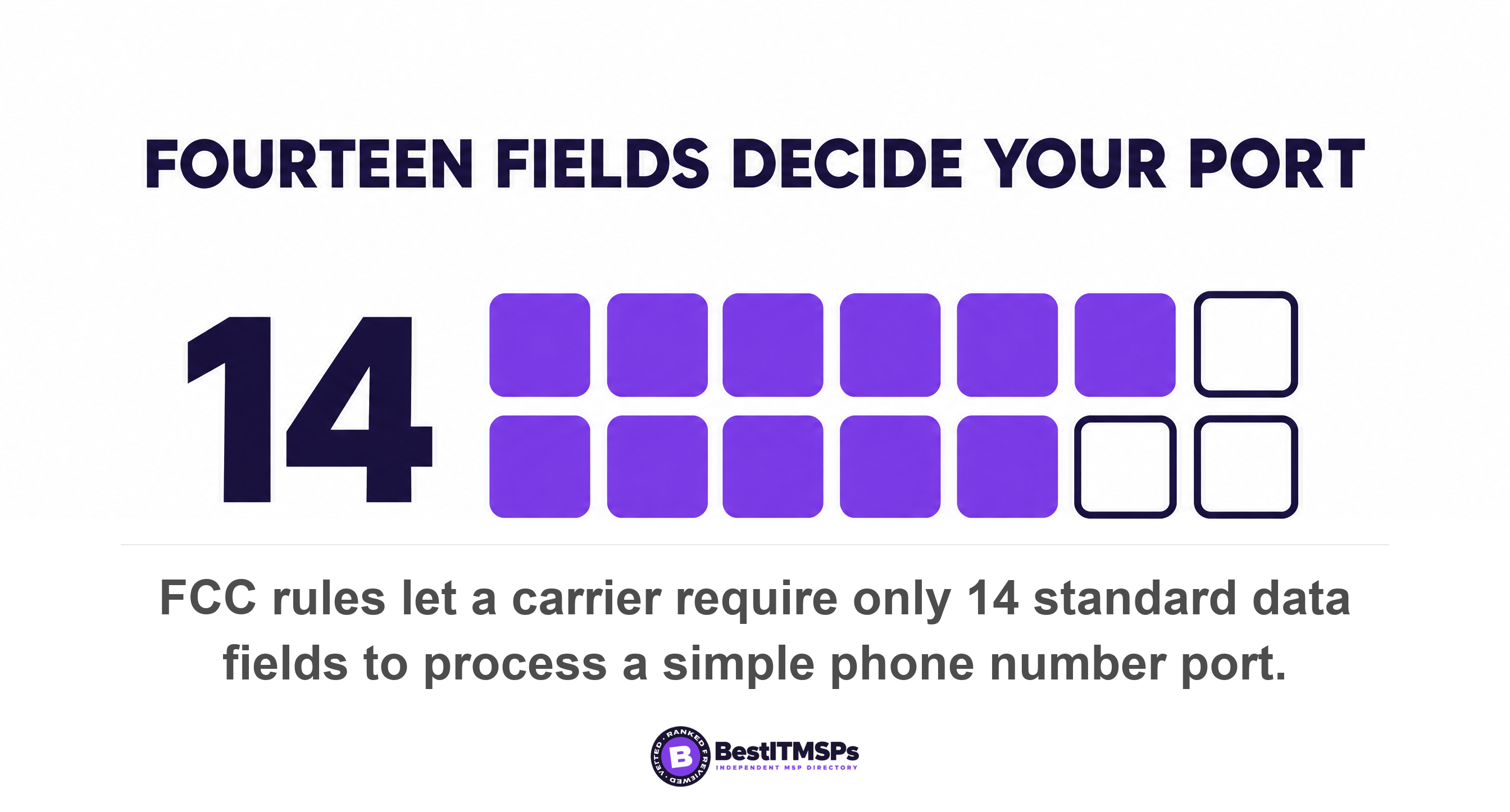
- Federal rules cap a simple port request at 14 standard data fields. All 14 come off your customer service record, so get that record first.
- The one-business-day interval starts only when a complete and accurate request arrives, and anything landing after 1 p.m. counts as the next business day.
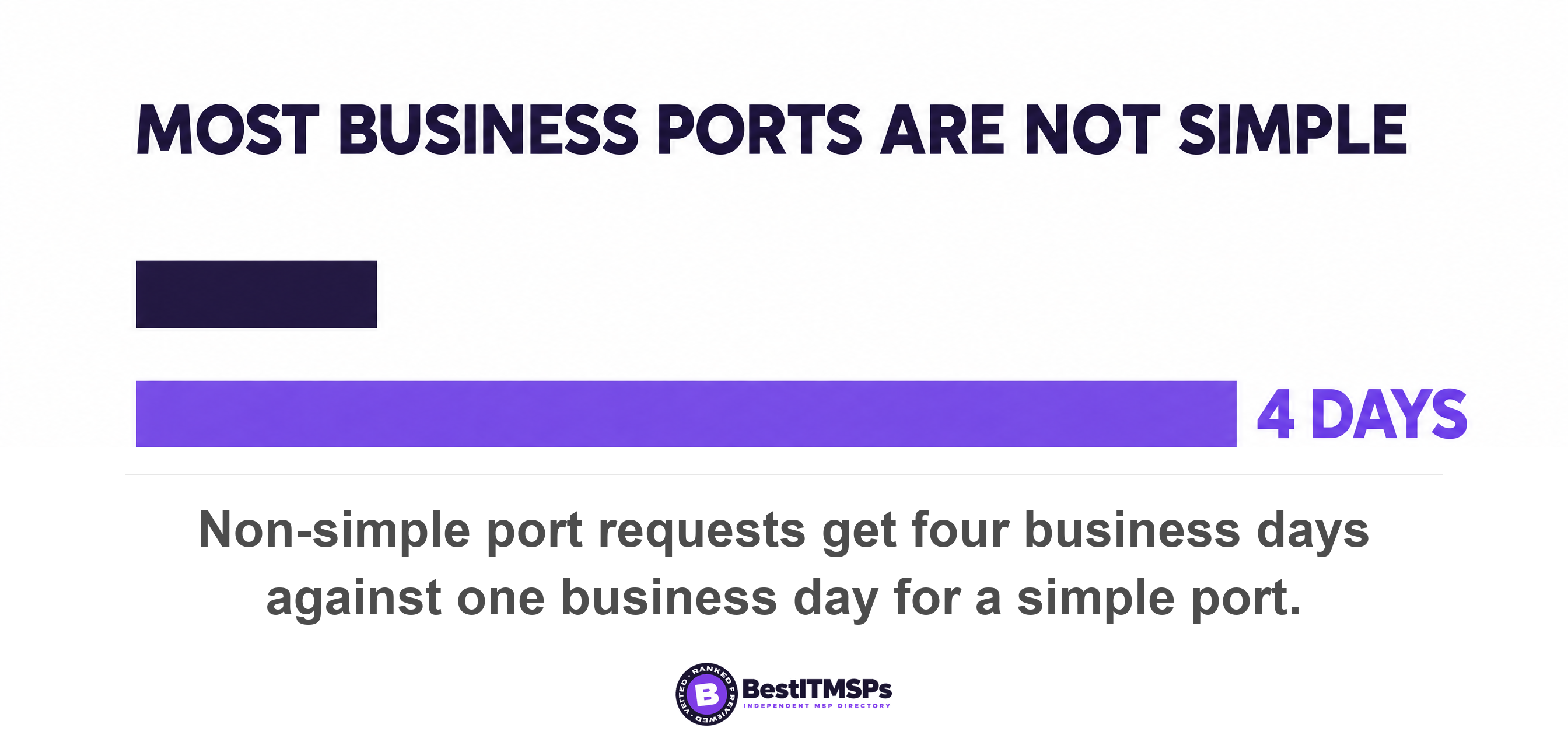
- A port order that changes your directory listing is not a simple port, so it drops to the four-business-day interval.
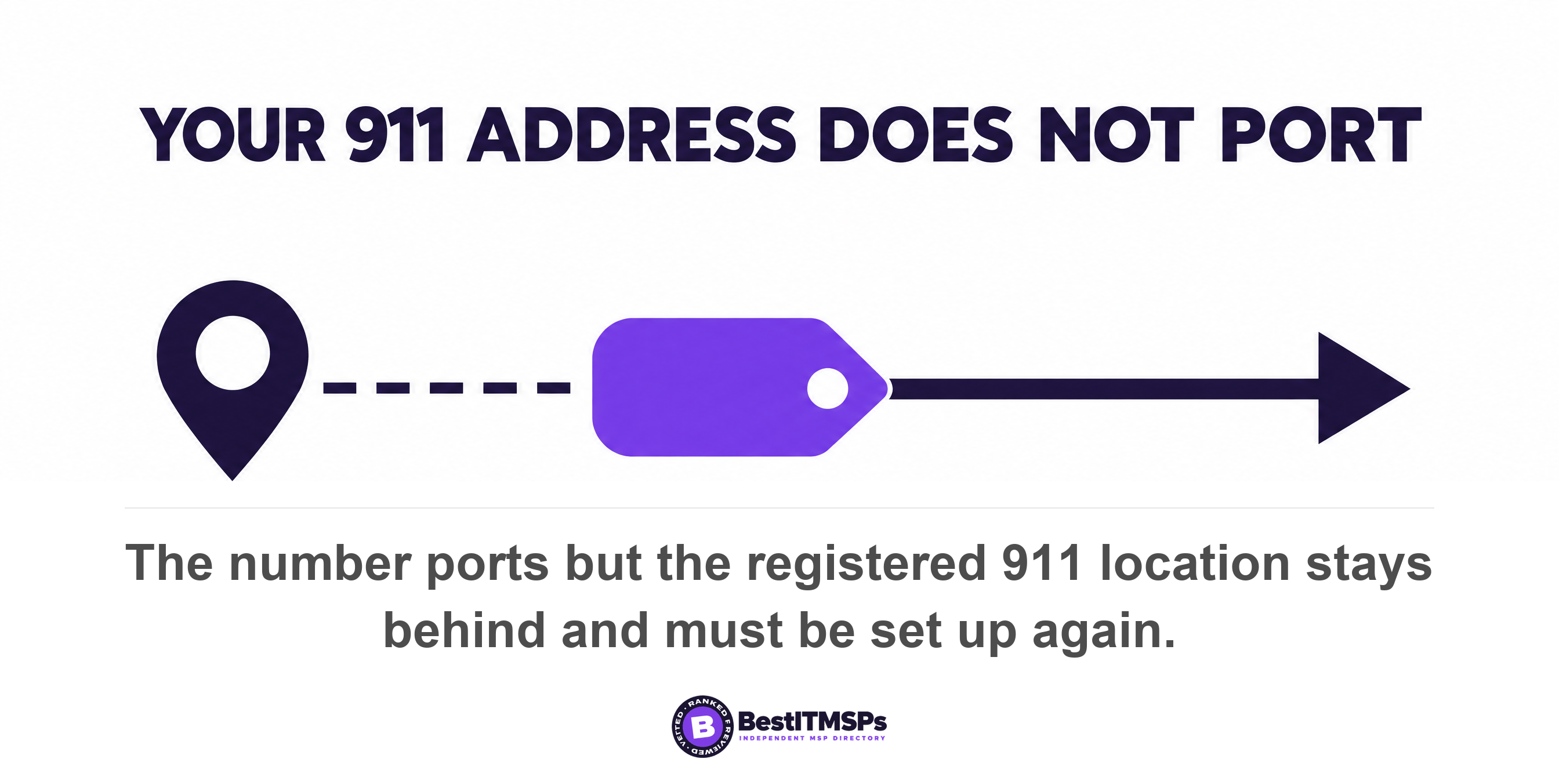
- Your 911 registered location and your directory listing are not among the 14 fields, so neither travels with the number.
Phone number porting problems come in four shapes
Phone number porting fails in four ways. The request gets rejected, only some of your numbers move, the numbers move but your 911 address and directory listing stay behind, or a port runs that nobody at your company authorized. Each failure has a different cause, a different federal rule behind it, and a different pre-port check that stops it.
For a 20-person firm, a failed port is not a technical annoyance. Your main billed number sits on your invoices, your Google listing, your van and your front door. When it goes dark on a Tuesday morning, inbound revenue stops and nobody calls to tell you, because they cannot. The rules on local number portability govern how two carriers exchange a number. They do not promise to keep your business reachable while they do it.
Federal rules do set the shape of the process. A carrier must complete a simple wireline-to-wireline or simple intermodal port request within one business day, and a non-simple request within four business days. The carrier you are leaving, called the losing carrier, may require only the data described in two short lists to accomplish a simple port order request from your new carrier, and those lists come to 14 standard data fields plus an optional passcode. The provider taking you on is the winning carrier, and those 14 fields are everything it has to supply. Read that twice. The information needed to port your numbers is finite, published and knowable before you sign anything.
Work through this before you pick a cutover date. If you are still choosing a platform, start with Hosted VoIP vs On-Premise and Unified Communications Explained. If the circuit worries you more than the number, Internet Failover for Small Business covers that instead.
Failure 1: the request gets rejected and you lose the day
A rejected port request is the most common failure, and the cause is almost always a data mismatch. The losing carrier compares the request against its own account record. One wrong character in the account number or the service zip code is enough to send the whole order back, and nothing moves until somebody fixes it and resubmits.
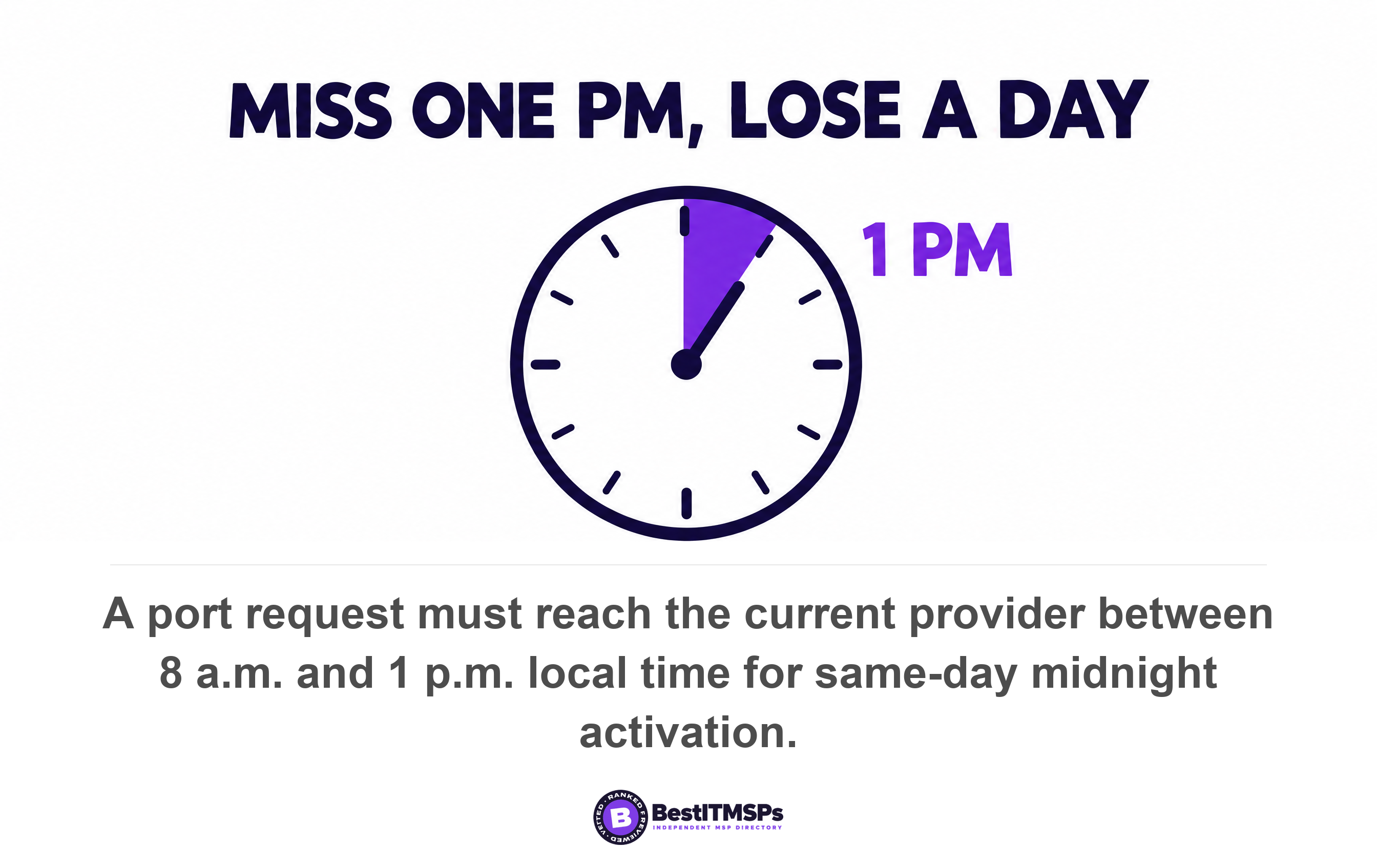
Timing is what makes a mismatch expensive. The one-business-day interval runs from the moment an accurate and complete Local Service Request reaches the current service provider, and that request must arrive between 8 a.m. and 1 p.m. local time to be eligible for activation at midnight the same day. Anything later is considered received on the following business day. The current provider then has to respond within four hours with a Firm Order Confirmation or a reject. A rejection at 2 p.m. does not cost you four hours. It costs you tomorrow.
The rules cap the request, not the record behind it
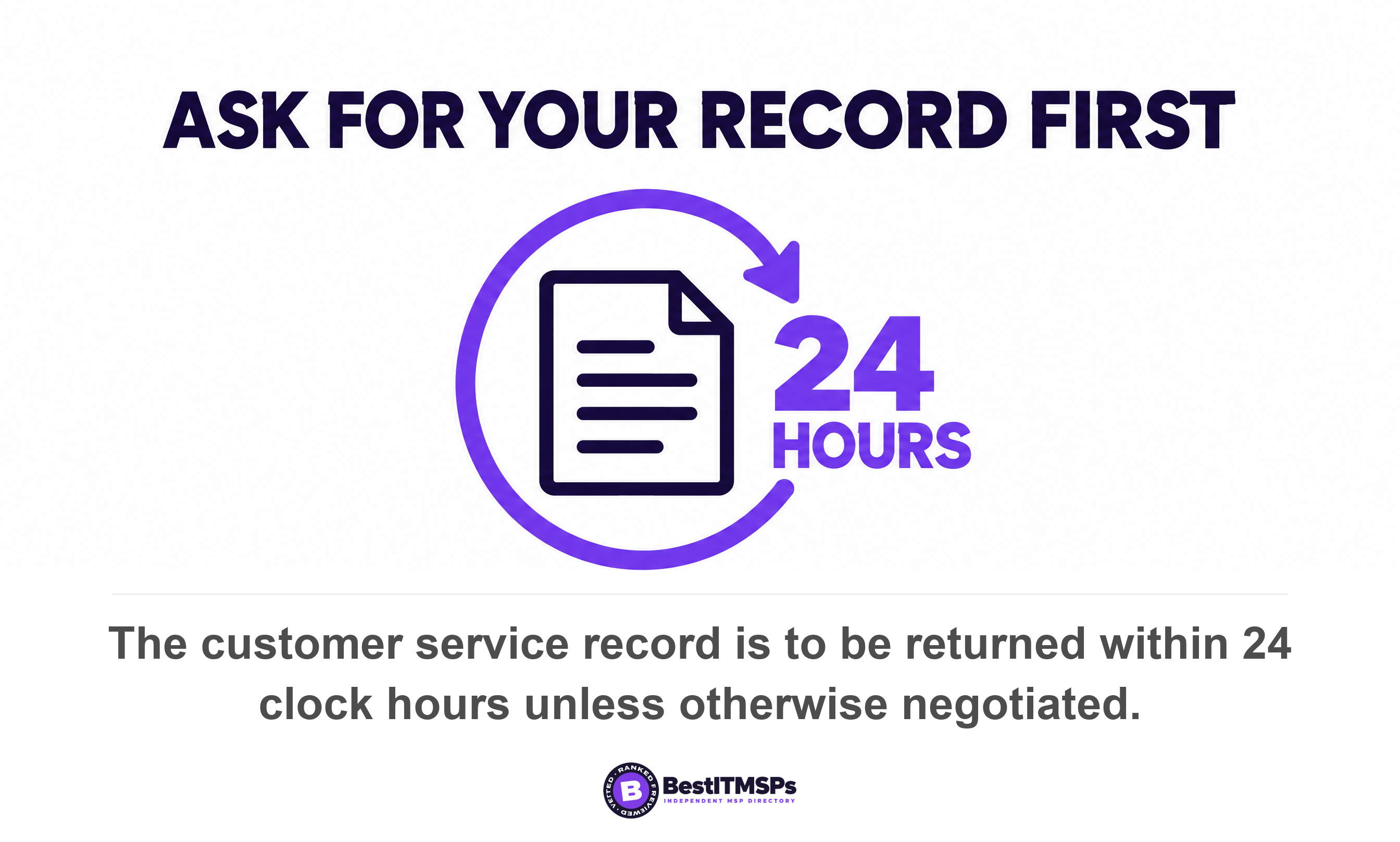
Here is the part no vendor explains. The 14-field cap governs the port request itself, and the step in front of it carries no cap at all. All 14 fields come off your customer service record, which is the account summary your current carrier holds, and the Commission's order expressly does not address what information the current service provider can require before disclosing a customer service record. It did settle two useful points. Service providers may only request and provide customer service records for the purpose of transferring a number, and carrier-assigned passcodes may not be required in order to obtain a customer service record. The record itself is meant to come back within 24 clock hours, unless otherwise negotiated. So the single input that decides whether your port succeeds sits on the least regulated step in the whole process, and it is the one step you can finish yourself, weeks early, at no cost.
So ask for your own customer service record now, while nothing is urgent. Read the account number, the service address, the zip code and the main billed number off it, then match them character for character against the port form your new provider asks you to sign. Business days also exclude the current provider's own company-defined holidays, so a cutover scheduled beside one is a cutover scheduled into a gap. The Commission expects carriers to contact the new provider to resolve issues rather than simply reject the request, which tells you exactly what to escalate when one does not.
Failure 2: only some of your numbers move
A partial port happens because a business phone account is not a single line. The federal intervals sort ports into simple and non-simple, and very little about a multi-line business is simple. A simple port carries the one-business-day clock, and everything else drops to four business days.
One trigger is easy to miss and sits in the FCC's own order. Orders involving changes to directory listings will not be considered for simple port processing. The moment your port order also changes how your company appears in directory assistance, the request stops being a simple port. The word simple in the rule is a processing class, not a description of how hard your cutover will feel.
A partial port splits your call flow in half. Calls to the ported number land on the new system while the direct dial numbers you did not port still ring the old one. Hunt groups, the SIP trunk your old provider terminated, and the overflow path to voicemail all lived on the old account. Three line types get stranded most often, including fax lines, alarm panel dialers and elevator lines, because nobody lists them when they list the phones.
Two questions settle this before you schedule anything. Ask your current provider, in writing, what happens to the lines you are not porting once the main billed number leaves the account. Then ask your new provider which numbers it is filing as a simple port and which as a complex port, and get a separate interval expectation for each batch. The intervals apply unless the new provider or the customer requests a longer period, so a staged port is allowed and is often the safer way to migrate.
Failure 3: the number arrives and your 911 address does not
A number can port perfectly and still reach the wrong ambulance. None of the 14 standard data fields carries a 911 location or a directory listing, so neither travels with the number. Your new provider builds both from scratch, and the port can complete before it finishes.
The duty sits with the provider taking you on. An interconnected VoIP provider must have obtained the Registered Location from the customer prior to the initiation of service, and must have provided end users one or more methods of updating their Registered Location, with any method allowing an update at will and in a timely manner. Providers must also tell every subscriber, prominently and in plain language, when E911 may be limited, and the rule names delays in making a dispatchable location available in the automatic location information database as one of those cases.
The affirmative acknowledgement is your receipt. Providers must obtain and keep a record of affirmative acknowledgement by every subscriber that the E911 advisory was received and understood. A provider who cannot produce yours probably never completed your E911 registration properly. Ask for the copy, then test the result. Dial 933 if your provider supports it, or arrange a non-emergency verification call with your local dispatch center.
Your directory listing needs the same treatment, separately, because a listing change pushes the order out of simple port processing anyway. One more trap catches firms that port and move office in the same month. The federal definition of number portability is the ability to retain existing numbers at the same location, and relocating is a different concept the rules call location portability. Treat the move and the port as two projects with two dates.
A provider who can show you the date your registered 911 address was confirmed is operating the control. A provider who says the number will just work is only selling it.
Failure 4: a port runs that you never authorized, or yours gets blocked
The fourth failure has two faces and one control behind both. Somebody can move your number without your consent, or a block meant to prevent exactly that stops a port you do want. Both turn on who is allowed to authorize a change to your account.
The unauthorized side, which the rules call slamming
Federal rules call an unauthorized carrier change slamming, and they give you a remedy. A submitting carrier must obtain the subscriber's authorization, verify it, and keep the verification record for at least two years. The document the industry calls a letter of authorization is a letter of agency in the rules, and it must be a separate or easily separable document whose sole purpose is authorizing the change. It may not be combined with inducements of any kind. Where a port happens anyway, the accused carrier has 30 days to provide valid proof of verification, and failing to do so is presumed to be clear and convincing evidence of a violation.
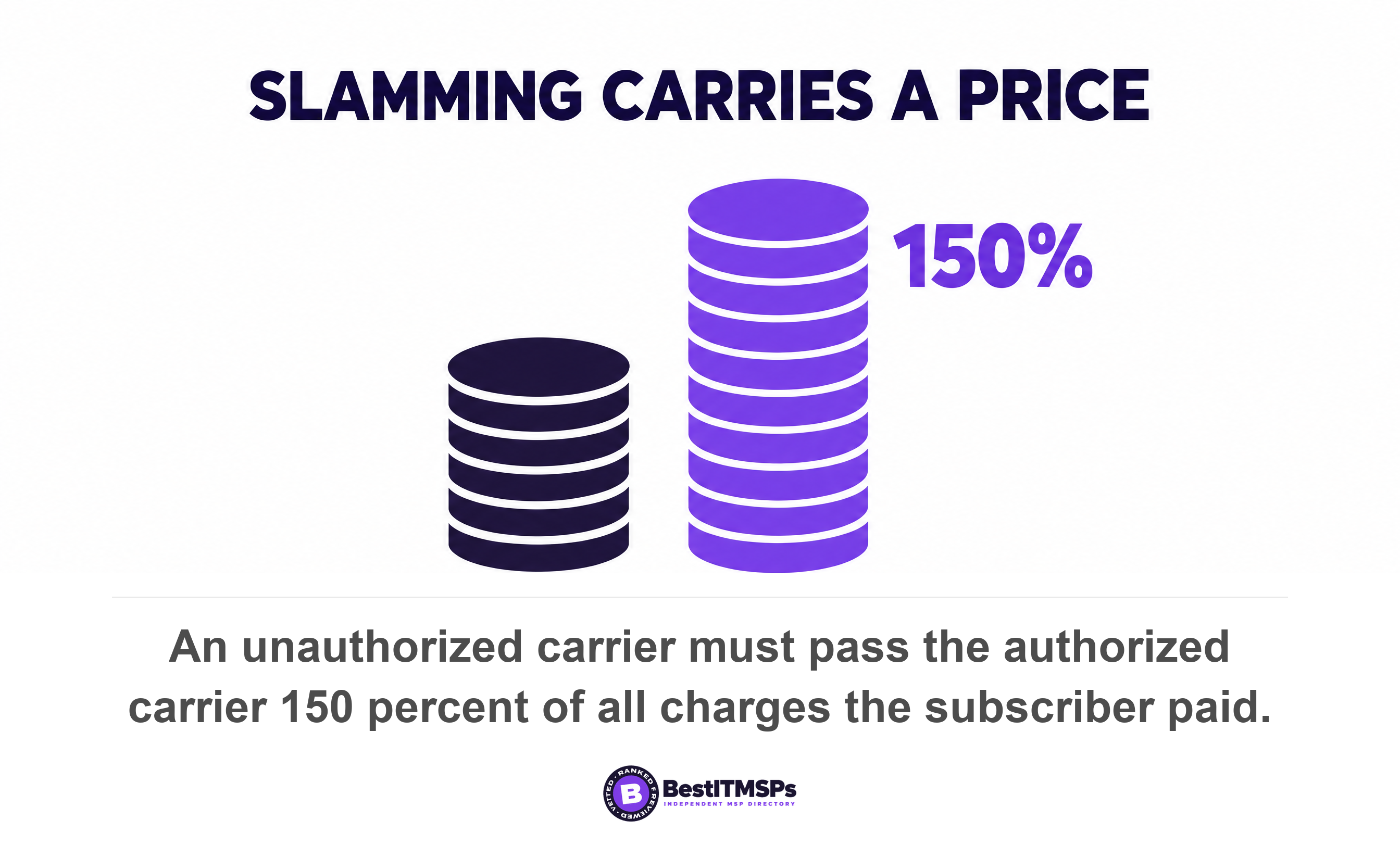
The money remedies are worth knowing before you need them. Where you have not paid, you are entitled to absolution from the charges incurred during the first 30 days. Where you have paid, the unauthorized carrier is ordered to pass your real carrier an amount equal to 150 percent of all charges paid by the subscriber, and that carrier must refund you 50 percent of them within ten days of receiving it.
The blocked side, and a scope gap worth asking about
A port freeze is the block. A freeze prevents a change in a subscriber's preferred carrier selection unless the subscriber gives express consent, and the carrier must accept either a written or electronically signed authorization, or an oral authorization, stating your intent to lift it. Carriers also freeze accounts under their own port-out protections, and the scope there surprises people. The FCC's secure port-out rule covers all providers of commercial mobile radio service, including resellers of wireless service, who must use secure methods to authenticate a customer before effectuating a port-out request. That is wireless. Your main business line usually is not, and the definitions behind those slamming remedies refer only to telecommunications carriers and do not name interconnected VoIP providers.
Treat a port-out PIN on a business VoIP account as a feature your provider may offer rather than something those rules require, and ask whether it exists. Three questions close this out. Ask who at your company is allowed to authorize a port out. Ask whether a port-out PIN or account lock is set. Ask whether a port freeze is active today, because a freeze somebody arranged years ago will reject your own request on day one.
The pre-port checklist, in the order you should work it
Work the eight steps below in order, because each one feeds the next. Start two weeks before the date you want, not two days.
- Request your customer service record from your current provider and read it yourself.
- Match the account number, service address, zip code and main billed number against the port form, character for character.
- List every number on the account, including fax lines, alarm dialers and anything attached to a SIP trunk.
- Split the order into a simple port batch and a complex port batch, and ask for an interval on each.
- Confirm in writing what happens to the lines you keep once the main billed number leaves.
- Clear any active port freeze and locate the port-out PIN before the request goes in.
- Register your E911 address with the new provider and get the affirmative acknowledgement in writing.
- Schedule the cutover for a Monday or Tuesday morning before 1 p.m. local time, so a rejection still leaves most of the week to recover.
Then test the thing you cannot undo. Before you let the old account close, call every ported number from an outside mobile, send a test fax, trigger the alarm panel's test call and verify the 911 registration. Keep the old service alive for a full billing cycle where the provider allows it. The overlap costs one month and buys you a rollback.
Keep one last habit. Write down who you escalate to on both sides, with a direct number, before the day of the port. Carriers and interconnected VoIP providers must facilitate a valid port request without unreasonable delay or unreasonable procedures, but somebody at your end still has to notice that nothing happened and say so out loud.
What a good answer sounds like, and what to walk away from
A provider worth porting to answers in dates, fields and names. A weak one answers in reassurance. Four answers should end the conversation.
- Quoting a firm cutover date before it has seen your customer service record.
- Treating a multi-line business account as a simple port without telling you which numbers qualify.
- Refusing to confirm in writing what happens to the lines you are not porting.
- Having no written process for E911 registration on the day the numbers cut over.
None of this makes a port risk free, and no honest provider claims otherwise. It makes the four failure modes visible early, when each one costs a phone call instead of a day of missed revenue. Porting is a data-matching exercise with a published input list, which means most of the work happens before anyone touches a switch. Put the four question sets above to every provider on your shortlist and compare the answers side by side.
FAQ
How long does it take to port a business phone number?
Federal rules give carriers one business day for a simple port and four business days for a non-simple port. The clock starts only when an accurate and complete request reaches your current provider between 8 a.m. and 1 p.m. local time. Most multi-line business accounts are not simple ports, so plan around the four-day interval.
What information do I need to port my phone number?
You need the data on your customer service record. A carrier may require only 14 standard data fields, plus an optional passcode, to process a simple port order, including the ported telephone number, the account number and the service zip code. Request the record from your current provider and check every field yourself before you sign.
Why was my number port rejected?
A rejected port is almost always a mismatch between your request and your current carrier's account record. The current provider must respond within four hours with a Firm Order Confirmation or a reject, and a request arriving after 1 p.m. is considered received on the following business day. Fix the field, resubmit before 1 p.m., and escalate rather than refile blindly.
Does my 911 address move when I port my number?
No. Your E911 registration is not one of the 14 porting fields, so it does not travel with the number. Your new provider must have obtained the Registered Location from you prior to the initiation of service and must give you a way to update it at will. Ask for the affirmative acknowledgement record in writing.
Can someone port my business number without my permission?
Yes, and the rules call it slamming. A carrier must obtain and verify your authorization and keep the record for at least two years, and an accused carrier has 30 days to provide valid proof of verification. A port freeze blocks a change unless you give express consent, and you can lift it with a written or an oral authorization.
Best IT MSP is the independent directory of vetted managed IT and cybersecurity providers across the US and Canada. Organic ranking is earned on rating and verified data, and paid placement is always labelled. Take the four question sets above to three merit-ranked firms in your city and compare the answers side by side.