Block Hours That Expire: What You Are Really Buying
A block of hours is prepaid support labour sold at a discount and dated to expire. It breaks even only while the share of hours that lapse stays below the discount you were given. Federal gift card rules guarantee five years of life, and they do not cover a business buyer.
- A block breaks even when the share of hours that lapse equals the discount. A 10 percent discount survives a 10 percent lapse rate and nothing worse.
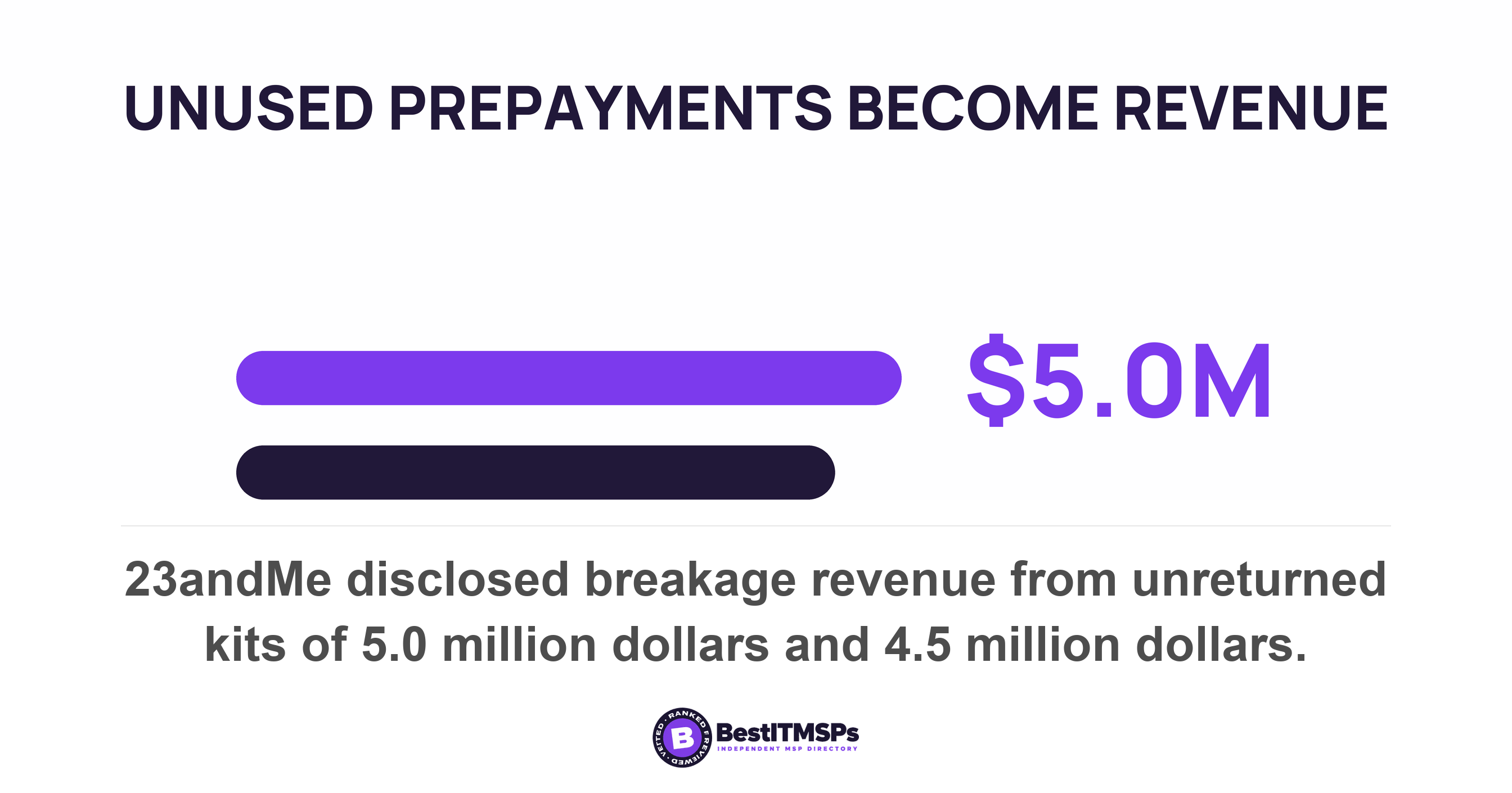
- Unused prepayments become the seller's revenue, and the accounting name for it is breakage. 23andMe disclosed breakage revenue of $5.0 million and $4.5 million from unreturned kits.
- Federal rules give a consumer gift card at least five years of life. They are written for personal purchases and do not reach a business block of hours.
- Minimums debit the block, not the clock. One filed service agreement charges a minimum of 2 hours per call, so ten calls of 20 minutes each cost 20 hours.
- Prepaying is a loan. Carrying an average unused balance of $7,875 for a year is worth about $551 at a 7.00 percent prime rate, roughly a third of a 10 percent discount.
What are block hours, and what are you actually buying?
A block of hours is prepaid support labour, sold at a discount against the rate card and dated so it expires. You buy three things in one purchase. A rate, an option to use it, and a short term loan to your provider. The option expires. The loan pays you nothing.
The structure is old and it is written down in public. A service agreement filed with the US Securities and Exchange Commission in March 2005 defines a block of hours as prepaid on-site Support hours (including both labor and travel), selected in advance and used during the contract year. Then it adds the sentence that decides the whole purchase: unused hours expire at the end of the contract year for which they were purchased. Its overtime block is priced the same way, as labor and travel hours pre-purchased at a discounted rate. That contract covers medical imaging service rather than IT, which is the useful part. The commercial shape of prepaid hours has not changed in twenty years, and neither has the expiry clause.
So the discount is not a gift. It pays you for two things you hand over. You give up the cash early, and you accept the risk that you never use what you bought. A fair block pays you back for both. The rest of this post prices each side, then gives you the contractual wording that fixes it. For the rate card a block draws against, read Out of scope: the two words that decide your real annual IT spend.
Where does the money go when block hours expire?
The money becomes your provider's revenue. Accountants have a name for it, and the name is breakage. A prepayment starts life as deferred revenue, a liability the seller owes you in service, and the balance turns into earnings once the right to use it is gone.
That is not theory. It is disclosed to regulators. In a letter to the SEC dated 9 August 2022, 23andMe described customers who never redeem a purchase as leaving it with unexercised rights, which it labels breakage, revenue, and said that to estimate breakage, the Company applies the practical expedient available under Topic 606, the US revenue recognition standard. It then put a number on it, reporting breakage revenue from unreturned Kits of $5.0 million and $4.5 million. Those are test kits rather than support hours, so read the figure as scale and not as a benchmark. The mechanism is identical. A prepayment nobody redeemed became earnings.
Your money is also not ring-fenced while you wait. When the federal government prepays a contractor, its own clause puts the cash in a special account and states that none of the funds in the special account shall be mingled with other funds of the Contractor, limits withdrawals to properly allocable, allowable, and reasonable costs, and takes security, because the Government shall have a lien upon any balance in the special account paramount to all other liens. Your block payment lands in your provider's operating account. No special account, no lien, and no claim on the remaining balance if the firm is sold or fails. Ask where the money sits before you ask for a bigger discount.
Does any rule protect unused prepaid hours?
No federal rule we could find reaches a business buying support hours. The protection exists and it is real, and it is written for consumers rather than for you. That gap is the finding, not a technicality.
Federal law does cap gift card expiry. Regulation E bars the sale of a gift card unless the funds last at least five years after the date the gift certificate was initially issued. Read the definition, though, and the protection stops at your door. It covers an instrument issued on a prepaid basis primarily for personal, family, or household purposes to a consumer, and the rule separately excludes anything not marketed to the general public. A block of hours inside a managed services agreement is bought by a business, priced privately and never marketed to the general public. It fails all three tests.
State that plainly, because it changes what you do next. A consumer who buys a $100 gift card gets five years by federal rule. A business that prepays $15,750 of help desk support gets whatever its own contract says, and the seller wrote the contract. There is no regulator to appeal to and no statutory floor underneath you. The only protection a business buyer has on a nonrefundable prepayment is the wording it negotiates before signing.
How much does an expired hour actually cost you?
An expired hour costs you the full list rate you prepaid to avoid. One clause does that work, and the filed agreement states it plainly: unused hours expire at the end of the contract year. The arithmetic after that is simple, and almost nobody runs it. A block breaks even when the share of hours that lapse equals the discount you were given.
Work it through on illustrative numbers. A rate card of $175 an hour, a 100 hour block, 10 percent off. You pay $15,750 instead of $17,500, which is $157.50 an hour. Lose ten hours to expiry and you used 90 of them for $15,750, which is $175.00 an hour. You paid the list rate for a discounted block. Lose twenty and your used hours cost $196.88 each, 12.5 percent more than if you had never prepaid at all.
| Hours that lapse | Hours you used | Cost per hour used | Against the $175 list rate |
|---|---|---|---|
| 0 | 100 | $157.50 | 10.0 percent below |
| 5 | 95 | $165.79 | 5.3 percent below |
| 10 | 90 | $175.00 | level |
| 20 | 80 | $196.88 | 12.5 percent above |
| 30 | 70 | $225.00 | 28.6 percent above |
That rule travels to any block. A 15 percent discount survives a 15 percent lapse rate and nothing worse. A 5 percent discount is erased by one hour in twenty. So the question to settle before you buy is not what the discount is. It is what share of last year's block you actually used. If your provider cannot tell you, that is the answer. No published figure exists for how often a small business block lapses, so your own drawdown history is the only evidence available, and it is better evidence than any industry benchmark.
How do minimums and rounding drain a block faster than the clock?
Minimums and rounding drain a block faster than the clock because the balance is debited in billing units, not in minutes worked. The unit is a commercial choice, and it is the cheapest thing in the agreement to negotiate.
The filed agreement above sets its unit in one line: you will be charged a minimum of 2 hours per call. Put ten short calls through that rule. Ten password resets of 20 minutes each is 3.3 hours of work and 20 hours off the block, six times the clock. A 100 hour block bought for a migration can be half gone before the project work starts.
Where a public standard does set an increment, it is far smaller. The US Trustee guidelines for reviewing professional fees in bankruptcy cases require that time entries should be kept contemporaneously with the services rendered in time periods of tenths of an hour, and allow small tasks to be combined only if they do not exceed .5 hours on a daily aggregate. A tenth of an hour is six minutes. That is a federal view of what a defensible time record for professional labour looks like, so a 15 minute or one hour minimum on your block is a pricing decision rather than an accounting necessity. Ask which one you are buying.
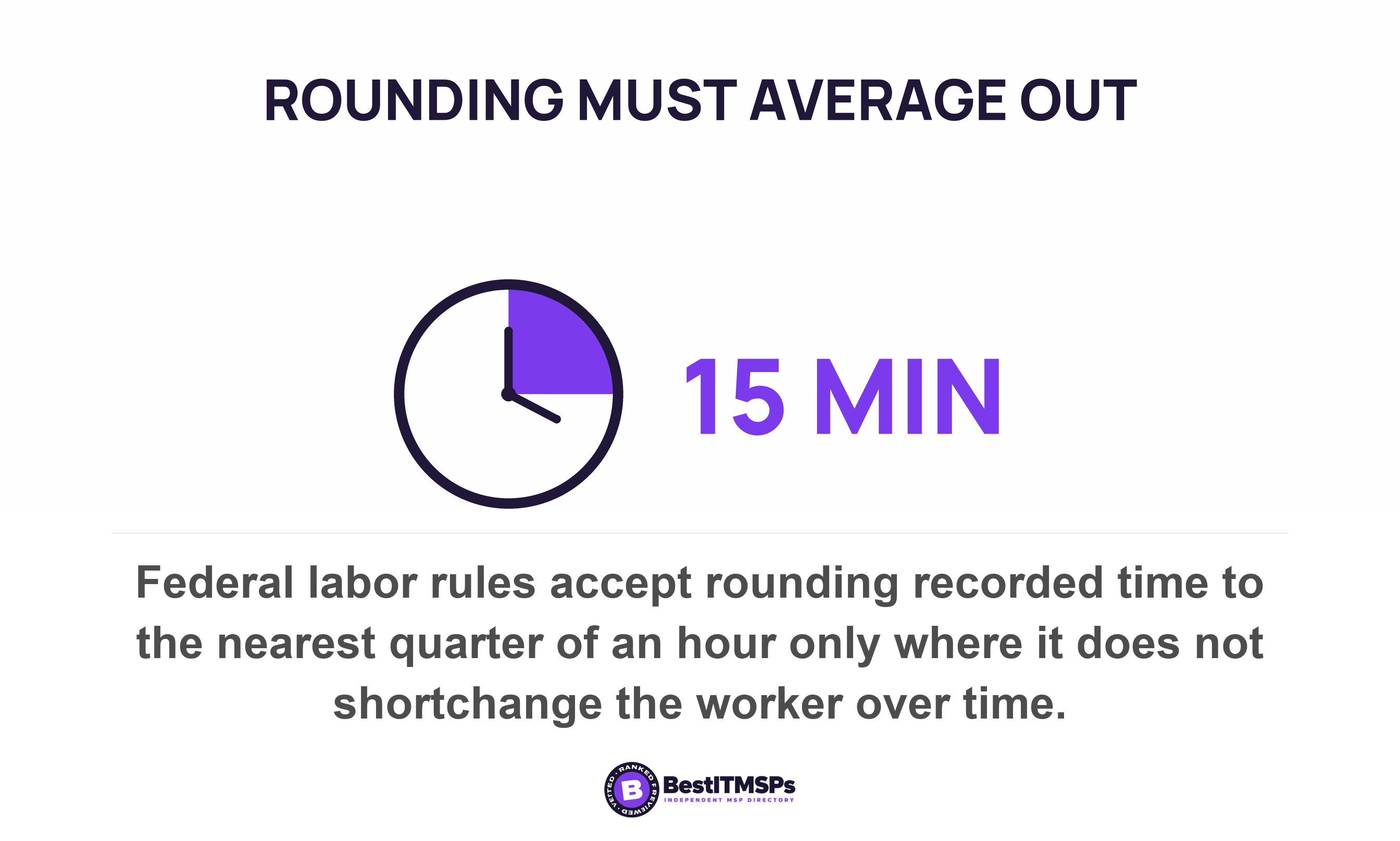
Rounding itself is ordinary. One way rounding is not. Federal labor rules accept employers recording time to the nearest 5 minutes, or to the nearest one-tenth or quarter of an hour on a single condition, that the practice must not result over a period of time, in failure to compensate the employees properly for all the time they have actually worked. That rule governs paying staff rather than billing clients, so borrow the principle instead of claiming it as a right. Rounding has to average out. Ask whether your provider's system will round every ticket up to the increment, because a rule that only ever rounds one way is a fee. After-hours support compounds it, and Out of scope covers that multiplier and the full rate card.
What counts against the block, and what does not?
Five categories decide how fast a block drains, and only one of them is the work you asked for. Get each named in the agreement.
- Travel. The filed agreement counts both labor and travel inside the block, so a 40 minute drive bills before anyone touches a keyboard.
- After-hours premiums. A 1.5x rate drawn against an hours bank can take 1.5 hours off the remaining balance for every clock hour worked. Ask whether the block converts at the base rate or the premium.
- A second technician. Two engineers on one call debit two hours an hour. Even the federal fee guidelines make a professional justify it when more than one professional from the applicant firm attends a hearing or conference.
- Internal and administrative time. Ticket notes, internal handovers and report writing. The same guidelines treat word processing, proofreading, secretarial and other clerical services as nonreimbursable overhead rather than billable work.
- Third party hold time. Hours spent in your software vendor's support queue still come off your balance, and absorbing that call yourself is not free either, at an average employer cost of $46.89 per hour worked for private industry in June 2026.
None of those five is dishonest on its own. Together they are how a block that looked like 100 hours of engineering becomes 60. Price them, then reconcile the monthly statement against the list.
Is a block of hours ever the right purchase?
Yes, for scoped and predictable work you intend to schedule. No, as a substitute for a support agreement. The test is whether the work already has a date on it.
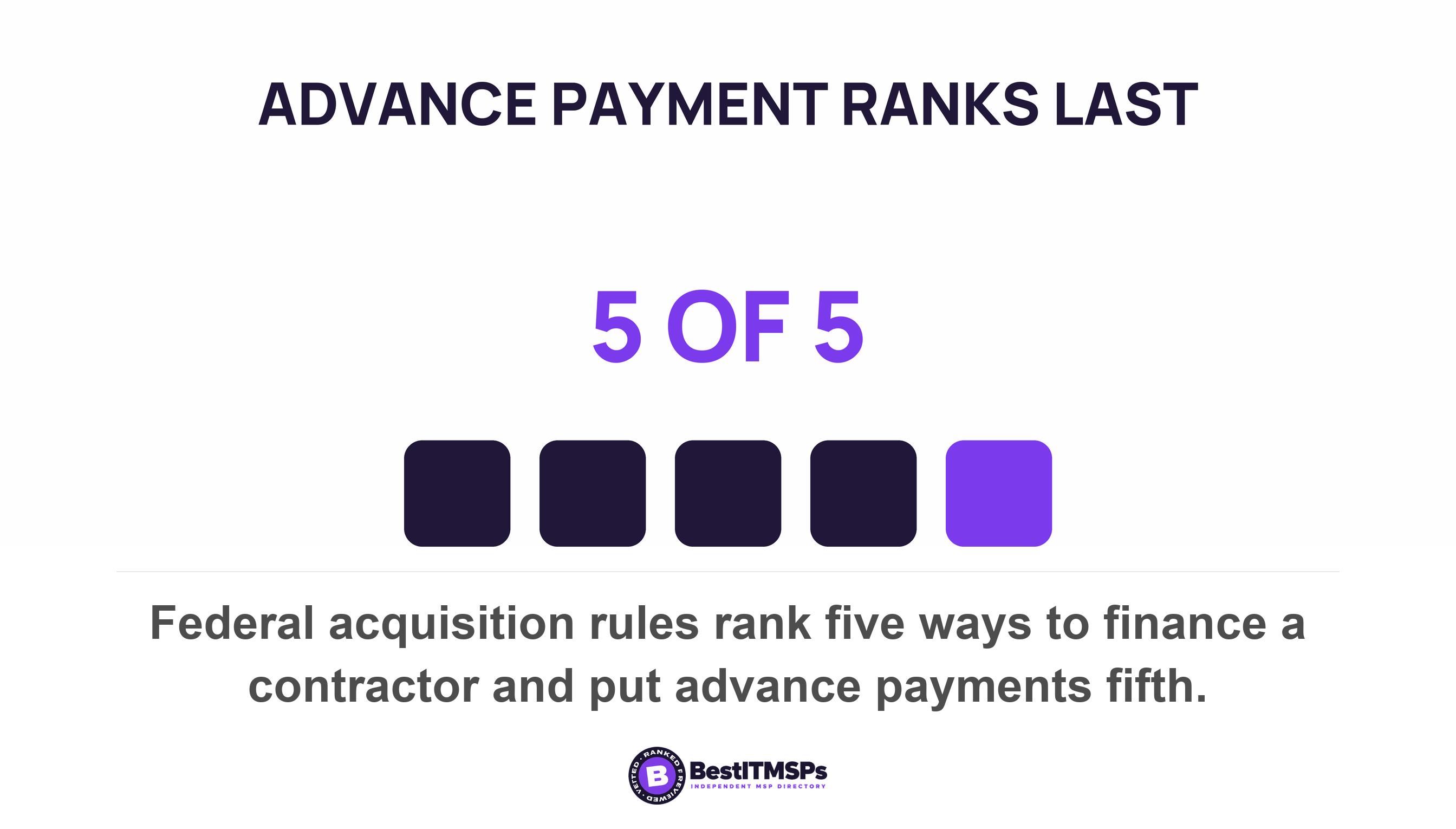
The largest buyer in the world prepays reluctantly and publishes why. Federal acquisition rules set an order of preference for financing a contractor and place advance payments last of the five methods they rank. The policy is blunter still. It states that advance payment is the least preferred method of contract financing and that it should not be authorized where other financing is reasonably available in adequate amounts. When the government does prepay, one of the statutory conditions is that the contractor gives adequate security. A business prepaying a block takes no security at all.
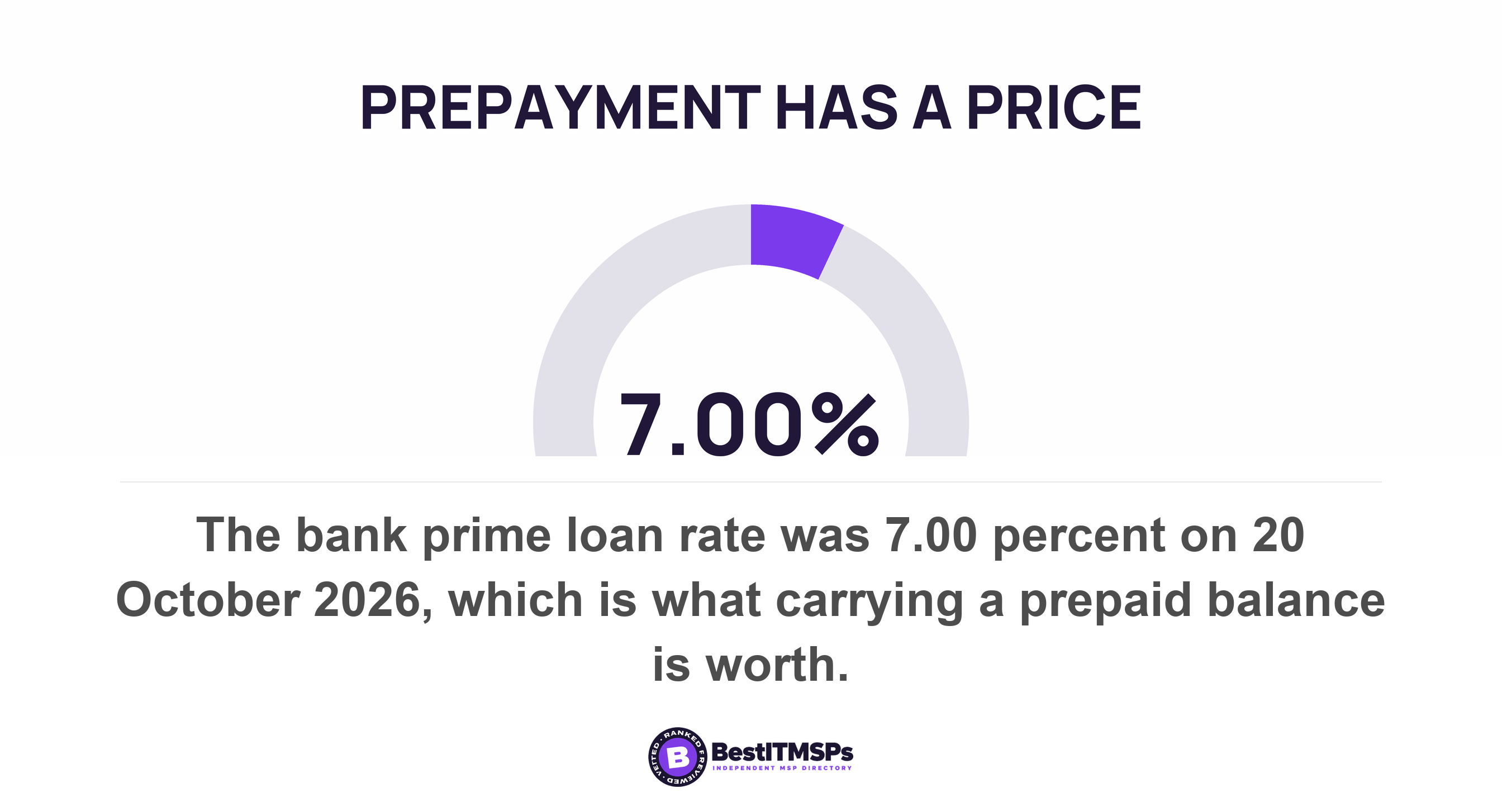
Price the loan, because it is real money. A $15,750 block drawn evenly across a year leaves an average unused balance of about $7,875. At the bank prime loan rate of 7.00 published for 20 October 2026, carrying that balance for your provider is worth roughly $551 over the year, close to a third of the $1,750 discount that persuaded you to prepay. Add one lapsed hour in ten and the whole discount is gone.
So prepay for a migration that has an estimate, a priced incident response retainer, or a known seasonal push. Do not prepay to cover monitoring, patching and day to day help desk support, which are continuous and belong in a monthly fee that cannot expire. A block is break-fix support bought in advance, so it sits beside an agreement rather than instead of one. Break-Fix vs Managed IT Services sets out that trade, and How Much Do Managed IT Services Cost? A 2026 Pricing Guide carries the monthly benchmarks.
Seven clauses that make a block of hours fair
Seven clauses turn a block from a bet into a budget. Take them to three providers and compare the answers rather than the discounts.
- Roll unused hours into the next term, or refund them at the rate you paid. A hard expiry with neither is the first clause to push on.
- Set the expiration date to the contract term, and say in the same sentence what happens to the balance at renewal and on termination.
- Fix the drawdown rate at the rate you bought. A block bought at $157.50 an hour and drawn down at next year's uplifted rate shrinks while you watch.
- Name the billing increment and the per ticket minimum in minutes rather than in adjectives. Six minutes and two hours are different products.
- List what the block may be spent on and what it may not, covering travel, after-hours premiums, project management and internal admin.
- Demand a quarterly or monthly statement showing the date, ticket, technician, minutes recorded, hours deducted and remaining balance.
- Trigger a written notice at 75 percent drawn and 30 days before expiry, so the choice to use or lose the hours is yours to make.
A provider who shows you the remaining balance every month is selling you capacity. A provider who only shows you the invoice is selling you an option it hopes you forget.
Then track it yourself. One named person owns the balance, checks the statement, and books the remaining hours into real work before the term ends. Our own directory data shows a median of 16 listed providers per market across 730 city datasets, so a firm that refuses all seven clauses is a firm you can replace. None of this makes a block cheap. It makes the spend predictable, which is the only thing a prepayment can honestly promise. Then forecast next year's block from what you actually used, not from what you were sold.
FAQ
Do block hours expire?
Usually yes, at the end of the quarter or contract year in which you bought them. A service agreement filed with the SEC states it in one line, that unused hours expire at the end of the contract year for which they were purchased. Nothing forces a rollover, so the expiry window is a negotiation.
Is it legal for an MSP to let prepaid hours expire?
Yes. Regulation E's five year floor applies to a card issued on a prepaid basis primarily for personal, family, or household purposes to a consumer, and excludes anything not marketed to the general public. A business to business block of hours falls outside it, so the contract is the only protection you get.
Should unused block hours roll over to the next term?
Ask for it, because the alternative has a price. Unredeemed prepayments become the seller's revenue, which accountants call breakage, and 23andMe reported breakage revenue from unreturned Kits of $5.0 million and $4.5 million. Rollover, or a refund at the rate you paid, keeps that value on your side.
What is a fair billing increment for block hours?
Six minutes is the smallest defensible unit in print. Federal fee guidelines require professional time entries in time periods of tenths of an hour. Many providers bill in 15 minute units, which is workable, while a minimum of 2 hours per call can turn ten short calls into 20 billed hours.
Is a block of hours cheaper than a managed services agreement?
Only while you use nearly all of it. A block breaks even when the share of hours that lapse matches the discount, so a 10 percent discount cannot survive a 10 percent lapse rate. Continuous work such as monitoring and help desk support belongs in a monthly fee with a service level agreement.
Best IT MSP is the independent directory of vetted managed IT providers across the US and Canada. Organic ranking is earned on rating and verified data, and paid placement is always labelled. Take these seven clauses to three merit ranked firms in your city and compare the answers side by side.