The 2026 MSP Consolidation Report: who is buying your IT provider, and what changes when they do
466 managed IT deals closed in 2025, up 20 percent, with private equity in 69 percent of them. But our data on 17,816 providers shows 57.6 percent employ under ten people. Consolidation is buying the middle of the market, not the whole of it.
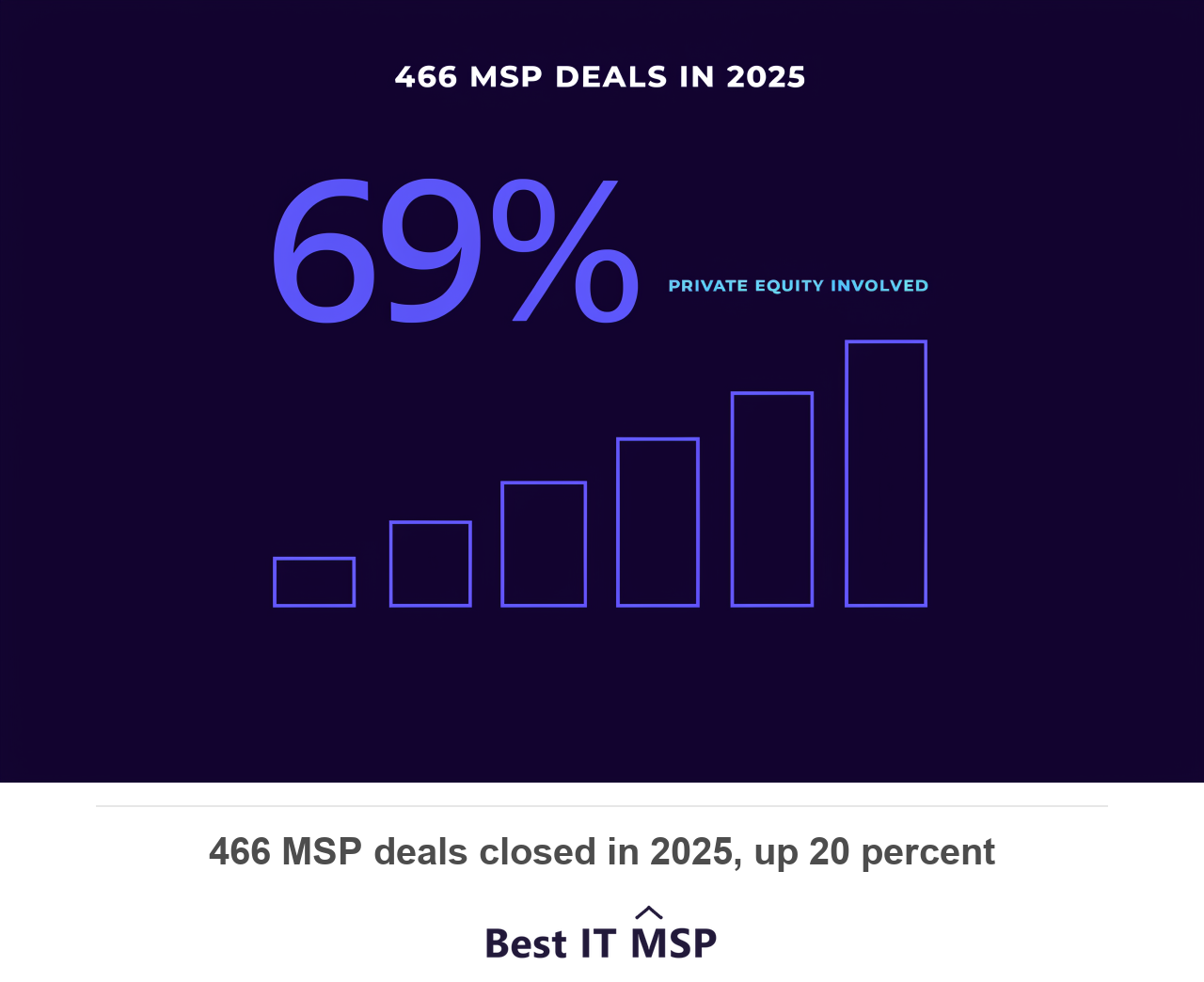
- 466 MSP transactions closed in 2025, worth 4.3 billion dollars in disclosed value, a 20 percent rise on the year before.
- Private equity appeared in 69 percent of disclosed deals, and more than 75 backed platforms are actively buying.
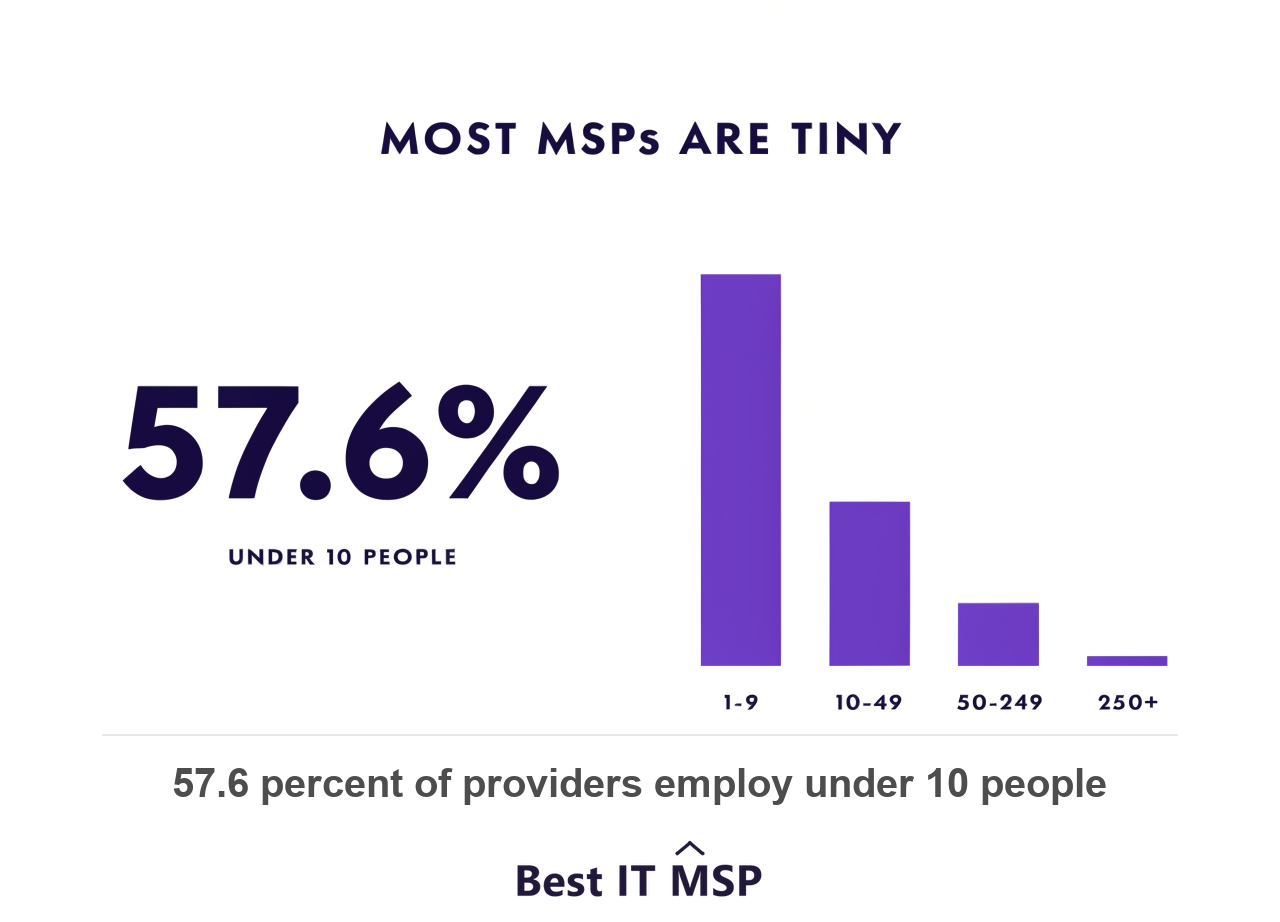
- Across 17,816 providers in our directory, 57.6 percent employ fewer than ten people and only 2.3 percent employ more than 250.
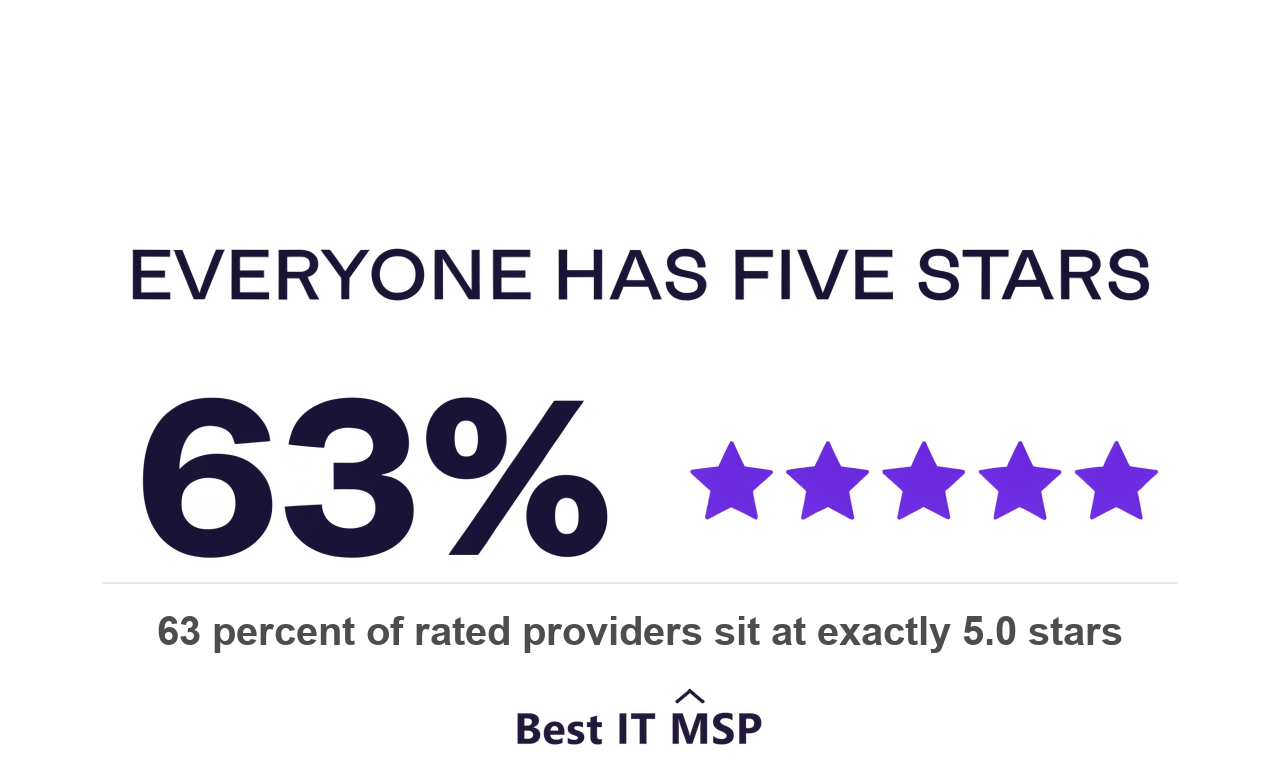
- 63 percent of rated providers sit at exactly 5.0 stars, so a star rating alone cannot tell two firms apart.
- The question for a buyer is not whether the market consolidates. It is whether the eight people who know your network stay.
The deal wave is real, and it is accelerating
Managed IT is being bought. 466 MSP transactions closed in 2025, worth 4.3 billion dollars in disclosed value, a 20 percent rise on the prior year. That is not a blip. Deal flow in 2026 is tracking ahead of it.
The buyers are mostly financial. Private equity appeared in 69 percent of disclosed 2025 deals, and more than 75 private-equity-backed platforms are actively acquiring managed IT services firms. The largest single consolidator closed 47 acquisitions in 2025 and passed its 100th cumulative deal in June that year.
The providers themselves expect more of it. About 53 percent of MSPs say they plan to pursue a merger or acquisition. When half an industry is planning to buy or sell, the odds that your own provider is part of it stop being remote.
But most of the market is still very small
Here is where the headline and the ground truth part company. We hold verified data on 17,816 managed IT providers across 500 city markets in 61 states and provinces. Of the 15,929 with a confirmed size band, the shape is stark.
- 57.6 percent employ fewer than ten people
- 33.3 percent employ ten to 49
- 6.8 percent employ 50 to 249
- 2.3 percent employ more than 250
Nine in ten providers employ fewer than 50 people. The roll-up wave and the long tail are both true at once, because they are not describing the same firms. A platform buying recurring revenue wants a business with real contracts and a management layer. Most of this market is a founder-owned shop of six.
That is why deal pricing splits so hard. Sub-5-million-dollar-revenue sellers trade near 4 times EBITDA while scaled, cybersecurity-heavy or AI-enabled platforms reach 14 times, against a median of 8.9 times across 120 analysed transactions. The small end is not being bid up. It is being passed over.
What actually changes when your provider is acquired
Buyers of IT services tend to hear about an acquisition as a press release and assume nothing changes. Sometimes nothing does. But the reasons a platform acquires a regional firm point directly at what moves afterwards.
The economics that make you attractive also make you standard
Platforms buy recurring revenue and then centralise. Finance, procurement, vendor management, security operations and often the help desk get consolidated into shared functions. That can be an upgrade: a six-person firm cannot staff a 24-hour security desk, and a platform can. It can also mean the engineer who knew your network now sits behind a ticket queue.
Security is the capability being bought
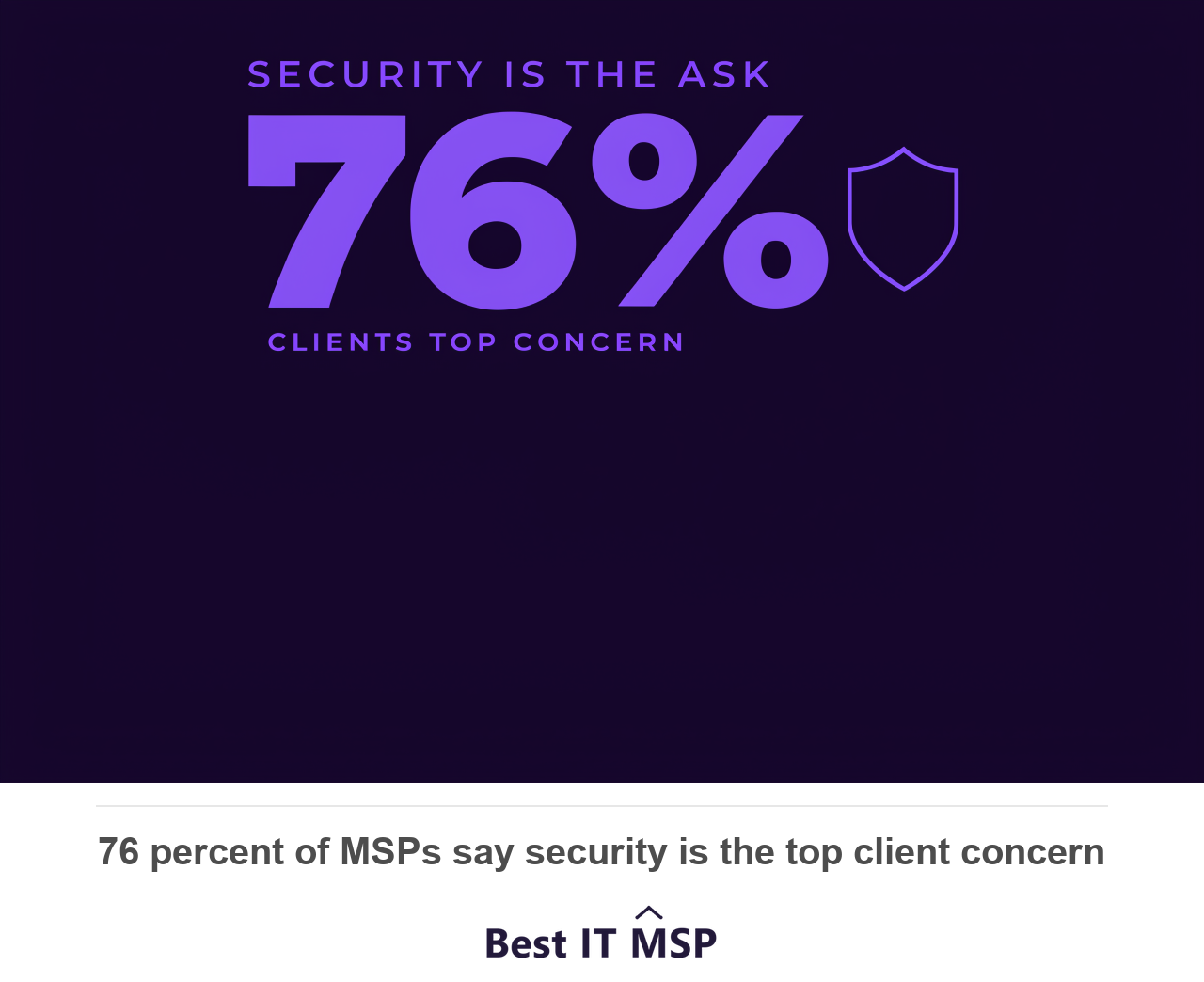
Security is the centre of gravity. 76 percent of MSPs say security is what their clients are most concerned about, and 67 percent say it is among their five fastest-growing revenue categories. Acquirers are underwriting that capability directly. If your provider is bought for its cybersecurity bench, expect that bench to be spread across the platform's whole client base, not reserved for you.
The stakes are not abstract. The global average cost of a data breach reached 4.99 million dollars in 2026. For a business of 30 people, the practical risk is not the headline figure. It is that a transition period is exactly when monitoring gaps open.
How to tell whether your provider is a target
You do not need inside information. The attributes that acquirers screen for are visible from the outside, and you can verify most of them in an afternoon. Five signals, in the order a buyer weighs them.
- Revenue shape. Contracted, recurring revenue rather than hourly project work. This is the single strongest driver of what a provider is worth.
- Security depth. A real cybersecurity practice with its own staff, not a reseller relationship with a vendor logo on the website.
- Headcount band. Between roughly 10 and 100 staff. Below that a firm is too small to absorb; above it, it is usually the buyer.
- Succession gap. A founder in their late fifties or sixties with no visible second-in-command named anywhere on the site.
- Brand history. A recent rebrand, new parent-company branding, or a changed legal name. This is the clearest public signal of all.
That last signal shows up in our own data. 1,880 providers in the directory now operate in more than one market, and 477 trade under more than one brand name. A firm carrying two names is usually a firm that has already been through a deal.
Co-managed arrangements are a useful tell too. 61 percent of MSP executives report co-managed IT revenue growing year over year. A provider moving toward co-managed work is building the kind of predictable, contracted base that acquirers price at a premium.
Why star ratings will not answer this for you
The obvious move is to check reviews. It does not work as well as people expect. Across 11,764 rated providers in our directory, 63 percent sit at exactly 5.0 stars and only 5 percent fall below 4.0. The mean is 4.78.
A five-star rating is the norm, not a distinction. It cannot separate a stable independent firm from one three months into a difficult integration, because reviews lag the change that matters. This is why we rank on a confidence-weighted rating rather than a raw average, and why review depth counts: a 5.0 from three reviews tells you far less than a 4.9 from two hundred.
Consolidation is not good or bad for a buyer. It is a change of counterparty, and counterparty changes are worth asking about before they happen.
What to do about it, concretely
None of this argues for avoiding acquired providers. Scale genuinely buys things a small firm cannot fund, and a platform with a real security operations centre may support you better than the independent shop it replaced. The mistake is finding out after the fact.
- Ask directly whether the firm has taken outside investment or is in discussions. A straight answer is itself information.
- Get a change-of-control clause in writing, so ownership changes trigger a review rather than an automatic renewal.
- Name the people. Ask which engineers hold your account and what happens to them under new ownership.
- Ask what the help desk escalation path looks like today, and whether it would move to a shared queue.
- Ask when your backup was last restored end to end, with a date. Transitions are when that slips.
If you decide to switch, switch for a reason you can state. Being acquired is not one. Losing the response times you were sold, or the named engineer you relied on, is. Verify what you are actually getting now, and write down the answer so you can compare it in twelve months.
The market will keep consolidating. Managed IT deal flow in 2026 is running ahead of 2025's 466 transactions, and the 57.6 percent of providers under ten people are not the ones being bought. For most businesses the practical question stays small and answerable: do the people who know your network still work on it, and can you prove it?
FAQ
How common is MSP consolidation in 2026?
Very common and still rising. 466 MSP transactions closed in 2025 with 4.3 billion dollars in disclosed value, up 20 percent year over year, and 2026 is tracking ahead of that. About 53 percent of providers say they plan to pursue a merger or acquisition.
Does private equity own most managed IT providers?
No, and the gap between headline and reality is large. Private equity appeared in 69 percent of disclosed 2025 deals, but deals concentrate on larger firms. In our directory of 17,816 providers, 57.6 percent still employ fewer than ten people, and most of those are independent and founder-owned.
Will my service get worse if my IT provider is acquired?
Not necessarily, and it can improve. Platforms fund things small firms cannot, such as a 24-hour security desk. What usually changes is who answers: help desk and security operations are often centralised. Ask which named engineers stay on your account before the transition, not after.
How can I tell if my MSP is about to be acquired?
Look for contracted recurring revenue, a genuine cybersecurity practice, a headcount between roughly 10 and 100, and a founder with no visible successor. A recent rebrand is the clearest public signal. 477 providers in our directory already trade under more than one brand name.
Should I choose an independent MSP over a private-equity-backed one?
Neither is safer by default. Judge the specific engagement: who holds your account, what the escalation path is, and what the contract says about a change of control. A confidence-weighted rating and verified company data tell you more than ownership structure does.
Sources
- N2M Capital Advisors, MSP M&A Valuation Report, Mid-Year 2026 (June 2026)
- Evergreen Services Group, Evergreen Celebrates 100th MSP Acquisition (June 2025)
- Kaseya, Key Findings From Kaseya's 2025 Global MSP Benchmark Report
- Best IT MSP directory analysis, 500 live city markets, September 2026
- IBM and Ponemon Institute, Cost of a Data Breach Report 2026
Best IT MSP ranks providers on verified rating and company data, city by city. We do not sell IT services, and paid placement is always labelled.