A Digital Transformation Framework for SMBs
A digital transformation framework is a structured plan for using technology to improve how your business operates and serves customers. For an SMB, it works in clear phases: assess your current state, set a clear vision and goals, prioritize high-impact projects, build a roadmap, design in security and governance, execute in phases, and measure results.
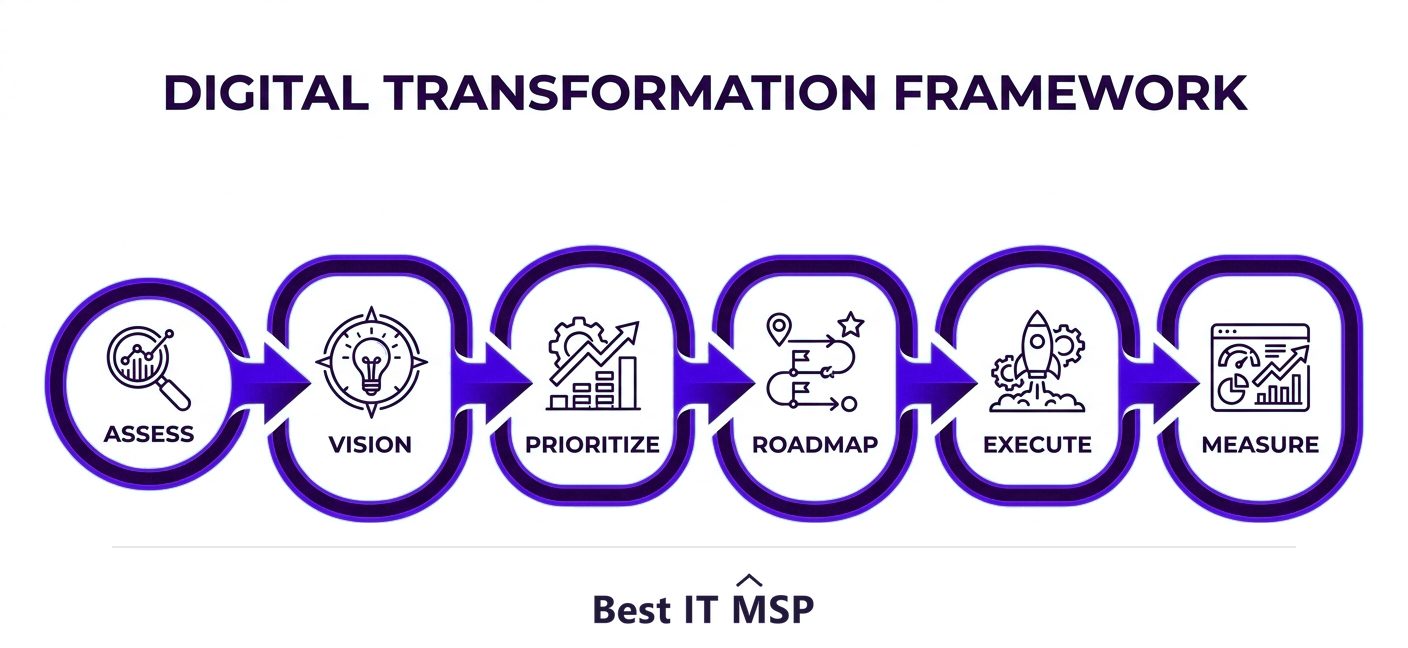
- Digital transformation is using technology to change how the business operates and delivers value, not just buying tools.
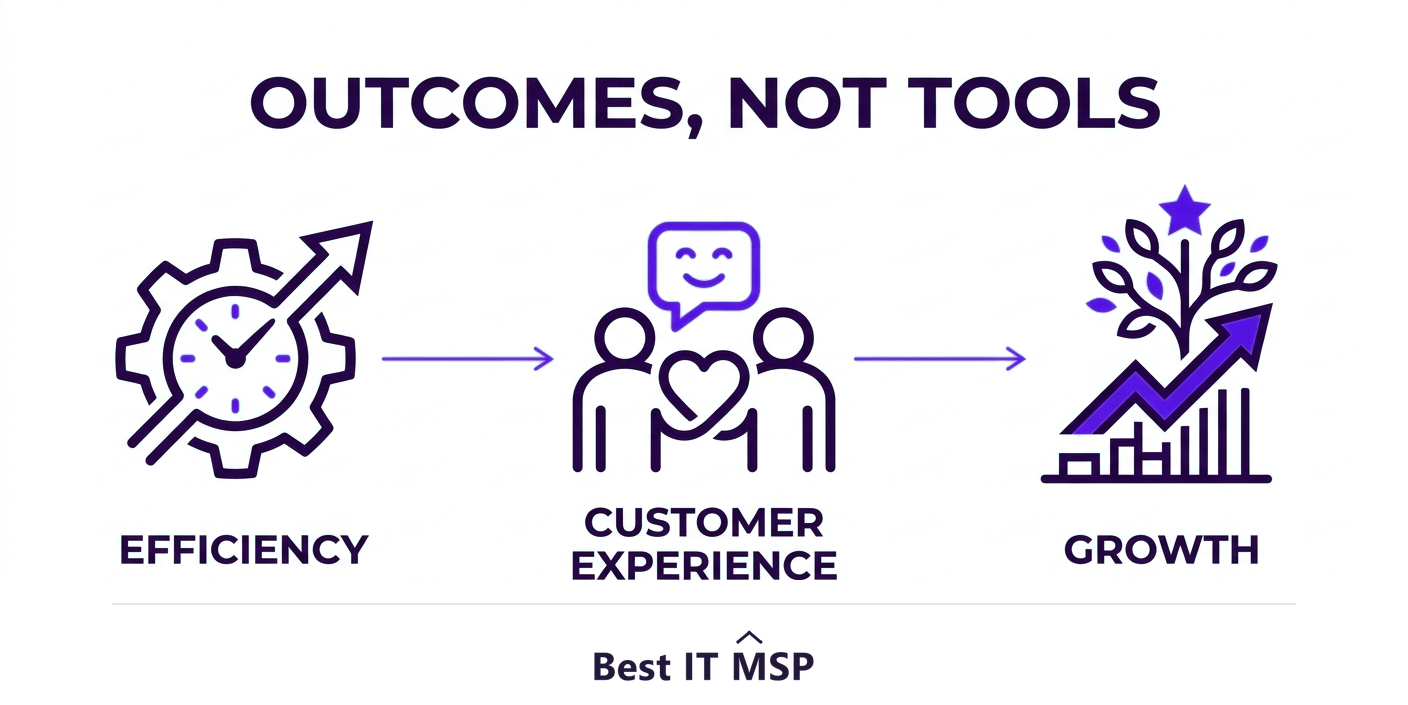
- A framework keeps it focused on business outcomes and prevents expensive, directionless spending.
- The core phases are assess, set vision, prioritize, roadmap, secure, execute in phases, and measure.
- Start with the business problem, not the technology, and move in small, measurable steps.
- Security and people must be built into the plan, not bolted on after.
What is a digital transformation framework?
Digital transformation is the process of using technology to fundamentally improve how your business operates and delivers value to customers, not simply buying new software. A digital transformation framework is the structured plan that guides that process, so it produces real results instead of expensive, scattered projects that never connect. For a small or midsize business, a framework matters even more than it does for a large enterprise, because budgets are tighter and there is no room to waste money on technology that does not move the business forward.
The pressure to transform is real, with worldwide public cloud spending forecast to top $723 billion in 2025, up from about $595.7 billion in 2024, as businesses modernize how they work. But transformation done badly is a well-known way to burn cash, while transformation done with a clear framework is how smaller businesses compete with much larger ones. This guide lays out a practical framework built for SMBs. It pairs with our digital transformation services and IT consulting services overviews.
Phase 1: Assess your current state
Every framework starts with an honest assessment of where you are. Map your current technology, processes, and pain points: what systems do you run, where do they slow people down, what do customers complain about, and where are you doing manually what could be automated? Talk to the people who actually do the work, because they know the friction better than any system diagram. This assessment grounds the whole effort in reality and reveals the gaps worth closing, rather than letting you chase trends that do not fit your business.
Phase 2: Set a clear vision and goals
Transformation without a destination drifts. Define what you are trying to achieve in business terms: faster service, lower costs, better customer experience, new revenue, or the ability to scale. Then translate that vision into specific, measurable goals, for example, cut order processing time in half, or enable the whole team to work securely from anywhere. The crucial discipline here is to lead with business outcomes, not technology. Nobody should be adopting a tool because it is trendy; every initiative should trace back to a goal that matters to the business.
Phase 3: Prioritize high-impact initiatives
You cannot do everything at once, and trying to is a common reason transformations fail. With your goals set, list the possible initiatives and rank them by impact versus effort. Look for the high-impact, achievable projects, the ones that deliver real value without enormous cost or risk, and start there. Quick wins build momentum and confidence, and they fund and justify the bigger, harder changes that follow later in the roadmap. Prioritization is what turns an overwhelming wish list into a sequence you can actually execute.
Phase 4: Build a roadmap
Turn the prioritized initiatives into a roadmap: a phased plan that sequences the work over time, with owners, timelines, budgets, and dependencies. A good roadmap shows not just what you will do but in what order and why, so the team understands how each step builds toward the vision. It also makes the investment defensible, because leadership can see the path and the expected return. For an SMB, the roadmap is often where an outside advisor or virtual CIO adds the most value, bringing experience of what sequence actually works.
Phase 5: Build in security and governance
Every new system and connection you add expands your attack surface, so security has to be part of the framework from the start, not an afterthought once something breaks. Build in access controls, encryption, backups, and monitoring as you modernize, and make sure new tools meet your compliance obligations. The cost of skipping this is steep, with the average data breach reaching $4.88 million, taking about 258 days to identify and contain, and reported cybercrime losses topping $12.5 billion in a single year. Transformation that ignores security simply moves the business into the cloud and leaves the door unlocked.

Phase 6: Execute in phases, with people in mind
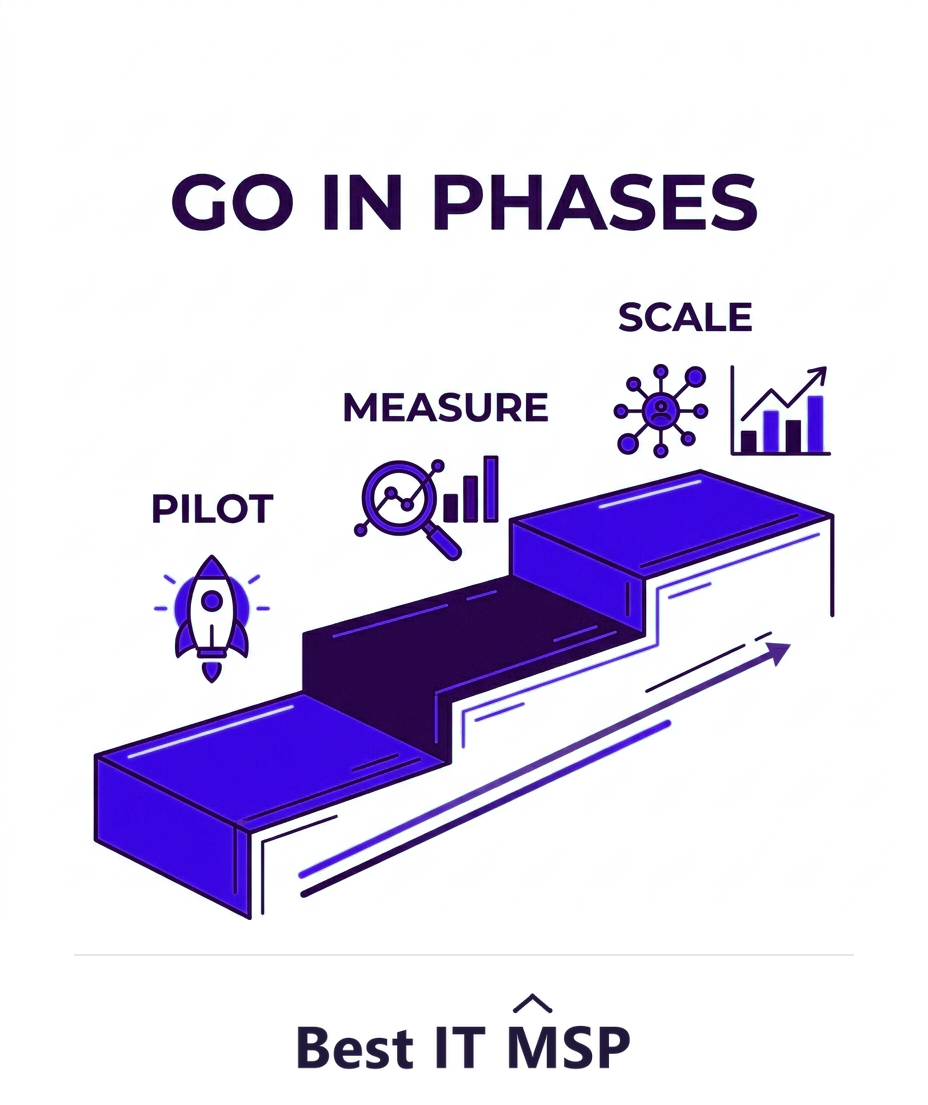
Roll out changes in manageable phases rather than a single big-bang launch. Pilot an initiative with a small group, measure the result, fix what does not work, then scale it. This contains risk and lets you learn cheaply. Just as important, bring your people along: transformation is as much about adoption as technology, and a brilliant new system delivers nothing if staff resist or never learn it. Communicate the why, train people properly, and involve them early. Most transformation failures are people-and-process failures, not technology failures.
Phase 7: Measure, learn, and iterate
Finally, measure against the goals you set in phase two. Track the metrics that show whether each initiative delivered the intended business outcome, and use what you learn to adjust the roadmap. Digital transformation is not a one-time project with an end date; it is an ongoing capability to keep improving as technology and the market change. The businesses that win treat it as a continuous loop, assess, plan, execute, measure, repeat, rather than a single push. Building that habit is the real goal of the framework.
Getting transformation right with help
A framework makes digital transformation achievable, but executing it well takes strategic and technical expertise that many SMBs do not have in-house, especially amid a global shortfall of about 4.8 million cybersecurity and IT professionals. This is why many smaller businesses lean on a managed provider or virtual CIO to guide the framework, sequence the roadmap, and handle the technical and security work, part of why the managed services market is projected to grow from about $330 billion in 2024 to about $879 billion over the next decade. The right partner keeps transformation anchored to outcomes and away from wasted spend.
If you want help building and executing a digital transformation framework, start with a provider who plans around your business goals, not a product catalog. Browse vetted, merit-ranked firms by city in the Best IT MSP directory, where ranking is earned on rating and verified data.
FAQ
What is a digital transformation framework?
A digital transformation framework is a structured plan for using technology to fundamentally improve how a business operates and serves customers. It guides the process through clear phases, assess, set a vision, prioritize, build a roadmap, secure, execute, and measure, so transformation produces real business results rather than scattered, expensive projects that never connect.
What are the steps of a digital transformation framework?
The core phases are: assess your current state, set a clear vision and measurable goals, prioritize high-impact initiatives, build a phased roadmap, design in security and governance, execute in small phases with attention to people and adoption, and measure results against your goals, then iterate. Each phase keeps the effort anchored to business outcomes.
How should an SMB start digital transformation?
Start by assessing your current technology, processes, and pain points, then set a clear vision in business terms. Prioritize a few high-impact, achievable initiatives for quick wins rather than trying to do everything at once. Lead with the business problem, not the technology, and move in small, measurable phases so you contain risk and build momentum.
Why do digital transformations fail?
Most failures are people-and-process failures, not technology failures: no clear vision, trying to do too much at once, ignoring security, or rolling out tools without bringing staff along. A framework prevents these by anchoring every initiative to a business outcome, prioritizing, executing in phases, building in security, and focusing on adoption and measurement.
How does security fit into digital transformation?
Security must be built into the framework from the start, because every new system and connection expands your attack surface. Add access controls, encryption, backups, and monitoring as you modernize, and ensure new tools meet compliance obligations. With the average breach costing $4.88 million, transformation that ignores security just moves the business online with the door unlocked.
Should an SMB hire help for digital transformation?
Many should. Executing a transformation framework well takes strategic and technical expertise that is scarce and hard to hire. A managed provider or virtual CIO can guide the framework, sequence the roadmap, and handle the technical and security work, keeping the effort anchored to business outcomes and away from wasted spend, which is why many SMBs use one.
Best IT MSP is the independent directory of vetted managed IT providers across North America. Compare merit-ranked firms in your city that guide digital transformation around your business goals. No pay-to-play.