Virus Removal vs Modern Endpoint Protection
Virus removal is cleanup after infection. Modern threats, ransomware, fileless malware and stolen credentials, move too fast for that. Endpoint protection is proactive: it monitors devices continuously, blocks threats before they execute, and responds to suspicious behaviour in real time. Prevention and detection beat cleanup.
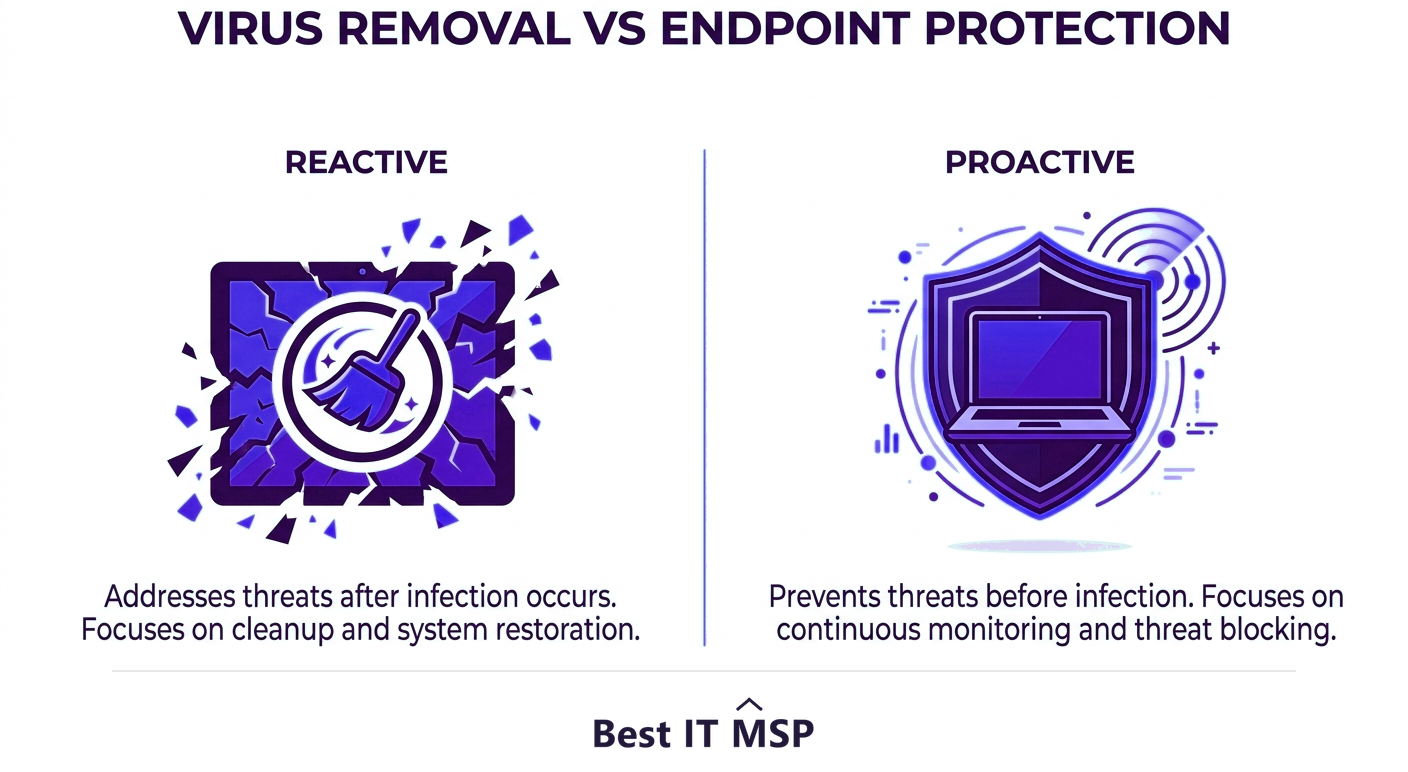
- Virus removal is reactive cleanup after infection; modern endpoint protection prevents and detects in real time.
- Today's threats, ransomware, fileless attacks, and stolen credentials, often cause damage before cleanup is even possible.
- Traditional antivirus alone catches known viruses but misses modern, behavior-based and novel attacks.
- Endpoint detection and response (EDR) continuously monitors devices and responds to suspicious behavior.
- Relying on virus removal alone is like having a fire extinguisher but no smoke detector.
How did we compare virus removal and endpoint protection?
By when each one acts, because that is the whole of it. One arrives after the damage, the other tries to prevent it, and every other difference follows from that.
- The dimensions. When it acts, what it can see, what it catches, how fast it responds, and who is watching.
- The evidence. Breach causes and extortion rates come from Verizon, detection and containment times from IBM, and downtime cost from ITIC.
- No vendor ranking. This compares approaches, not products. It names no vendors and recommends no supplier.
- Independence. Best IT MSP does not sell IT services or security services, and does not appear in its own rankings.
The timing row decides the rest of the table.
What is the difference between virus removal and endpoint protection?
For years, the model for dealing with malware was simple: a computer got infected, you ran virus removal to clean it up, and you moved on. That made sense when threats were slow, noisy, and aimed at causing nuisance. It does not make sense anymore. Today's attacks, ransomware that encrypts everything in minutes, fileless malware that leaves no traditional virus to scan for, and intruders using stolen credentials, do their damage before any cleanup is possible. Modern endpoint protection flips the approach from reactive to proactive: instead of waiting to clean up an infection, it continuously monitors every device to prevent, detect, and respond to threats in real time. This guide explains the difference, why traditional antivirus alone is no longer enough, and what good endpoint protection actually looks like.
It pairs with our cybersecurity services overview and the managed SOC and MDR page, and builds on our guide to where SMB cybersecurity should start.
What does virus removal mean, and why is it outdated?
Virus removal is exactly what it sounds like: detecting and removing malicious software from a device after it has already gotten in. Traditional antivirus supports this model by scanning files against a database of known virus signatures and quarantining matches. For decades this was the backbone of security. The problem is that it is fundamentally reactive, it acts after infection, and it depends on recognizing threats it has seen before. Against a modern attacker, both assumptions fail. By the time ransomware is detected, it may have already encrypted your files; and signature-based scanning is blind to brand-new or behavior-based threats that do not match a known signature. Virus removal still has a place when an infection slips through, but as a primary defense, it is like having a fire extinguisher and no smoke detector.
How have threats changed?
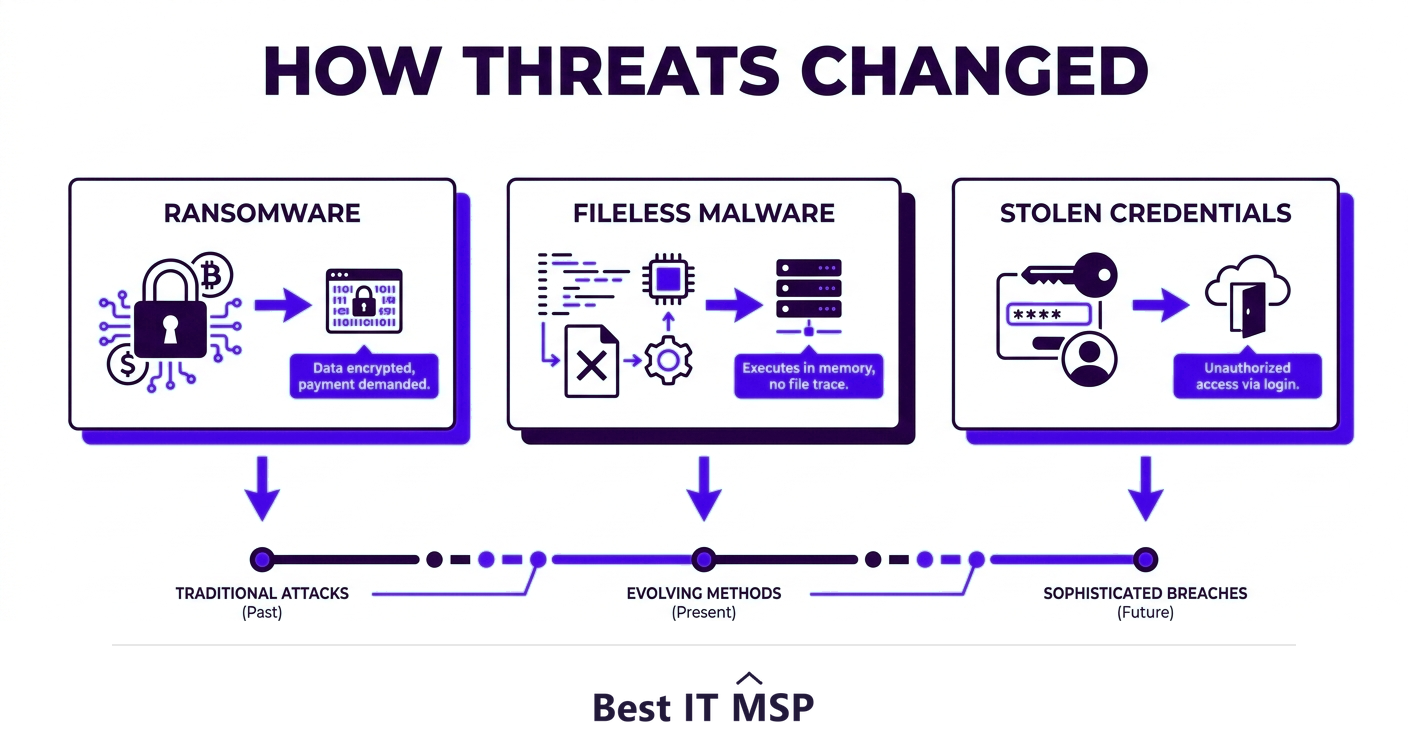
The threat landscape today looks nothing like the era virus removal was built for:
- <strong>Ransomware.</strong> Encrypts your data and demands payment, often within minutes of execution, leaving no time for after-the-fact cleanup.
- <strong>Fileless malware.</strong> Runs in memory using legitimate system tools, leaving no file for traditional antivirus to scan or remove.
- <strong>Stolen credentials.</strong> Attackers simply log in as a real user, which is why the human element is involved in 68% of breaches, no virus required.
- <strong>Novel and polymorphic malware.</strong> Constantly changing code that evades signature-based detection.
- <strong>Targeted, fast-moving attacks.</strong> Designed to do maximum damage quickly, which is why the average breach still takes 258 days to identify and contain when defenses are weak.
Against threats like these, waiting to detect and remove an infection is waiting too long.
What is modern endpoint protection?
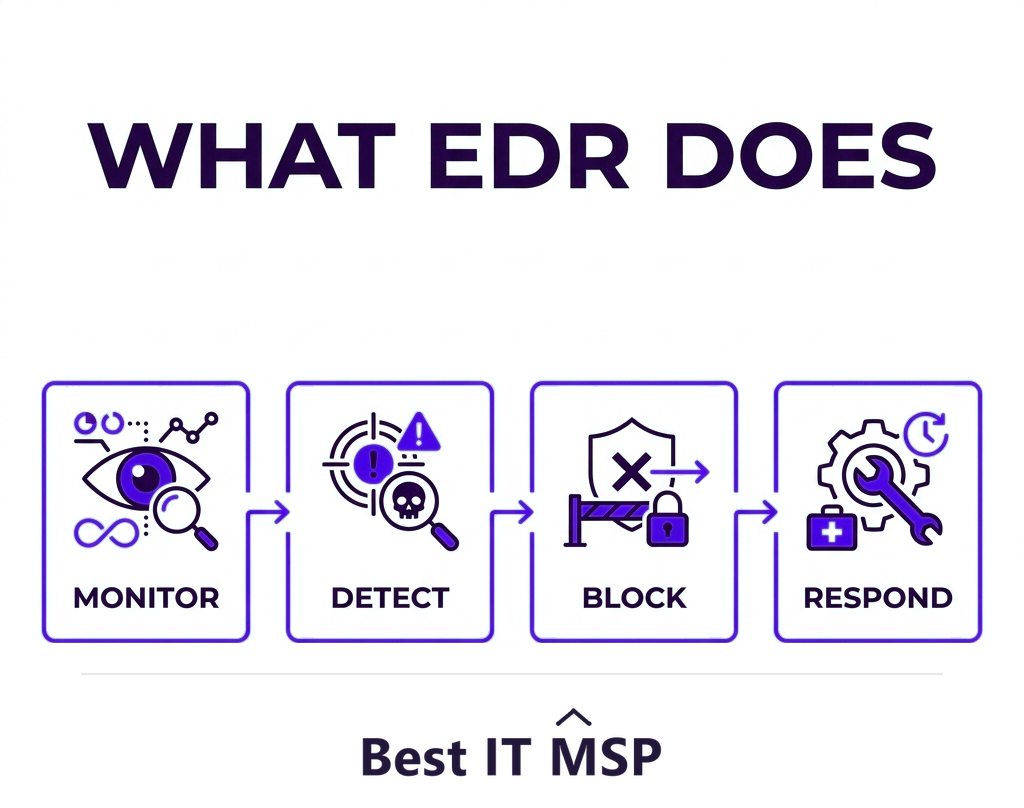
Modern endpoint protection, often delivered as endpoint detection and response (EDR), is built for this reality. Rather than only scanning for known viruses, it continuously monitors what is actually happening on each device, the processes running, the behaviors, the network connections, and uses that visibility to catch threats by how they act, not just by what they are. When it sees something suspicious, ransomware-like file encryption, an unusual process, signs of an intruder, it can block it before it executes and respond automatically to contain it, isolating the device from the network in seconds. Crucially, EDR detects novel and fileless threats that signature-based antivirus misses, and it records what happened so responders can investigate. It is the difference between a smoke detector and alarm system that catches a fire starting, versus an extinguisher you reach for after the room is ablaze.
Why is antivirus alone not enough?
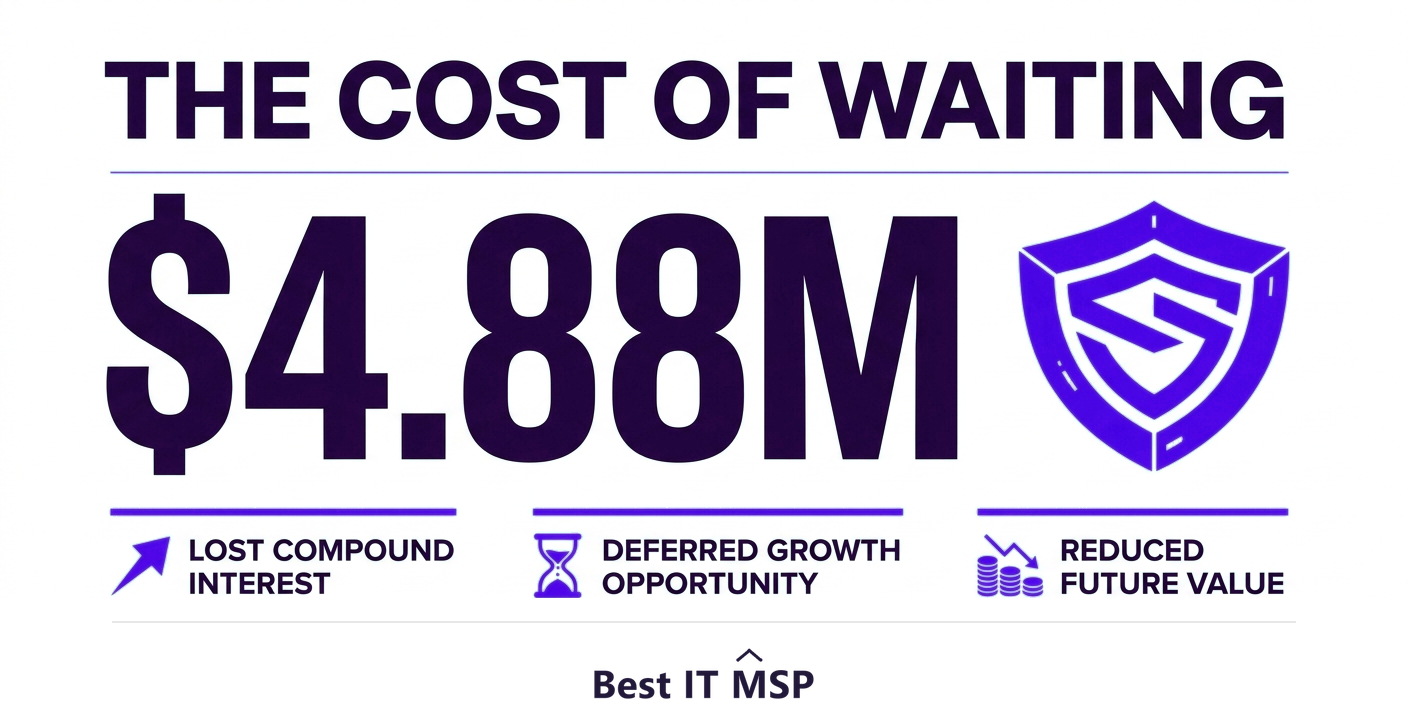
This does not mean antivirus is worthless; it still blocks the flood of known, commodity malware efficiently, and modern endpoint protection includes that capability. The point is that antivirus alone, and the virus-removal mindset behind it, leaves a wide gap that today's attackers walk right through. Prevention and early detection beat cleanup every time, because the cost of a successful attack is severe: the average data breach reaches $4.88 million, and downtime alone costs most organizations more than $100,000 an hour. The economics strongly favor stopping threats early, and automation makes that even more valuable, with organizations using security AI and automation extensively saving an average of $2.22 million per breach. Running this well takes expertise, and organizations facing a security skills shortage saw breach costs about $1.76 million higher, so the goal is to protect every device proactively rather than scramble to clean up afterward. Spending to prevent and detect is almost always cheaper than paying to recover.
| Dimension | Virus removal | Endpoint protection |
|---|---|---|
| When it acts | After a device is already infected | Continuously, before and during execution |
| What it looks at | Files on disk | Process behaviour, memory, and activity across the device |
| What it catches | Known malware with a signature | Ransomware, fileless attacks and novel code |
| Response speed | As fast as someone notices and calls | Automated isolation in seconds |
| Who is watching | Nobody, until a user complains | Monitoring, often a managed team around the clock |
Two figures explain why cleanup stopped being a strategy. Verizon found that 32% of all breaches involved some form of extortion technique, ransomware included, which is a category that finishes its work long before anyone runs a scan. IBM found that organisations using automation across detection and response cut the time to identify and contain a breach by nearly 100 days. Speed is the product being bought here.
What does good endpoint protection include?
A strong modern endpoint defense brings several capabilities together:
- <strong>Next-generation antivirus.</strong> Efficiently blocks known malware as a baseline.
- <strong>Behavior-based detection.</strong> Catches threats by what they do, including novel and fileless attacks.
- <strong>Endpoint detection and response (EDR).</strong> Continuous monitoring, automated containment, and the data to investigate.
- <strong>Real-time response.</strong> The ability to isolate a compromised device and stop an attack from spreading in seconds.
- <strong>Managed monitoring.</strong> Human experts watching alerts around the clock, often as managed detection and response (MDR), because tools still need people to run them.
- <strong>Patching and hardening.</strong> Keeping devices updated so there are fewer holes for malware to exploit in the first place.
How do you get endpoint protection right?
The shift from virus removal to modern endpoint protection mirrors the broader shift in security from reactive to proactive. Cleaning up after an infection is no longer a strategy; preventing and detecting threats in real time is. For most businesses, the right approach is modern endpoint protection with EDR, ideally monitored by experts around the clock, so threats are caught and contained before they become the kind of incident that costs millions. Virus removal remains a useful last resort, but it belongs behind a wall of prevention and detection, not in front of it. The expertise to run this well is a major reason businesses turn to managed security, part of a managed services market growing from about $330 billion in 2024 toward $879 billion over the next decade.
If you want to move from virus removal to modern, managed endpoint protection, comparing vetted providers on merit is the place to start. Browse merit-ranked managed IT and security firms by city in the Best IT MSP directory, where ranking is earned on rating and verified data, not on who pays the most. You can also read our explainer on what an MSSP is.
FAQ
What is the difference between virus removal and endpoint protection?
Virus removal is reactive: it detects and removes malware from a device after it has already infected it. Modern endpoint protection is proactive: it continuously monitors every device to prevent, detect, and respond to threats in real time, blocking many before they execute. Virus removal cleans up after the fact; endpoint protection stops attacks as they happen.
Why is virus removal no longer enough?
Because today's threats do their damage before cleanup is possible and often evade signature-based scanning. Ransomware can encrypt files within minutes, fileless malware leaves no file to remove, and attackers using stolen credentials trigger no virus at all. Virus removal is reactive and depends on recognizing known threats, so it leaves a wide gap that modern attackers exploit.
What is EDR (endpoint detection and response)?
EDR is modern endpoint protection that continuously monitors the processes, behaviors, and connections on each device, catching threats by how they act rather than only by known signatures. When it detects something suspicious, it can block it before execution and respond automatically, for example isolating the device from the network in seconds, while recording what happened so responders can investigate.
Is antivirus still useful?
Yes, as a baseline. Antivirus efficiently blocks the large volume of known, commodity malware, and modern endpoint protection includes that capability. The problem is relying on antivirus alone, which misses novel, behavior-based, and fileless attacks. The right approach layers next-generation antivirus with behavior-based detection and EDR so both known and unknown threats are covered.
What should modern endpoint protection include?
It should combine next-generation antivirus to block known malware, behavior-based detection for novel and fileless threats, endpoint detection and response (EDR) for continuous monitoring and automated containment, real-time response to isolate compromised devices, managed monitoring by human experts around the clock (often as MDR), and patching and hardening to reduce the holes attackers can exploit.
Is modern endpoint protection worth the cost?
Almost always. Prevention and early detection are far cheaper than recovery, given the average data breach costs $4.88 million and downtime costs most organizations more than $100,000 an hour. Organizations using security automation extensively save an average of $2.22 million per breach. Spending to stop threats early consistently beats paying to clean up and recover after a successful attack.
Best IT MSP is the independent directory of vetted managed IT and security providers across North America. Compare merit-ranked firms in your city that deliver modern endpoint protection and EDR. No pay-to-play.