Phishing vs Spear Phishing vs Whaling
Phishing is a broad, mass attack that sends generic scam messages to many people at once. Spear phishing is targeted: a personalized message aimed at a specific person or company using research about them. Whaling is spear phishing aimed at the biggest targets, executives and other high-value 'whales'.
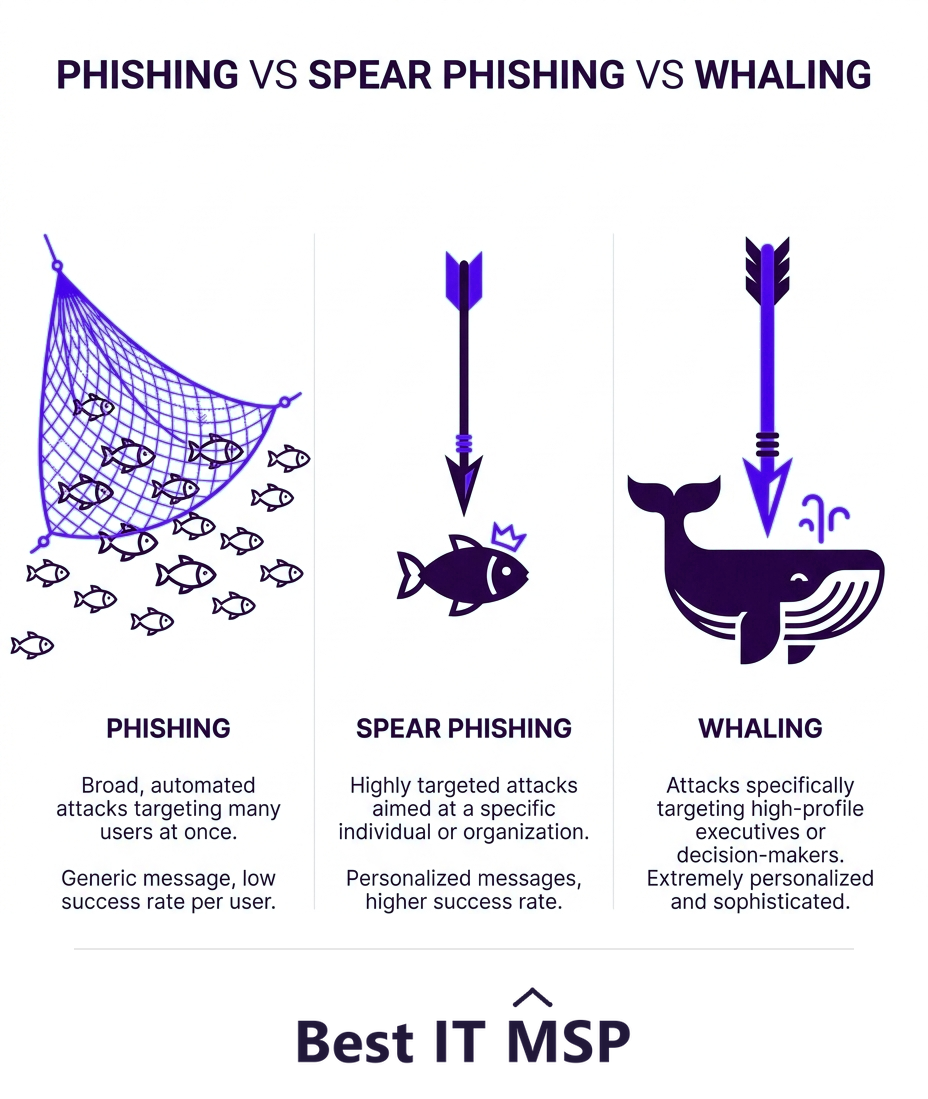
- Phishing is broad and generic, sent to many people hoping a few fall for it.
- Spear phishing is targeted and personalized to a specific person or organization.
- Whaling is spear phishing aimed at executives and other high-value targets.
- The more targeted the attack, the more convincing and damaging it tends to be.
- All three exploit people, so training plus MFA and email security are the core defenses.
How did we compare phishing, spear phishing and whaling?
Three attacks that share a delivery method and differ in effort and aim, so the comparison is built around who is being targeted and what makes each message land.
- The dimensions. Who is targeted, how much research goes into the message, the volume sent, and what makes each one work on a reader.
- The evidence. Reporting rates and social-engineering prevalence come from Verizon, loss totals from the FBI's IC3, and the account-compromise figure from Microsoft.
- No vendor ranking. This compares approaches, not products. It names no vendors and recommends no supplier.
- Independence. Best IT MSP does not sell IT services or security services, and does not appear in its own rankings.
Laid out together, the escalation in effort from left to right is the pattern worth remembering.
What is the difference between phishing, spear phishing and whaling?
These three terms describe the same basic attack, tricking someone into revealing information, clicking a malicious link, or sending money, but they differ in how targeted they are, and that difference matters enormously. Phishing is the broad, mass version: generic scam messages blasted to thousands of people, hoping a small percentage fall for it. Spear phishing is targeted: a carefully crafted, personalized message aimed at a specific person or organization, using real details about them to seem legitimate. Whaling is spear phishing aimed at the biggest fish, senior executives and other high-value targets, the 'whales' whose access or authority makes them especially valuable. The rule of thumb: the more targeted the attack, the more convincing it is, and the more damage it can do.
| Dimension | Phishing | Spear phishing | Whaling |
|---|---|---|---|
| Who is targeted | Many people at once | A specific person or company | Senior executives |
| Research behind it | None | Personalised using research on the target | Detailed, using the executive's role and relationships |
| Volume sent | High | Low | Very low |
| What makes it work | Reach, a small hit rate on many attempts | Credibility from accurate detail | Authority and urgency |
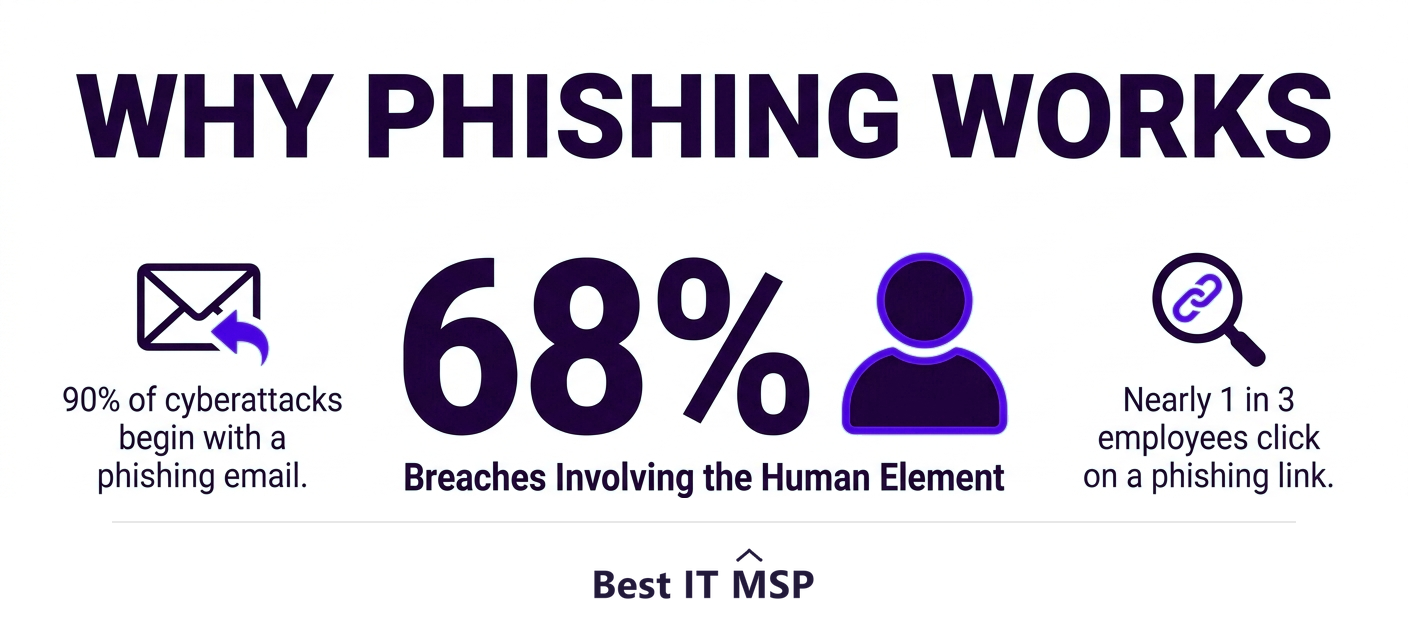
Understanding the distinction matters because the defenses and the stakes differ, and because these attacks are the number-one way breaches begin. The human element is involved in 68 percent of breaches, and phishing in its various forms is the leading entry point, with the average data breach costing $4.88 million and taking about 258 days to identify and contain. This guide breaks down each type and how to defend. It pairs with our email security and cybersecurity services overviews.
What is phishing?
Phishing is the broad, untargeted attack most people picture: a scam email (or text, or call) sent to a large number of people at once, impersonating a trusted brand, your bank, a delivery company, a popular service, and trying to trick recipients into clicking a malicious link, entering credentials on a fake site, or opening a malware-laden attachment. The messages are generic by design (Dear Customer) because they are sent en masse. Phishing relies on volume: even a low success rate pays off when millions of messages go out. It is the most common form, and while individual messages are often crude and easy to spot, the sheer quantity means some always get through.
What is spear phishing?
Spear phishing is the targeted, personalized version, and it is far more dangerous. Instead of a generic blast, the attacker researches a specific person or company, using information from social media, your website, data breaches, or public records, and crafts a message tailored to them. It might reference your real boss by name, a project you are working on, or a vendor you actually use, making it look entirely legitimate. Because it is personalized and well-researched, spear phishing is much harder to spot and far more likely to succeed than mass phishing. This is the technique behind many of the most damaging business attacks, including the business-email-compromise scams that trick staff into wiring money or sharing credentials.
What is whaling?
Whaling is spear phishing aimed at the 'whales', the biggest, most valuable targets in an organization, typically senior executives like the CEO or CFO, board members, and others with significant authority or access. These attacks are highly customized and often sophisticated, because the payoff is large: an executive can authorize big payments, access the most sensitive data, or be impersonated to order others to act. A classic whaling scenario is an email that appears to come from the CEO instructing the finance team to urgently wire funds. Whaling attacks tend to be the most carefully constructed of all, precisely because the stakes, for both attacker and victim, are highest.
Why do these attacks work?
All three are forms of social engineering, exploiting human psychology rather than technical vulnerabilities, which is exactly why they are so effective and so hard to stop with technology alone. They create urgency (act now or there will be consequences), impersonate authority or trust (your boss, your bank), and prey on helpfulness and routine. A well-crafted spear phishing or whaling message can fool even careful, security-aware people, because it looks exactly like a normal request. This is the core reason the human element features in 68 percent of breaches and reported cybercrime losses topped $12.5 billion in a single year: attackers have learned that the easiest way past your defenses is social engineering, asking a person to open the door for them.
How do you defend against all three?
Because these attacks target people, defense combines technology with human awareness:
Reporting is the control that improves fastest, and it is measurable. Verizon found that 20% of users identified and reported phishing in simulation engagements, and 11% of those who clicked the email reported it too. That second figure is the one to build on: a person who has already clicked and says so immediately turns a breach into an incident you can contain.
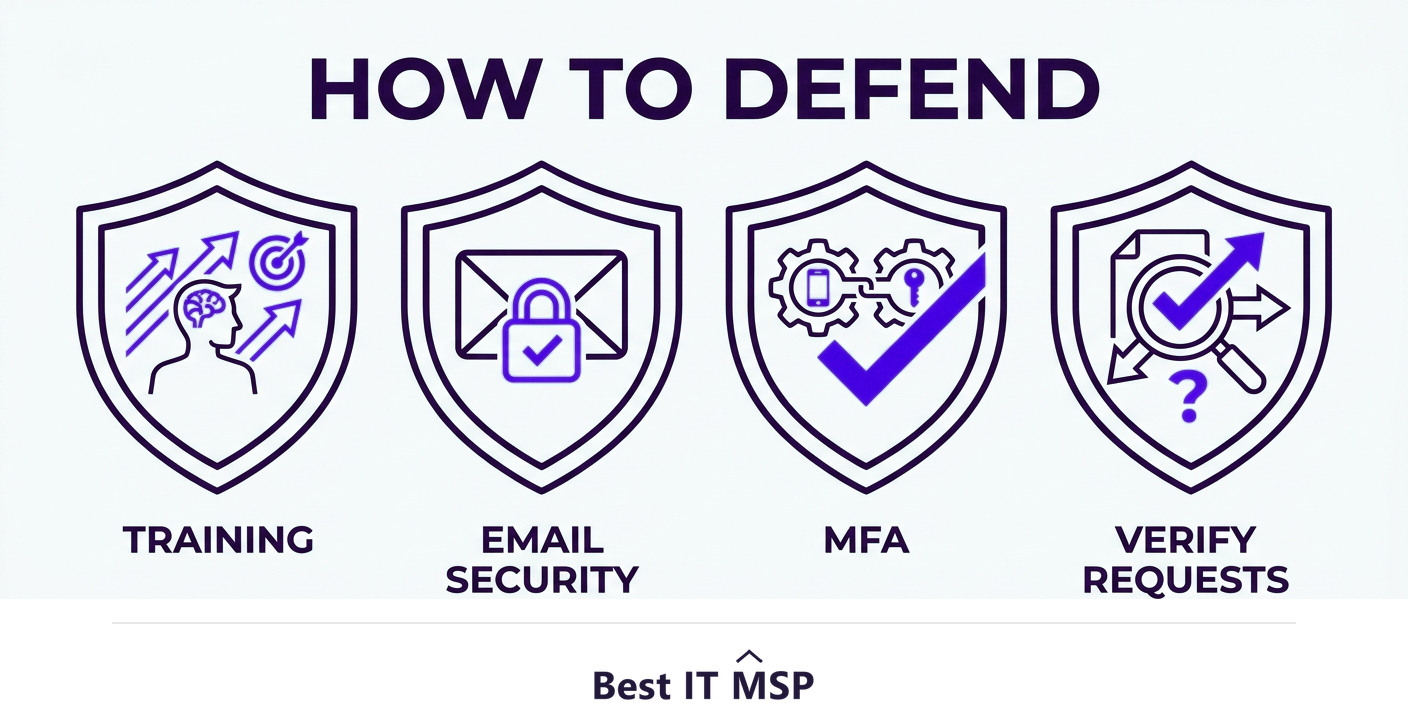
- <strong>Security awareness training.</strong> Teach staff to recognize phishing, spear phishing, and whaling, and run simulated phishing tests so the skill stays sharp. This is the single highest-impact defense.
- <strong>Email security.</strong> Filtering that blocks known phishing, malicious links, and spoofed senders before they reach inboxes, plus authentication (SPF, DKIM, DMARC) to stop impersonation of your domain.
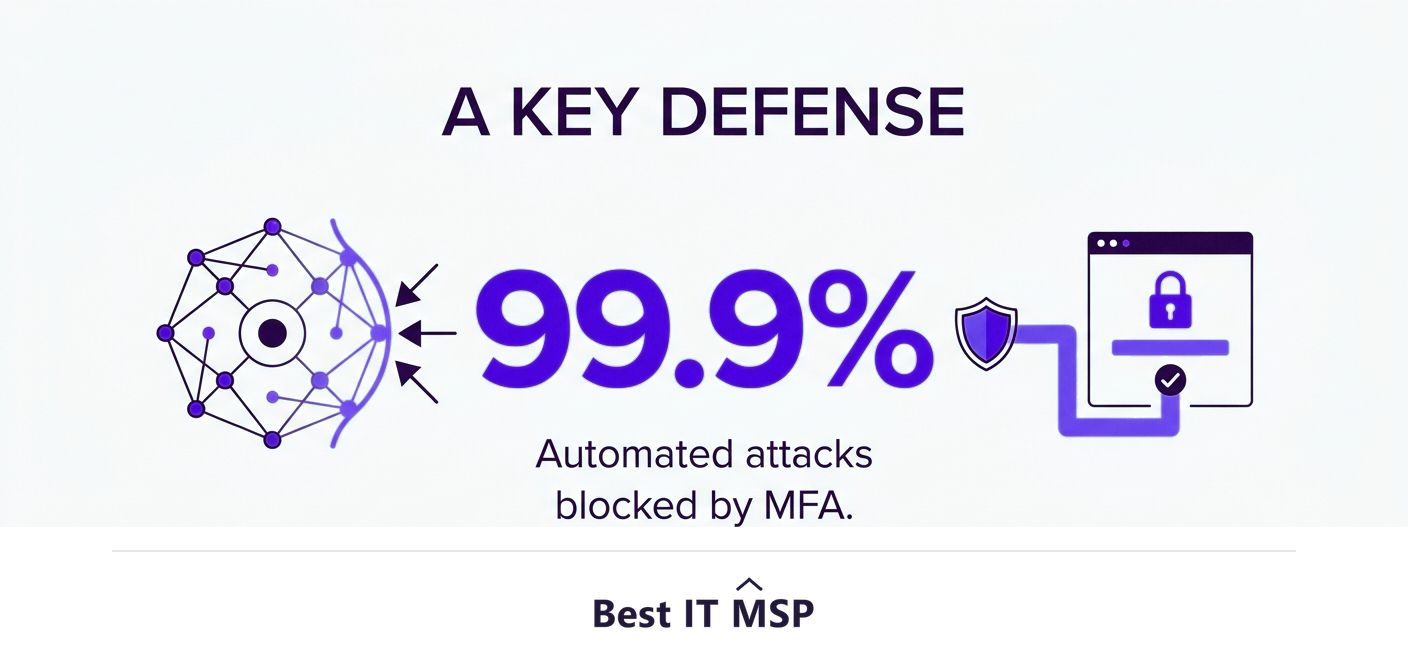
- <strong>Multi-factor authentication.</strong> Even if a password is phished, MFA blocks the login, and Microsoft reports it stops 99.9 percent of automated account-compromise attacks.
- <strong>Verification procedures.</strong> For sensitive actions like wiring money or changing payment details, require out-of-band verification (a phone call to a known number), which defeats whaling and business-email-compromise scams.
- <strong>A culture where it is safe to ask.</strong> Encourage people to double-check suspicious requests without fear, so urgency does not bully them into mistakes.
How do you build real phishing resilience?
No single control stops phishing; resilience comes from layering training, email security, MFA, and verification so that even when one fails, another catches the attack. Building and maintaining that, especially ongoing training and properly configured email security, takes effort and expertise that is scarce amid a global shortfall of about 4.8 million cybersecurity professionals. Many businesses get this protection through a managed IT or security provider that runs phishing-awareness programs, configures and monitors email security, and deploys MFA across the business, part of why the managed services market is projected to grow from about $330 billion in 2024 to about $879 billion over the next decade.
Because phishing, spear phishing, and whaling are the leading way attacks begin, defending against them is one of the highest-return security investments a business can make. To find a provider that can build your phishing defenses, browse vetted, merit-ranked firms by city in the Best IT MSP directory, where ranking is earned on rating and verified data.
FAQ
What is the difference between phishing and spear phishing?
Phishing is a broad, untargeted attack: generic scam messages sent to many people at once, relying on volume. Spear phishing is targeted and personalized: the attacker researches a specific person or company and crafts a tailored message using real details, making it far more convincing and harder to spot. Spear phishing is much more likely to succeed than mass phishing.
What is whaling in cybersecurity?
Whaling is spear phishing aimed at the 'whales', the biggest, most valuable targets in an organization, typically senior executives like the CEO or CFO, board members, and others with significant authority or access. These attacks are highly customized because the payoff is large, such as an email impersonating the CEO that instructs finance to urgently wire funds.
Why is spear phishing more dangerous than phishing?
Because it is personalized and well-researched. Instead of a generic blast, a spear phishing message references real details, your boss's name, a current project, a vendor you use, so it looks legitimate and is much harder to detect. That higher believability means a far higher success rate, which is why spear phishing is behind many of the most damaging business attacks.
Why do phishing attacks work?
They exploit human psychology rather than technical flaws: creating urgency, impersonating authority or trust, and preying on helpfulness and routine. A well-crafted spear phishing or whaling message can fool even security-aware people because it looks like a normal request. This is why the human element is involved in about 68% of breaches; attackers ask a person to open the door.
How do you defend against phishing, spear phishing, and whaling?
Combine technology with human awareness: security awareness training with simulated tests, email security that filters malicious messages and authenticates senders, multi-factor authentication so a phished password is not enough, and out-of-band verification for sensitive actions like wiring money. A culture where it is safe to double-check suspicious requests also helps.
Does multi-factor authentication stop phishing?
MFA does not stop the phishing message, but it stops the most common goal, account takeover, because even a phished password is not enough to log in. Microsoft reports MFA blocks 99.9 percent of automated account-compromise attacks. It is an essential layer alongside training, email security, and verification, especially for email and high-value accounts.
Best IT MSP is the independent directory of vetted managed IT and security providers across North America. Compare merit-ranked firms in your city that run phishing training, email security, and MFA. No pay-to-play.